What does texture actually do to a painting on a wall?
It makes the light part of the work. A flat painting reflects whatever falls on it and looks broadly the same from any angle in the room. A raised surface does two extra things: it casts its own small shadows, and it catches light on the ridges that face the source. Move three steps to the side and both change. Wait four hours and they change again, because the sun has moved and a lamp has come on.
That is not a decorative detail. It is the reason a textured piece behaves differently from a print or a photograph in the same spot. A print is finished when it is hung; a built-up surface keeps producing a slightly different image all day, which is why people who live with one report noticing things in it months later. The technical term for thickly applied paint that stands off the surface is impasto, and it has been used for exactly this effect for centuries.
The practical consequence is that texture rewards side light and is wasted under flat overhead light. We go through what that looks like in a real room in what texture does to a painting and in the same painting in different light.
Is textured art always on canvas?
No, and in this catalogue most of it is not. The heaviest surfaces here are built on wooden board, fiberboard or panel; canvas carries the lighter texture. That is a deliberate choice rather than an accident of supply.
The reason is physical. A stretched canvas is fabric under tension — the support, in the gallery term — and fabric flexes when it is handled, leaned on or moved between a cold van and a warm room. A thick, brittle build-up of paste, collage and cured resin does not want to flex with it. A rigid board does not move, so it will hold a much deeper surface without the risk.
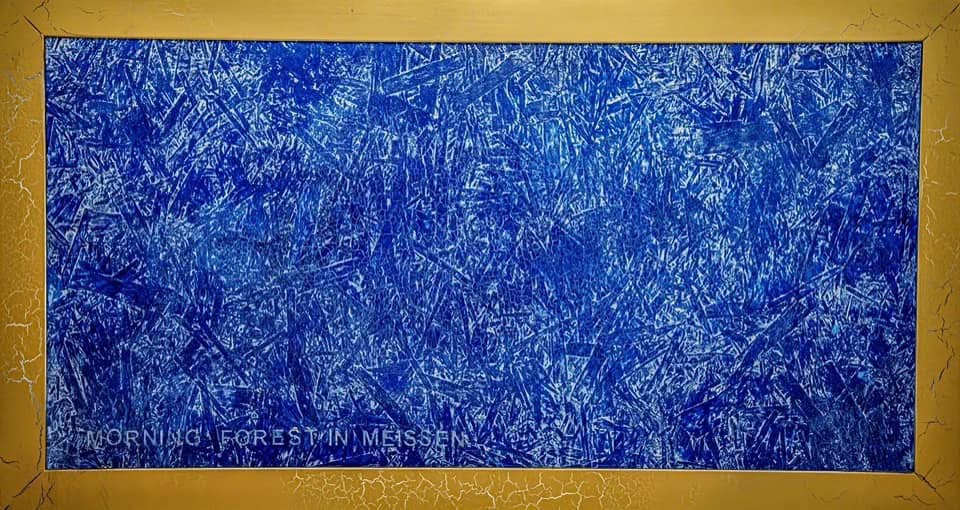
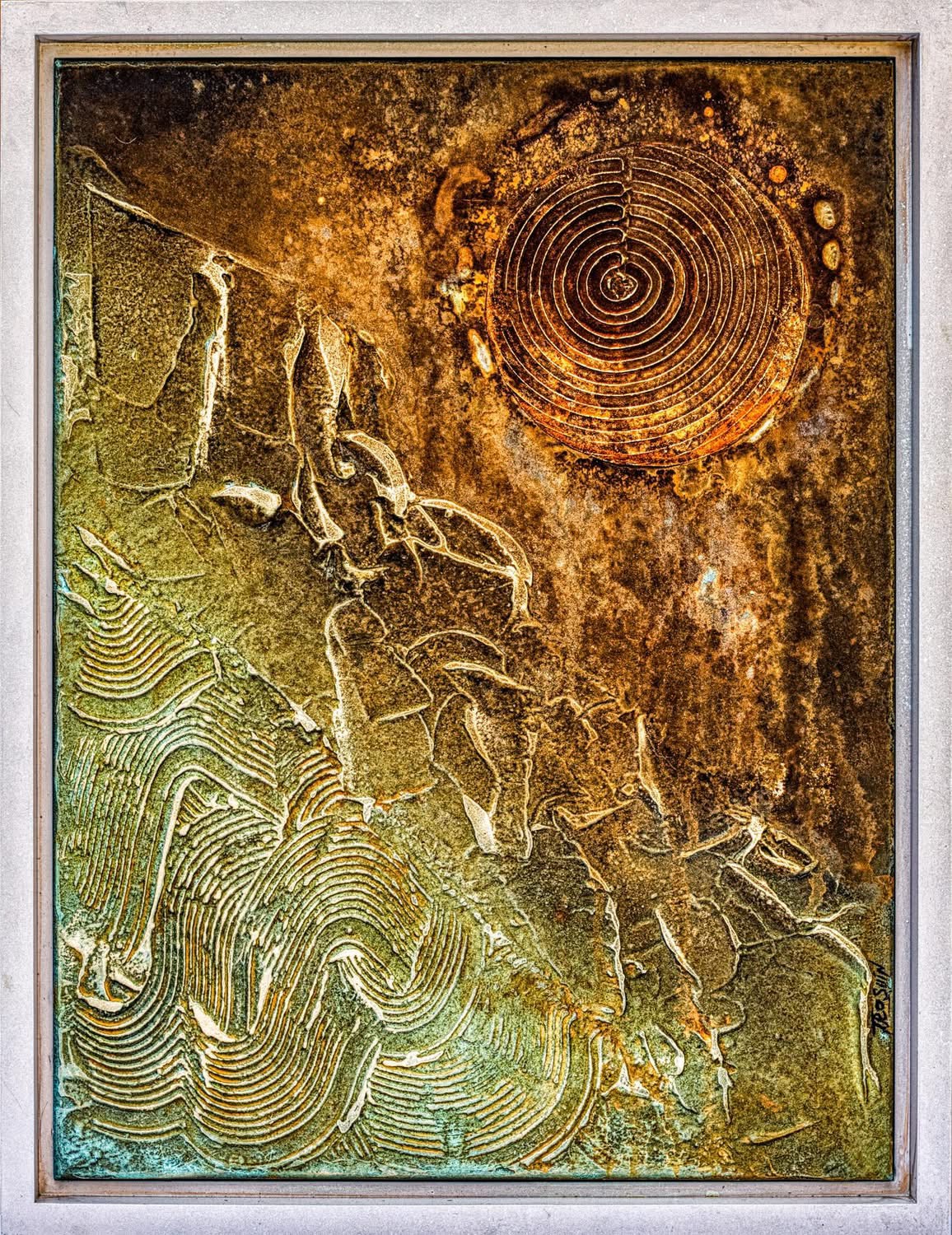
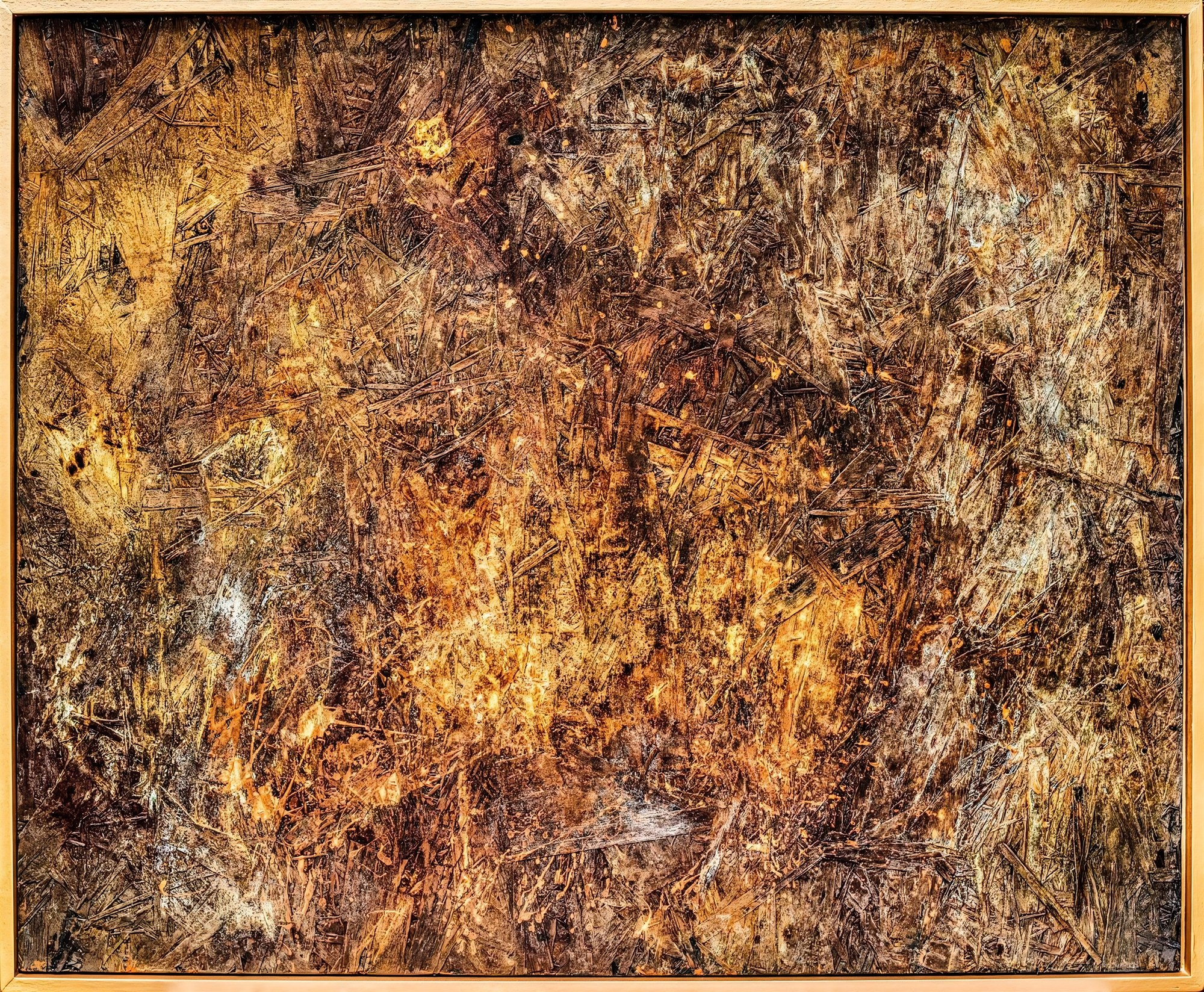
You can see both approaches in the gallery. Hamsin (2025) is mixed media on canvas at 18 by 24 inches — texture, in the artist's own description, built from rich textures, golden pastes and the hues of rust, with a concentric spiral running through it, but kept to a weight canvas can carry. Morning Forest in Meißen (2023) goes the other way: acrylic, natural dyes, resin, wax paste and diamond dust on a wooden board, framed, 52 by 28 inches. Nothing that deep belongs on stretched fabric. If you are weighing one against the other, canvas, wood or board sets out what each support is good at.
What is the texture actually made of?
Materials you can name, not a finish sprayed on at the end. Across the work in this gallery the surface is built from acrylic, natural dyes and pigments, wax paste, collage, resin, gold, diamond dust, and in the recent pieces actual rust and metal. A work that combines several of them is what galleries call mixed media, and the term tells you nothing about quality — only that more than one material is involved.
Each material does something different to the light:
- Wax paste and modelling layers build genuine relief, so they produce shadow. This is the component that changes most as the light moves.
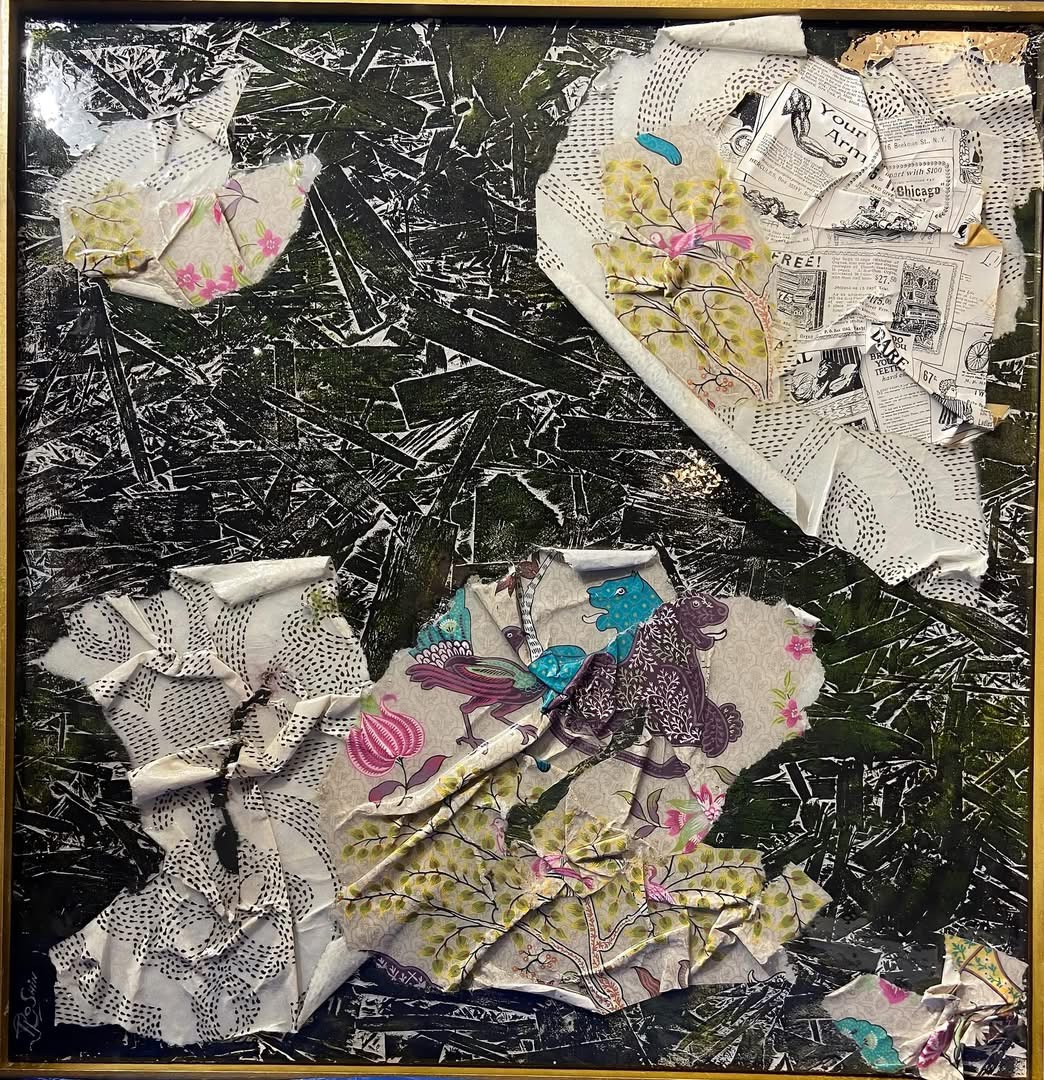
- Collage introduces edges — a step in the surface where one material stops and another starts. In Treasure Behind the Wall II (2024) that is the whole subject: layers of wallpaper peeled back to the pattern underneath.
- Diamond dust and gold do not build height at all. They sit on the surface and return light directly, so they flare at one angle and vanish at another. Diamond dust, gold and light covers what that looks like across a day.
- Resin does the opposite of relief: poured over a surface it cures to a hard, glass-like film that levels the top, deepens the colour beneath the way water darkens a stone, and adds a reflective face.
- Rust and metal bring their own grain. Of Whisper (2025), mixed media on panel at 32.7 by 42.9 inches, the artist writes: "I chose difficult materials: Wood, which remembers, and rust, which testifies to time."
Two longer reads if you want the vocabulary before you visit: mixed media explained and reading a layered surface.
Where should a textured piece hang?
Somewhere the light arrives from the side rather than straight on. A wall lit by a window to its left or right, or by a fitting aimed across it at an angle, will show every ridge. The same piece on a wall lit evenly from directly in front — most ceiling lighting, most hallway fittings — loses the shadows entirely and reads as a flat pattern. The Canadian Conservation Institute's note on track lighting is the practical reference for aiming a fitting at a wall.
Three placements that work particularly well for texture, and one that does not:
- A wall you pass at an angle — the end of a hallway, the wall beside a staircase. You never see it head-on, which is exactly what a raised surface wants.
- Beside a window rather than opposite it. Light raking across the surface from one side gives maximum shadow; light straight onto it gives none, and on a resin-sealed piece it gives reflection instead.
- Within arm's reach. Texture is one of the few things in a room that people want to look at closely. A piece over a console table at eye level gets examined; the same piece two metres up a stairwell does not.
- Not directly above a heat source or in a strip of direct sun. That is a care question rather than a looking one, and it is covered below.
Hanging weight is worth settling before the hooks go in. A board built up in paste and sealed with resin is heavier than a stretched canvas of the same dimensions, because the rigid support and the cured coating both add mass that fabric does not. How to hang a heavy painting covers the fixings, and where to hang a textured piece goes through the room choice in more detail.
Does a textured surface need different care from a flat one?
A little, and all of it is about what you do not do. The general handling rules for any painting are set out in the Canadian Conservation Institute's note on basic handling of paintings, and they apply here unchanged. Texture adds three specifics.
First, never wipe it. A cloth dragged across relief catches on the raised edges, and a cloth is exactly what most people reach for when a surface looks dusty. Second, no sprays — glass cleaner and furniture polish are the two most common causes of avoidable damage in a house, and a resin face looks enough like glass that a well-meaning helper will treat it as glass unless someone has said otherwise. Third, texture collects dust in a way a flat surface does not, simply because it has more surface and more horizontal ledges. Light, occasional dusting with a clean, soft brush is the accepted approach, moving across the work rather than into the ridges.
Two things textured work does not need: glass, and a humid room. Most of the pieces here are already sealed or are built on rigid supports, so glazing usually adds reflection without adding protection — and it flattens the very surface you bought. How to look after an original and winter air and the wall cover the rest, including the months when Ontario heating drops indoor humidity sharply.
Which textured originals are in the gallery now?
Six, at the time this page was written, spanning the range from light surface work on canvas to heavy relief on board.
- Hamsin (2025) — mixed media on canvas, 18 by 24 inches. Textures, golden pastes and rust tones built around a concentric spiral.
- Morning Forest in Meißen (2023) — acrylic, natural dyes, resin, wax paste and diamond dust on wooden board, framed, 52 by 28 inches. The deepest build in the gallery, and the one where the diamond dust does most.
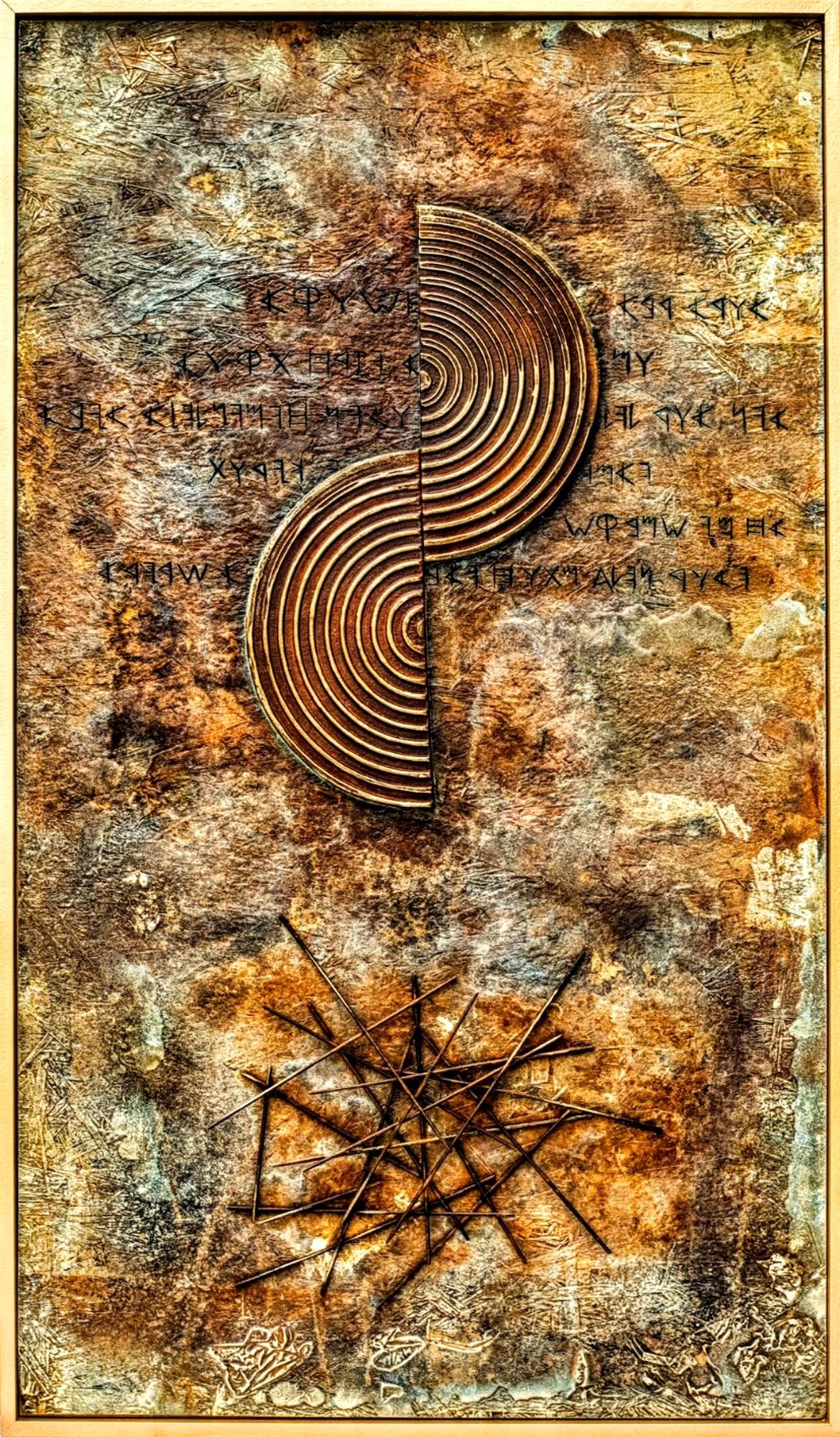
- Traces of the Forgotten (2025) — mixed media, 30 by 48 inches: a fractured circle, rusted textures and scattered metallic remnants.
- Whisper (2025) — mixed media on panel, 32.7 by 42.9 inches, made with wood and rust.
- Treasure Behind the Wall II (2024) — acrylic, collage and diamond dust on wood, built as layers of wallpaper opening onto the pattern beneath.
- Over The Horizon — acrylic, texture and metallic on fiberboard, sealed with epoxy, 24 by 24 inches.
The catalogue moves, and work that has sold stays on the site marked Sold or Private Collection rather than being removed — sold, private or available explains how to read the label. The full listing is on the artworks page, and there is more about Sergei Troshin, who is self-taught and based in Thornhill, on the about page.
Can you judge a textured painting from a photograph?
Not really, and this is the honest reason the gallery would rather you came in. A photograph fixes one angle and one lighting condition. On a flat work that is most of the information; on a raised surface it is a fraction of it, because the shadows that make the piece are the first thing a camera flattens. Photographs also undersell scale and weight: a 52-inch board with half an inch of built-up paste on it registers as a small picture on a phone.
If a visit is not practical, ask for the missing information rather than guessing at it. Useful questions on a call include how deep the relief actually stands off the surface, whether the piece is sealed and how reflective that seal is, what the work weighs, and what it looks like when the light comes across it from one side instead of from the front. What to ask before you buy lists the rest.
Prices are on request for every work here and there is no online checkout — each piece is one of a kind, so the figure belongs to the painting rather than to a category. Naming a work and asking what it costs carries no obligation. Each piece is signed and leaves the gallery with a Certificate of Authenticity from the artist; what a certificate of authenticity actually says explains what that document does and does not cover. Anything else is welcome through the contact page.
Questions people ask
What counts as textured art?
Any work where the surface stands off the support enough to cast its own shadow. Here that is built from wax paste, collage, natural dyes, resin, gold, diamond dust, rust and metal rather than a texture effect applied at the end. Thickly applied paint of this kind is called impasto.
Is textured art on canvas or on board?
Both, and the depth decides which. Canvas is fabric under tension, so it flexes when handled or when the air changes, which suits lighter surface work. Heavy build-ups sit on wooden board, fiberboard or panel, because a rigid support does not move under a thick, brittle layer.
How should a textured painting be lit?
From the side, or by a fitting aimed across the wall at an angle. Light arriving straight on cancels the shadows and flattens the surface, which is the one thing the work was built to avoid. A wall you pass at an angle, such as a hallway end or a staircase wall, works well.
How do you clean a textured painting?
You do not wipe it, and you never spray anything on it. A cloth catches on raised edges and glass cleaner is the most common avoidable cause of damage in a house. Light, occasional dusting with a clean soft brush, moving across the surface rather than into the ridges, is the accepted approach.
Does a textured work need glass over it?
Usually not. Most of the pieces here are sealed or built on rigid supports, so glazing adds reflection without adding much protection — and it flattens the surface you came for. Ask about the specific piece rather than assuming either way.
Why can't I tell how textured a piece is from the website photograph?
Because a photograph fixes one angle and one lighting condition, and the shadows that make a raised surface are the first thing a camera removes. Ask on the phone how deep the relief stands, how reflective the seal is and what the piece weighs — or come and stand at an angle to it.