A visitor once asked, quite reasonably, whether she should wipe her painting down with a damp cloth before guests arrived. The honest answer was no — and that she probably didn't need to touch it at all. Most of what affects an original at home isn't a single mistake. It's what happens quietly, over years, to a surface nobody asked about when it went up on the wall.
What Actually Affects an Original at Home?
Not dust, and not the occasional glance up close. The three things that matter are direct sunlight, which fades pigment and ages a clear coat; swings in humidity and temperature, which stress wood, canvas and any glued or collaged layer; and cleaning products or abrasive cloths, which can scratch a finish that was never meant to be scrubbed.
None of this is exotic. It's the same short list a museum uses, just applied to a living room instead of a climate-controlled gallery. The American Institute for Conservation's plain-language guidance on caring for artwork at home comes back to the same three points: light, stability, and a light touch.
Two Pieces, Two Different Surfaces
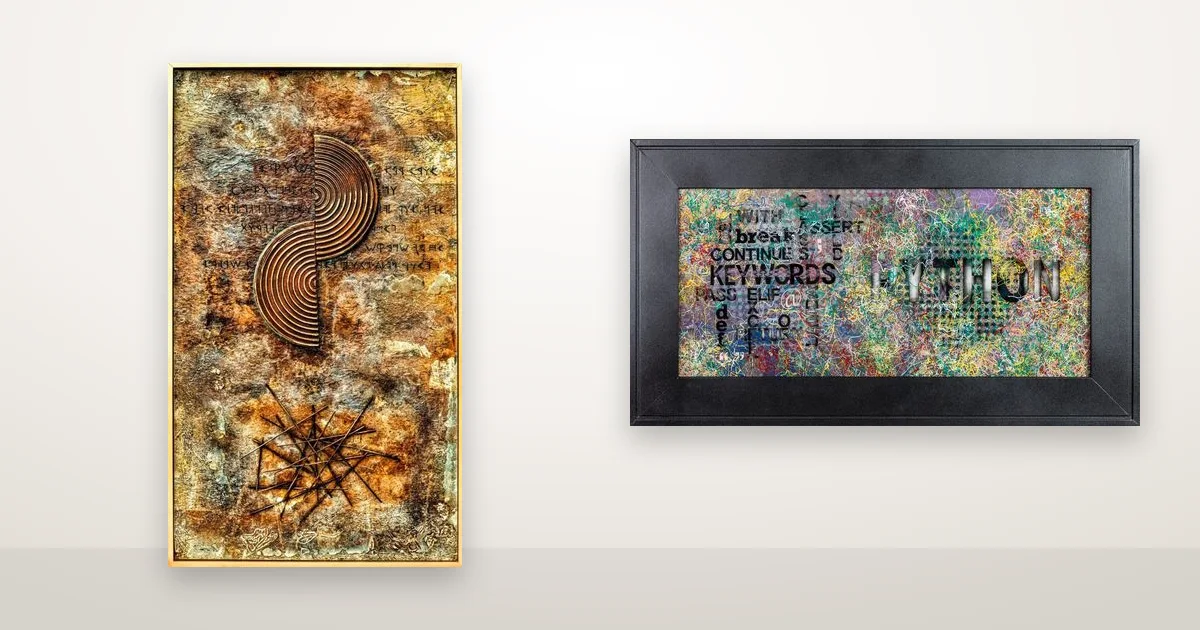
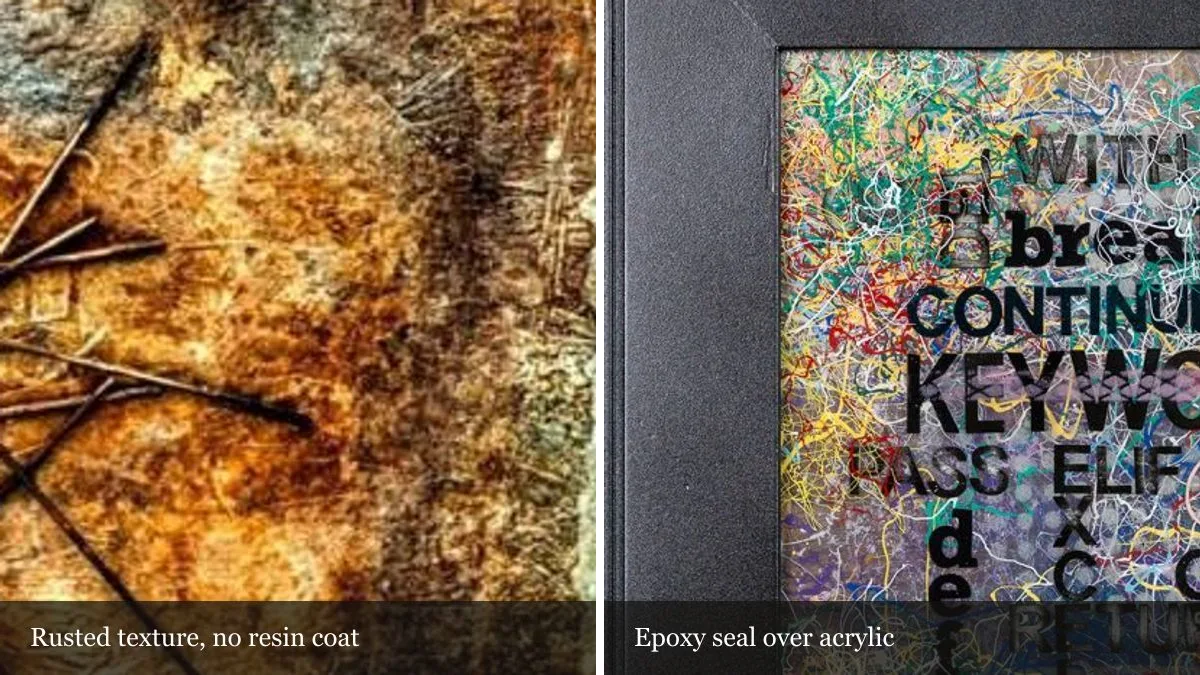
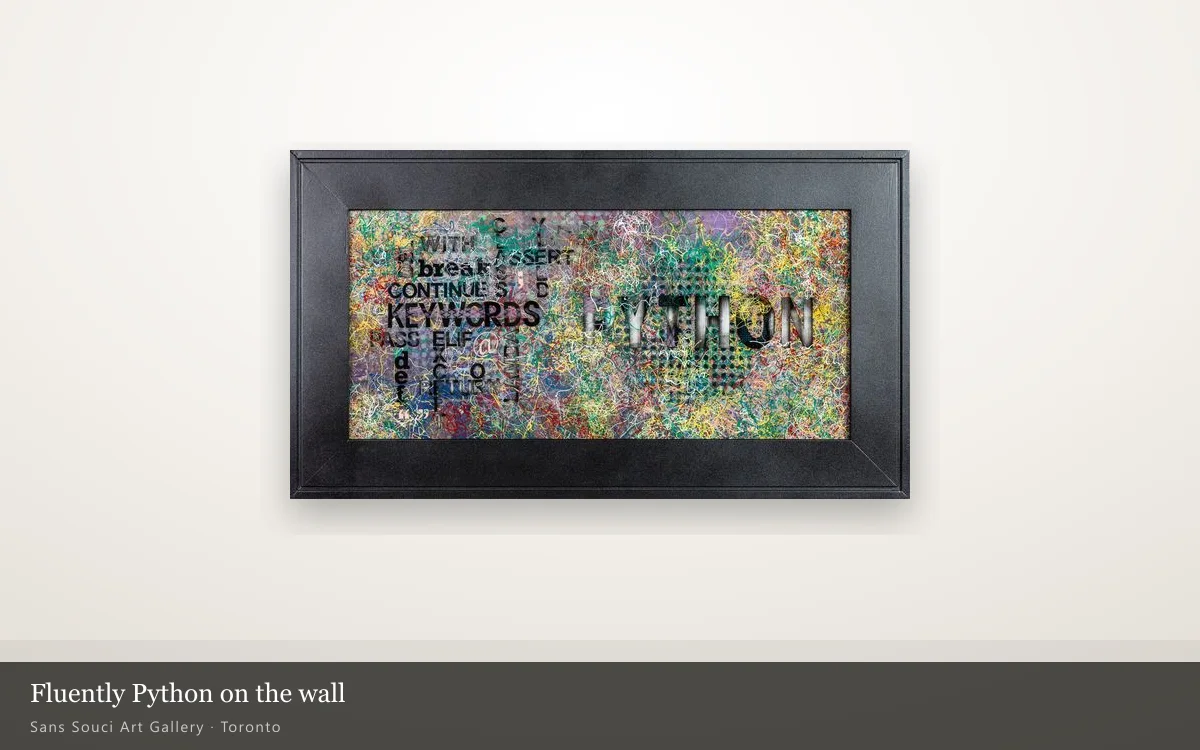
The right way to look after a piece depends on what's actually on top of it. Traces of the Forgotten, a large mixed-media work built from rusted textures and scattered metallic remnants, has no poured coating over it — the surface is raw, and it stays that way. Fluently Python, an acrylic piece the artist himself describes as "one labyrinth inside another," is sealed under a hard, poured epoxy face. Wipe the wrong one down and you either disturb texture that was never meant to be flattened, or scrub a gloss surface that scratches like any lacquer.
Neither choice is an accident. Troshin leaves a piece raw when the texture itself is the subject — here, rusted passages and half-hidden calligraphy that a glass-hard coat would flatten into a single reflective plane. He seals a piece under epoxy when the surface needs to survive handling, or when the finish is meant to deepen colour the way a coat of varnish deepens a stained floor. Once you know which decision was made, the care instructions follow on their own; you're not guessing.
| Traces of the Forgotten | Fluently Python | |
|---|---|---|
| Surface | Raw mixed media, no poured coat | Acrylic sealed under poured epoxy |
| Feels like | Matte, textured, some raised elements | Hard and glass-smooth to the touch |
| Daily care | Dry, soft cloth; avoid touching raised texture | Dry, soft cloth only — no solvents |
| Biggest risk | Humidity swings and direct sun on pigment | Scratching the coat; long UV exposure |
How Do You Tell Which One You Own?
Look at the surface from an angle, not straight on. A resin or epoxy face throws back a sharp, even reflection across the whole piece, the way a pane of glass would. A raw surface reflects unevenly, if at all — light catches the ridges and dulls in the recesses, because there's no glass-smooth layer sitting on top to bounce it back uniformly. Run a finger just above the surface, not on it: a resin face is flat under your hand's shadow; a textured piece has a visible landscape of high and low points.
If it's still not obvious, the artwork's own materials note settles it — every piece in the catalogue, like Fluently Python above, lists what it's built from, so there's no need to guess.
The Short, Honest List
Five things cover almost every original in a home, regardless of the materials underneath. None of them require special products.
- Dust dry, never wet. A soft, dry cloth or a soft brush is enough for both a raw textured surface and a resin or epoxy face. Water and household cleaners belong nowhere near either.
- Keep it out of long direct sun. Sustained afternoon light fades pigment and, on a resin or epoxy finish, ages the clear coat itself over time. Tate's glossary entry on resin covers what the coating actually is and why UV is the thing that shortens its life.
- Hold the room steady. Stable temperature and humidity matter more than any product on the shelf. A wall beside a radiator, vent, or a window that gets full sun is the one place to avoid, whatever the surface is made of.
- Don't touch a textured surface out of curiosity. Raised paste, collage or metallic elements can shift or wear under repeated handling in a way a flat resin face simply can't.
- When in doubt, ask before you clean. A quick question costs nothing; a scratched coat or a flattened texture doesn't come back.
Why This Is Worth Getting Right
An original doesn't come with a reprint if the surface is damaged. That's part of what a one-of-a-kind piece asks of the person living with it — not constant vigilance, just a handful of habits that cost nothing and take less time than the dusting most people already do around it. Every piece leaves the gallery with a Certificate of Authenticity, and the same document that proves what a work is and who made it is also the one you'll want to hand a conservator years from now, should a piece ever need real attention.
Most originals never need more than the list above. The pieces that do run into trouble are almost always the ones hung above a working fireplace, over a radiator, or on the one wall in the house that gets sun all afternoon — not because their owners were careless, but because nobody thought to ask before choosing that wall.
If you're not sure what's on the surface of a piece you already own, or you're choosing between two very different finishes for a new one, ask us directly — we'd rather answer the question before something goes wrong than after. And if you want to see the range for yourself, the full artworks collection is a reasonable place to start.