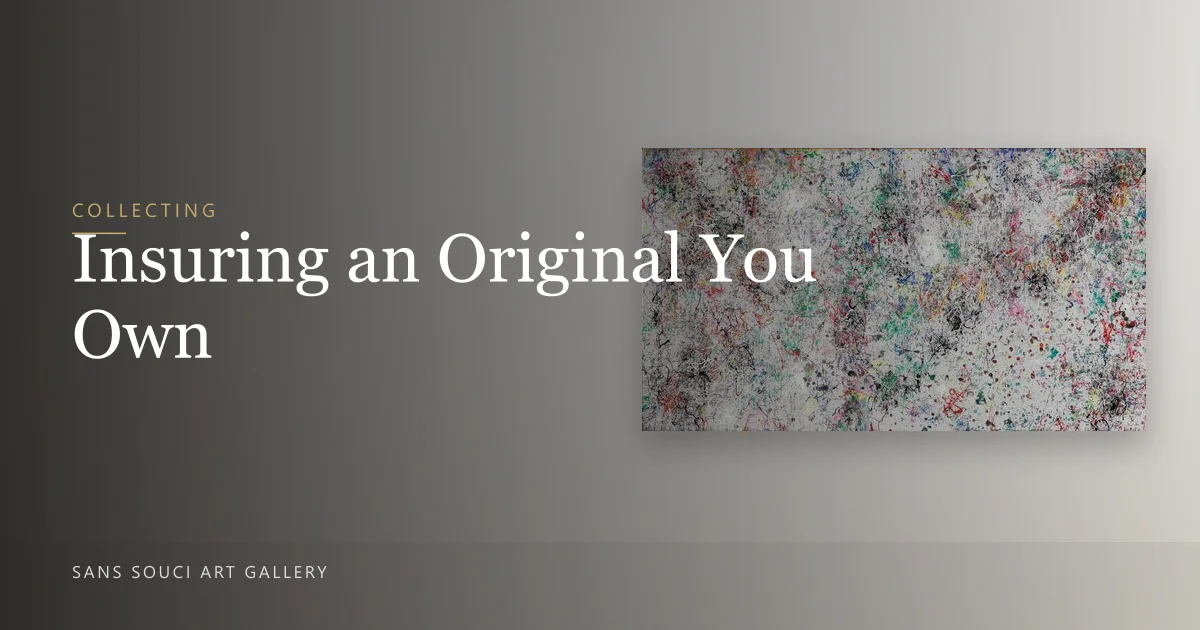
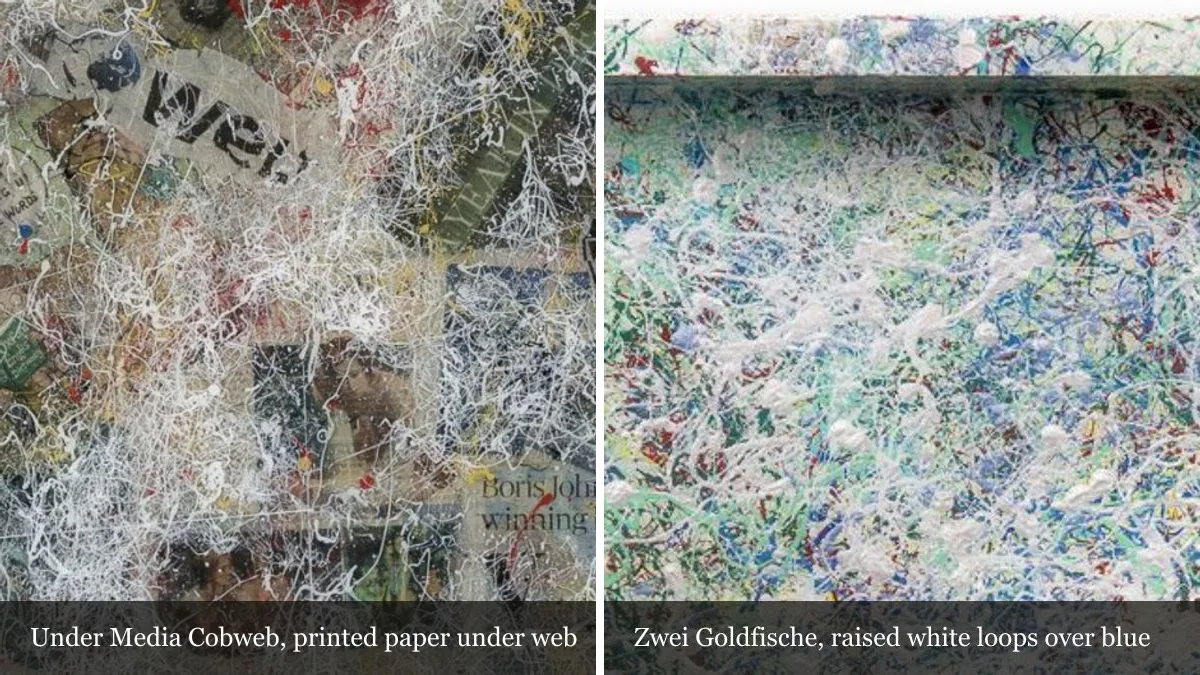
Under Media Cobweb measures 60 × 80 in (152.4 × 203.2 cm). No other work on this site states a larger size. Its page gives you the year, the materials and the measurements, and it goes as far as asking you to measure the doorways and stair turns on the way to it. What the page does not tell you is what the piece weighs, what the printed paper in its surface is, or what condition it is in today. Those are the questions to ask before you buy an original, and asking them is the ordinary part of buying art, not the awkward part.
What should you actually ask?
Ask for the nine facts that identify the object: type, materials and techniques, measurement, inscriptions and markings, distinguishing features, title, subject, date and maker. Then ask three practical ones — what it weighs, what condition it is in, and how it reaches your wall. Most of the first list is already printed on our artwork pages. None of the second list is.
The reason to collect the answers now is that they are hard to reconstruct later. A year after a painting is hung, nobody remembers whether the surface had a chip in the lower left when it arrived, or what the collage was made of. The gallery that sold it is the cheapest place to have that written down, and the day you buy is the cheapest day to ask.
The nine facts a museum standard says to record
Object ID is a documentation standard published by the International Council of Museums. It defines nine categories of information plus four steps, and it was developed with the museum community, police and customs agencies, the art trade, the insurance industry and valuers of art and antiques. Its purpose is blunt: an object that has been photographed and adequately described can be identified again, and one that has not usually cannot.
- Type of object — painting, work on paper, painted furniture. On this site the distinction is real: the catalogue holds paintings alongside hand-painted side tables, a tissue box and wine glasses.
- Materials and techniques — what it is made of and how it was built.
- Measurement — height, width and, for a thick surface, depth.
- Inscriptions and markings — a signature, a date, a title written on the back.
- Distinguishing features — what makes this piece and not a similar one: a raised element, a repaired corner, painted edges.
- Title — as the artist gave it, spelling included.
- Subject — what it depicts or refers to, which for abstract work is often the hardest of the nine.
- Date or period — when it was made, not when you bought it.
- Maker — the artist, in full.
The four steps that go with the categories start with photographing the object, then identifying those nine, then writing a short description, then keeping the file somewhere safe. You can read the standard in full on the ICOM Object ID page.
What our artwork pages answer, and what they do not
Five of the nine are on every artwork page here: type, materials, title, date and maker. Measurement is on most of them. Inscriptions and distinguishing features are on none. Below are the same nine categories run against two real works — the largest measured piece in the catalogue and one of the smallest — so you can see where the page stops and a question starts.
| Object ID category | Under Media Cobweb (2019) | Zwei Goldfische (2020) |
|---|---|---|
| Type of object | Painting, one of one | Painting, one of one |
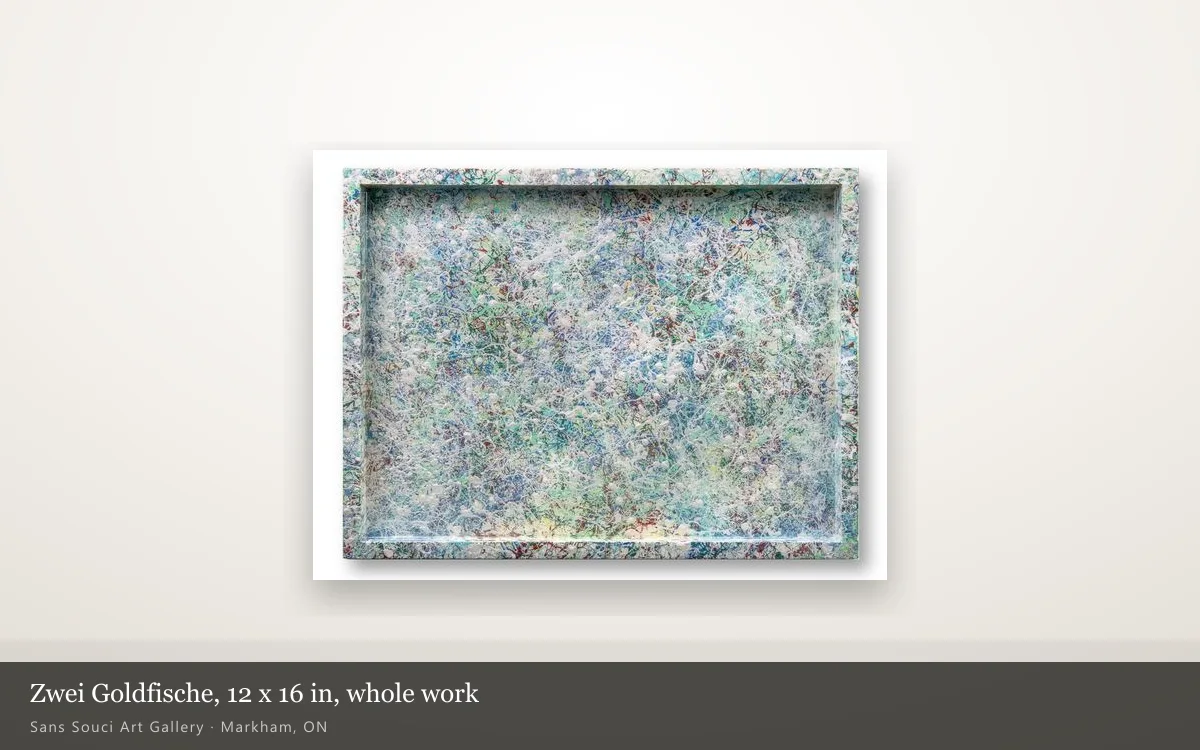
| Materials and techniques | Mixed media, collage, acrylic, resin | Acrylic on wooden board, sealed with resin, two sides painted |
| Measurement | 60 × 80 in (152.4 × 203.2 cm) | 12 × 16 in (30.5 × 40.6 cm) |
| Inscriptions and markings | Not on the page — ask | Not on the page — ask |
| Distinguishing features | Not on the page — ask | Partly: up to ten layers of clear epoxy, in the artist’s own note |
| Title | Under Media Cobweb | Zwei Goldfische |
| Subject | No note from the artist — ask | The note describes the process, not the subject — ask |
| Date or period | 2019 | 2020 |
| Maker | Sergei Troshin | Sergei Troshin |
The pattern holds across the whole catalogue, and we counted rather than guessed. All 61 pages state the maker, the title, a materials line and a completion year. Fourteen carry no measurement at all, and thirteen of those fourteen are the furniture and hand-painted accents rather than paintings. Twenty-seven carry no note from the artist, which is why subject and distinguishing features go unrecorded so often. And not one page in the catalogue — zero of 61 — says where a work is signed, lists an exhibition, or names a previous owner. If you want any of that written down, it comes from asking.
The three questions no artwork page here answers
These three are answered nowhere on this site, for any of the 61 works, and they are the ones that decide how a purchase actually goes.
What does it weigh, and will it get in? The Canadian Conservation Institute’s guidance on shipping opens with the question what are the object’s dimensions and weight, because size and weight together decide the vehicle, the crate and how many people are needed at the other end. Dimensions we publish. Weight we do not, for any work. It matters more than it sounds: Under Media Cobweb has roughly twenty-five times the surface area of Zwei Goldfische. One of them travels in a car. The other does not.
What condition is it in? A condition report is a written record of the physical state of a painting at a moment in time, made from close examination and usually kept with photographs. CCI puts the buyer’s case for one plainly: a report carried out before acquisition gives a buyer the information required to gauge whether he or she can provide the necessary care for the work. Kept systematically, such reports document any change over time — which is the only way to tell later whether a mark was there on day one.
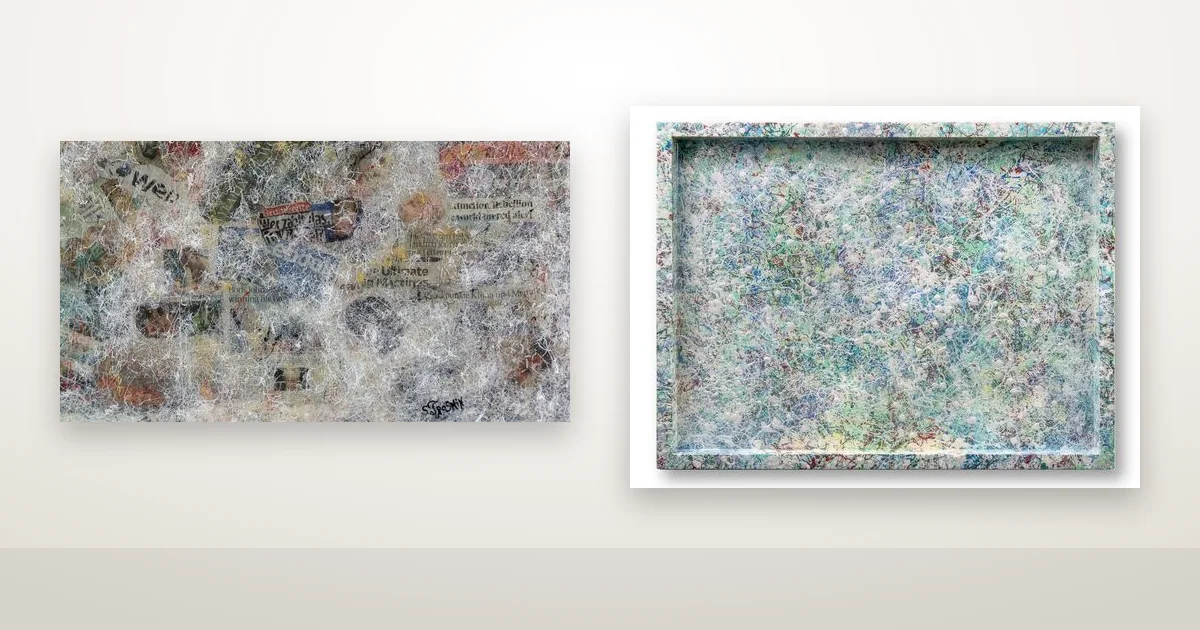
What exactly is the material in this piece? A materials line is a summary, not an inventory. Collage is named on three of the 61 pages and itemised on none of them, so what you can see in the surface of Under Media Cobweb — fragments of printed paper under a dense white web — is described by the page only as collage. Two sides painted appears on three pages, Zwei Goldfische among them, and no page explains whether that means the back of the board or its edges, which changes how you would hang it. And exactly one work in the catalogue is sold framed: Morning Forest in Meißen. For everything else, a frame is a decision, not a given.
Questions about the buying itself
The commercial answers are the same on every page of this site, so you can check them before you write to us rather than after.
- Price. Shared on request. There is no online checkout here, because each piece is one of a kind and we would rather answer your questions first.
- Authenticity. Every artwork leaves the studio with a Certificate of Authenticity, signed and sealed by the artist. Keep it with the photographs, not in a drawer with the receipts.
- Availability. Of the 61 works, 45 are available, 11 are marked Sold, three are Sold — Private Collection and two are Private Collection. If a label is unclear, we wrote about Sold, Private Collection and Available separately.
- Delivery. Shipping is quoted per piece and packed individually. If the work is travelling any distance, our note on shipping an original across Canada covers what to agree in advance.
- Seeing it. Works can be viewed in person in Markham by appointment. A poured resin face is the hardest surface to judge from a photograph, because it reflects whatever room it is standing in.
If it is your first original, the questions in choosing your first artwork come before these ones. Everything here is about the piece you have already decided you want.
One last question, for us rather than for the painting
Ask who made it and how you can check. On this site that answer is short: one artist, Sergei Troshin, self-taught, based in Thornhill, working across the 61 originals in the Artworks collection. A small gallery with one artist can answer every one of the nine categories from memory. A shop selling work it has never handled usually cannot, and that difference is worth one email.
If there is a piece you are weighing up, send us its title and ask whatever is missing from its page — weight, condition, what the collage is, how it hangs. Write to us or call +1 (416) 919-8331, and come and stand in front of it if you can.