Every artwork page on this site ends with the same sentence: shipping is quoted per piece and packed individually so the work travels safely. That line is true, and it is also all it says. This note is what sits behind it — what actually decides the quote when an original is shipped across Canada, what a cold truck does to a painting, and the questions worth asking us before you pay for anything.
Why nobody can quote you a shipping price from the photograph
Because four things decide the cost and none of them are visible in a picture. Our Terms of Use name them plainly: shipping is quoted per piece “because size, weight, rigidity and framing differ for every artwork”. In this catalogue those four run further apart than most people expect, so a single flat rate would be wrong for nearly every work in it.
Here is the spread, counted across all 61 works in the catalogue rather than estimated:
- Size — the longest side runs from 14 in to 80 in. Sixteen works are 16 in or less on their longest side; seven are 48 in or more.
- Rigidity — of the 48 works that hang on a wall, 32 name a rigid support (wood, hardboard, fibreboard, plywood, panel), 11 are on canvas, one is on paper, and four name no support at all.
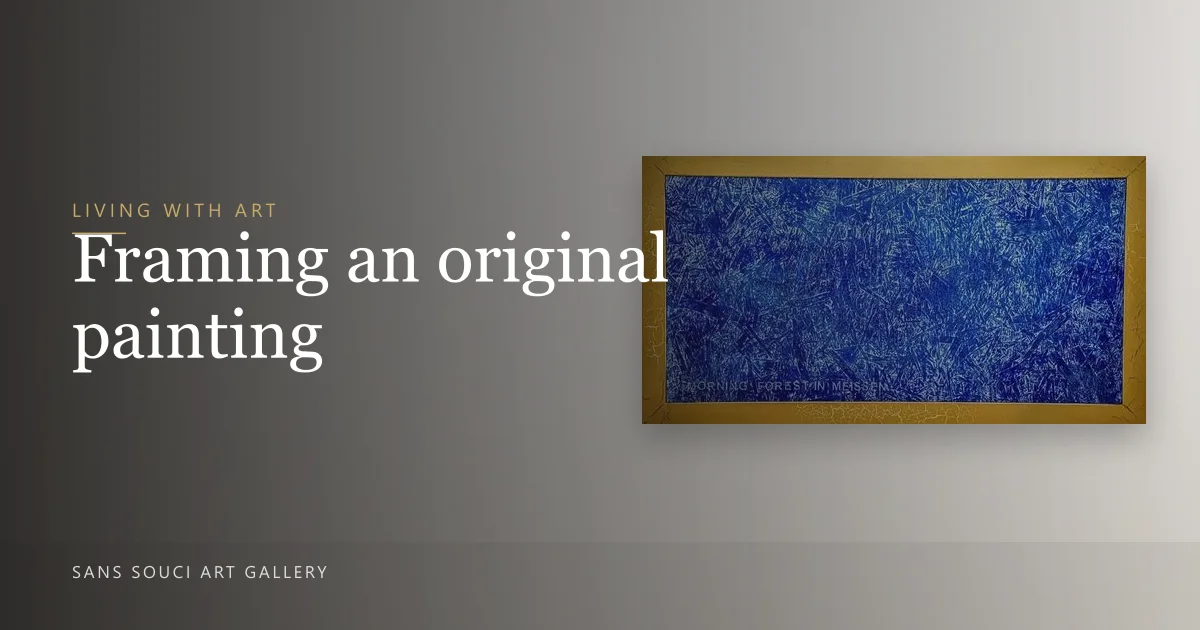
- Framing — exactly one work in the whole catalogue is framed: Morning Forest in Meißen. Everything else travels unframed, which changes the packing rather than simplifying it.
- Shape — thirteen pieces are painted furniture and objects. A side table or a hand-painted glass is not a flat parcel at all.
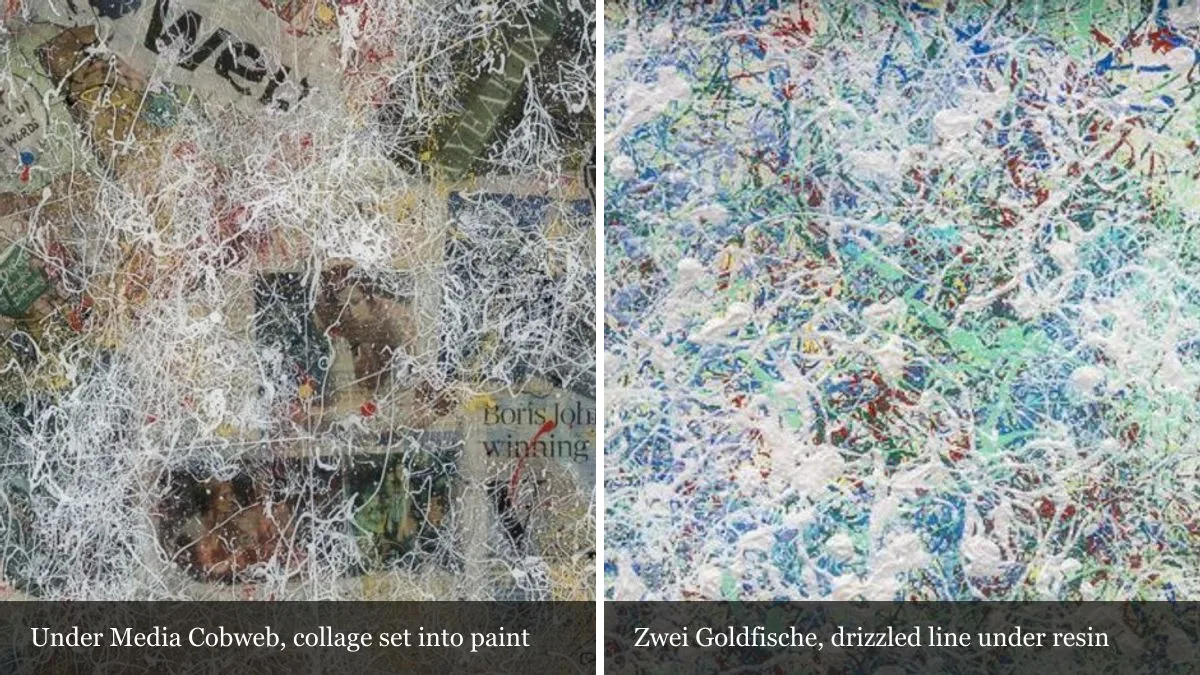
What the two ends of this catalogue look like
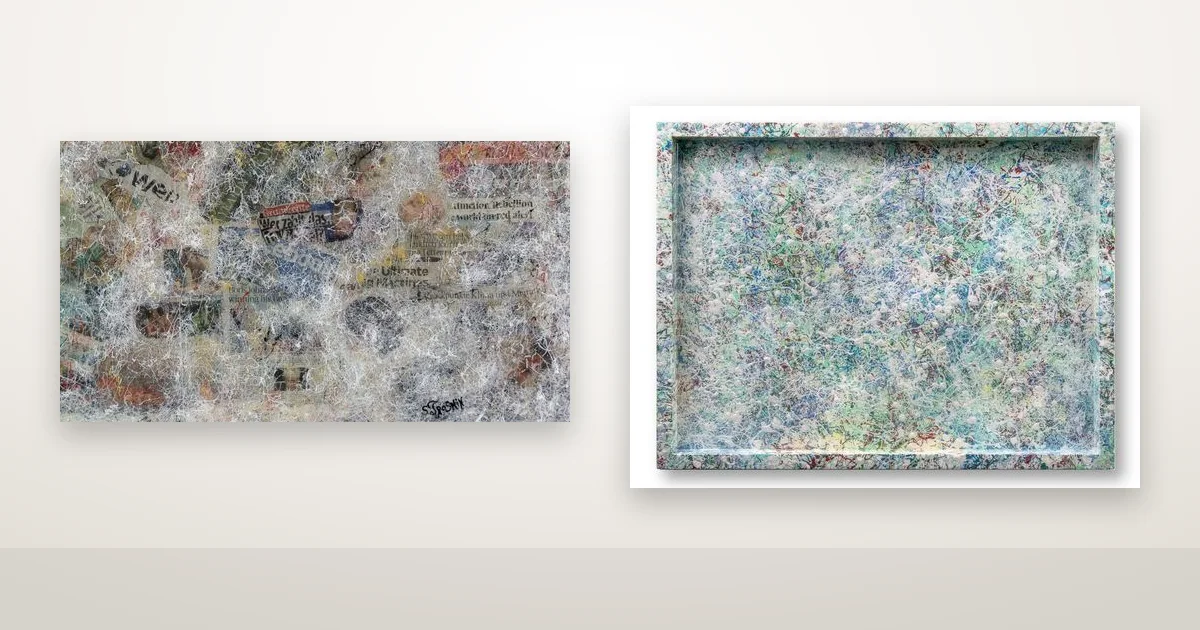
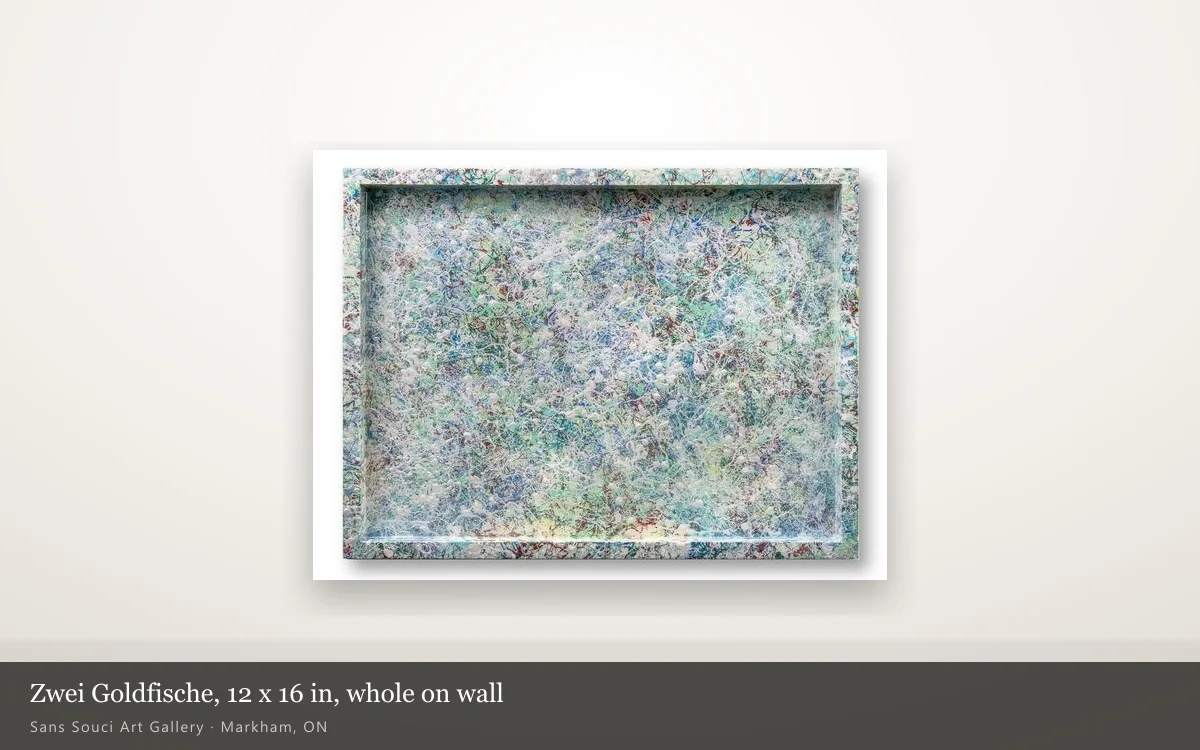
The largest work here is Under Media Cobweb, 60 × 80 in, mixed media with collage, acrylic and resin. The other end is a piece like Zwei Goldfische, 12 × 16 in on wooden board sealed with resin. Both are available, both are by Sergei Troshin, and they are not the same shipment in any respect.
| Under Media Cobweb | Zwei Goldfische | |
|---|---|---|
| Size | 60 × 80 in (152.4 × 203.2 cm) | 12 × 16 in (30.5 × 40.6 cm) |
| Completed | 2019 | 2020 |
| Materials | Mixed media, collage, acrylic, resin | Acrylic on wooden board, sealed with resin |
| Support stated on the page | None — the materials line stops at “mixed media” | Wooden board, so rigid |
| Painted faces | One | Two — the page records “Two sides painted” |
| Fits a standard parcel | No | Yes |
| Status | Available | Available |
Two rows there do real work. The first is the support: for the biggest piece in the catalogue, the page does not say what it is built on, and rigidity is one of the four things the quote depends on. Three other wall works have the same gap. If you are looking at one of them, ask us — the page simply never recorded it. What a support changes in general is the subject of an earlier note on canvas, wood and board.
The second is “Two sides painted”, which appears on exactly three pages here and reads like a footnote until something has to be packed. The standard method for wrapping a painting, set out in the Canadian Conservation Institute’s Note 10/16 on wrapping a painting, involves laying the work face down onto a prepared board. A piece finished on both sides has no face to lay down. It needs a travel frame that touches nothing but its edges — which the CCI also recommends more broadly, calling that kind of frame “especially appropriate for acrylic paintings and other paintings whose surfaces are too fragile to be in any contact, even temporarily, with a travel frame”. Fifty-six of the 61 materials lines in this catalogue name acrylic.
What cold does to a painting between here and the coast
It makes it brittle. The CCI is direct about this in Note 10/15 on paintings prior to travel: a painting “is more vulnerable to damage in cool temperatures, and should, therefore, not travel in an unheated vehicle in cold weather”. For a work leaving Markham in February for Calgary or Halifax, that single sentence is most of the shipping decision.
The same Note recommends heated air-ride trucks in cold weather “because painting materials become more brittle and easily damaged in low temperatures”, and adds a caution worth having before you pay for a climate-controlled service: shipping vehicles with air conditioning “are normally equipped to maintain temperature, not RH”. They hold the heat steady, not the humidity. Packing carries the rest, and the CCI’s Note 20/3 on safe shipment puts a number on how much: typical packaging buys “anywhere from 30 minutes to several hours of protection against sudden temperature changes”, and where controlled transport is genuinely needed, the standard specification is reliable control between 15°C and 25°C.
Note 10/15 also singles out mixed-media work, which describes a good part of this catalogue. Such pieces, it says, are “often… not framed and their surfaces can be particularly vulnerable during handling and travel”; the different materials respond differently to changes in humidity, and “component parts may loosen or detach”. Under Media Cobweb has collage set into its surface, so parts of it carry their own edge and their own thickness. Note 20/3 calls the shipping crate “the first line of defence against shipping hazards”, and a work of that size and construction is squarely in crate territory rather than parcel territory.
What a courier does not do
It does not pack your painting. The CCI states it flatly: “in most cases, a shipper does not pack or protect your painting any further before installing it in the vehicle”. Whatever protection the work carries when it is collected is the protection it has for the whole journey. That is the practical meaning of the line on every artwork page here — packed individually, before anyone else touches it.
Note 20/3 also has advice for the outside of the case: keep the labelling discreet, “fragile” or “handle with care”, and “avoid labelling the crate as art”. It observes as well that a case in good condition and well detailed may itself encourage better handling.
What we do not publish, and what to ask before you pay
Three things are missing from these pages, and it is more useful to say so than to let you discover it later. None of them is being withheld; they were never written down.
- No weight, anywhere. Not one of the 61 pages gives a mass in pounds or kilograms. Note 20/3 opens its packing method by asking for exactly that — the object’s dimensions and weight — because size and weight are what select the vehicle. Ask us for the weight of the specific piece; it is the most useful number we can give you before a quote.
- No support named on four wall works, including the largest in the catalogue. Ask, and we will tell you whether it is rigid or flexible.
- Nothing on insurance, tracking or customs paperwork. Those words appear on no page here. Our terms do say that import duties and taxes outside Canada are the buyer’s responsibility, and that risk and title pass on delivery or collection — which means the moment to inspect a work is before you sign for it, not the following weekend.
Settle the answers in writing before paying. Our terms are explicit that a sale exists only once we have confirmed it with you directly in writing and agreed the price, the delivery method and the payment terms. Delivery method belongs in that conversation, not after it.
When it arrives
Leave it wrapped for a while. This is our own habit rather than a rule from anyone’s conservation note, and the reason is in the numbers above: the packaging is doing temperature work for a limited number of hours, and a sealed wrapping helps isolate a painting from short-term humidity swings as long as the temperature is not swinging too. A parcel that has come off a cold truck is colder than your room. Bring it indoors, let it come up to room temperature before opening it, and unwrap in the room the work will live in rather than in a cold garage.
Then check the work against the catalogue photographs while the packing is still in front of you, and keep the Certificate of Authenticity somewhere other than the back of the frame — it gets pulled out years later, not on the day. Give the surface nothing more than a dry, soft cloth; the short care list covers the rest.
If a piece has your attention and the delivery is the part you are unsure about, tell us which work and where it is going. We will come back with the weight, how it will be packed, and what the carriage costs — or arrange for you to collect it in Markham by appointment. You can reach us through the contact page, or look through the whole Artworks collection first.