Our Terms of Use put the handover in a single line: risk and title pass on delivery or collection. From that minute the work is your property, and insuring an original you already own starts not with a phone call but with a page of facts about the object — what it is, who made it, when, what it is made of, how big it is. Most of those facts are already written on the artwork's own page here. A few are not, and which ones depends on which work you bought.
What changes the day the work arrives
Nothing on your household policy changes by itself: an insurer covers only what it has been told about, and a painting that arrived last Tuesday is not on any list yet. The Financial Consumer Agency of Canada, in its plain-language guide to home insurance, suggests listing your possessions with the cost to replace each item, pictures of your belongings, and receipts for major items. A new original belongs on that list the week it goes up.
Three records exist at that point, and they are not interchangeable. The Terms of Use describe all three. A sale exists only once we have confirmed it with you directly in writing and agreed the price, the delivery method and the payment terms — that written confirmation is your record of what you paid. The Certificate of Authenticity, signed and sealed by the artist, travels with the work itself. And the artwork's page stays online: works that have sold are labelled Sold or Private Collection rather than removed, so the archive stays complete. Sixteen of the sixty-one pages in this catalogue now describe works that already have owners.
The nine things a record of an artwork should contain
There is a published standard for this and it costs nothing to follow. Object ID, maintained by the International Council of Museums, was developed with the museum community, police and customs agencies, the art trade, the insurance industry and valuers of art and antiques. It defines nine categories of information and four steps, and it exists because objects that were never photographed or properly described are rarely recovered and returned to their owners.
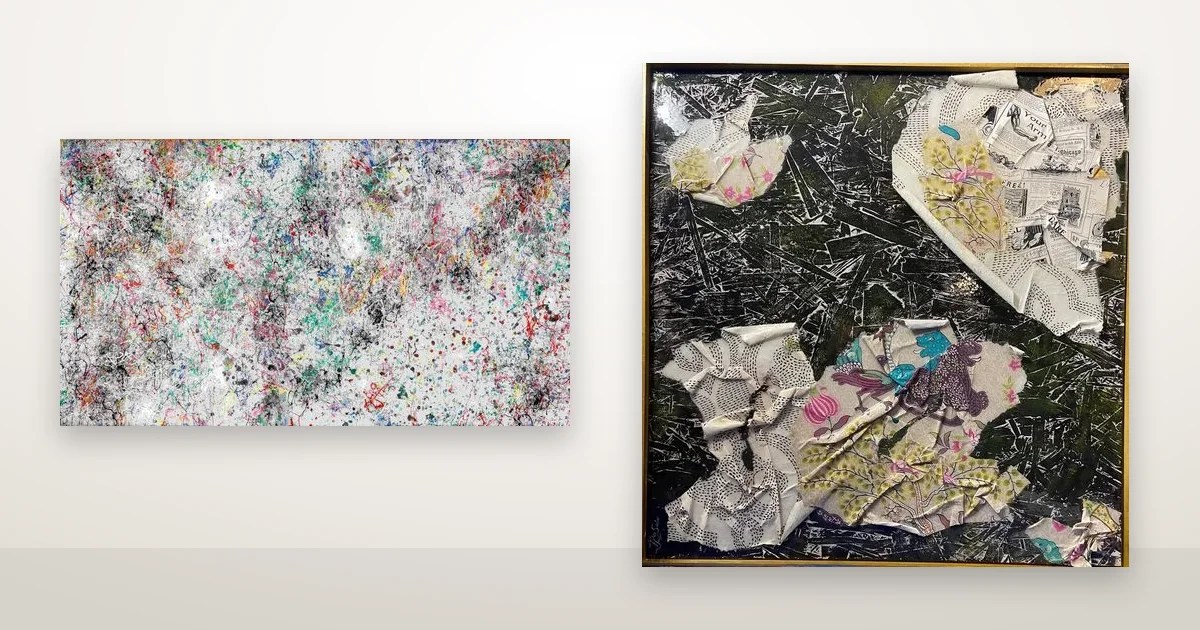
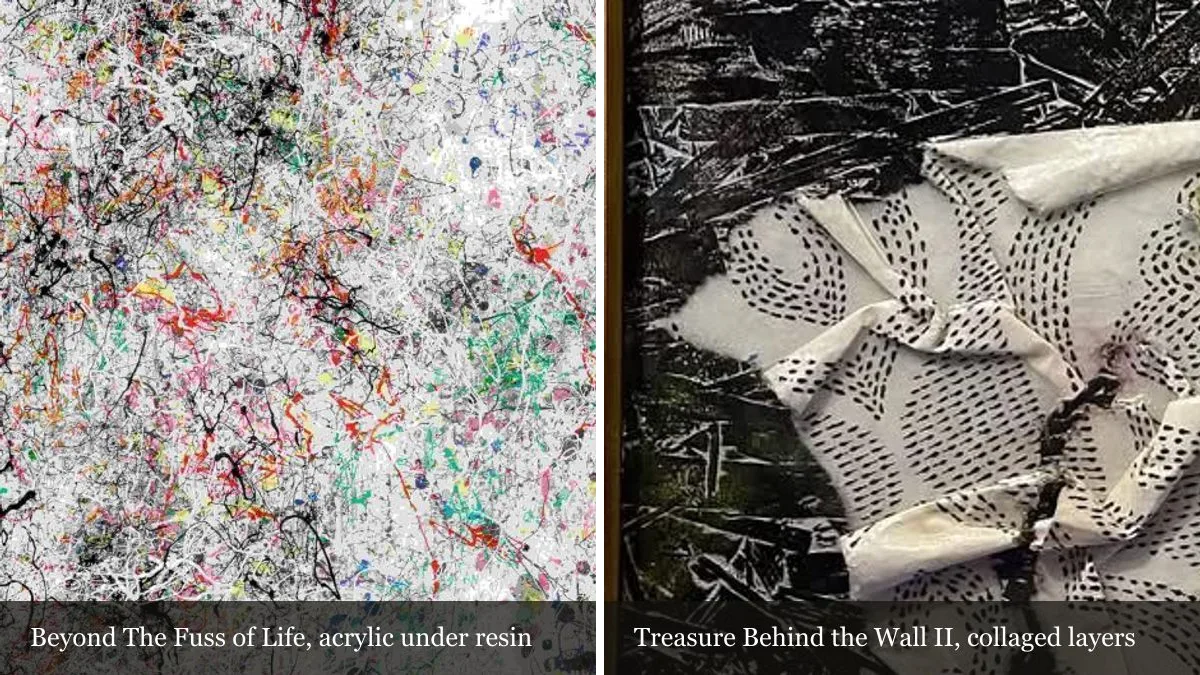
The nine categories are type of object, materials and techniques, measurements, inscriptions and markings, distinguishing features, title, subject, date or period, and maker. The four steps are to photograph the object, identify those categories, write a short description, and keep the documentation somewhere secure. Below is how two works from this catalogue score against that list.
| Object ID category | Beyond The Fuss of Life (2019) | Treasure Behind the Wall II (2024) |
|---|---|---|
| Type of object | Painting; the page states it is built on wooden board | Painting; the page states it is built on wooden board |
| Materials and techniques | Acrylic, sealed with resin, on wooden board | Acrylic painting, collage, diamond dust on wood |
| Measurements | 36 × 20 in (91.4 × 50.8 cm) | Not published |
| Inscriptions and markings | Not recorded | Not recorded |
| Distinguishing features | Not recorded | Layers of wallpaper and diamond dust, described by the artist |
| Title | Beyond The Fuss of Life | Treasure Behind the Wall II (2024) |
| Subject | Not recorded — the page carries no description by the artist | The artist's own description, at length |
| Date or period | Completed 2019 | Completed 2024 |
| Maker | Sergei Troshin, born 1960, Canada | Sergei Troshin, born 1960, Canada |
Two works, two different gaps
The two pages fail the standard in opposite places, so what one work publishes tells you nothing about the next. Beyond The Fuss of Life is fully described as an object: acrylic sealed with resin on wooden board, 36 × 20 in, completed in 2019. What it has no words for is the picture. No description by the artist was ever published for it, so the two categories that ask what the work depicts and what makes this one recognisable are blank.
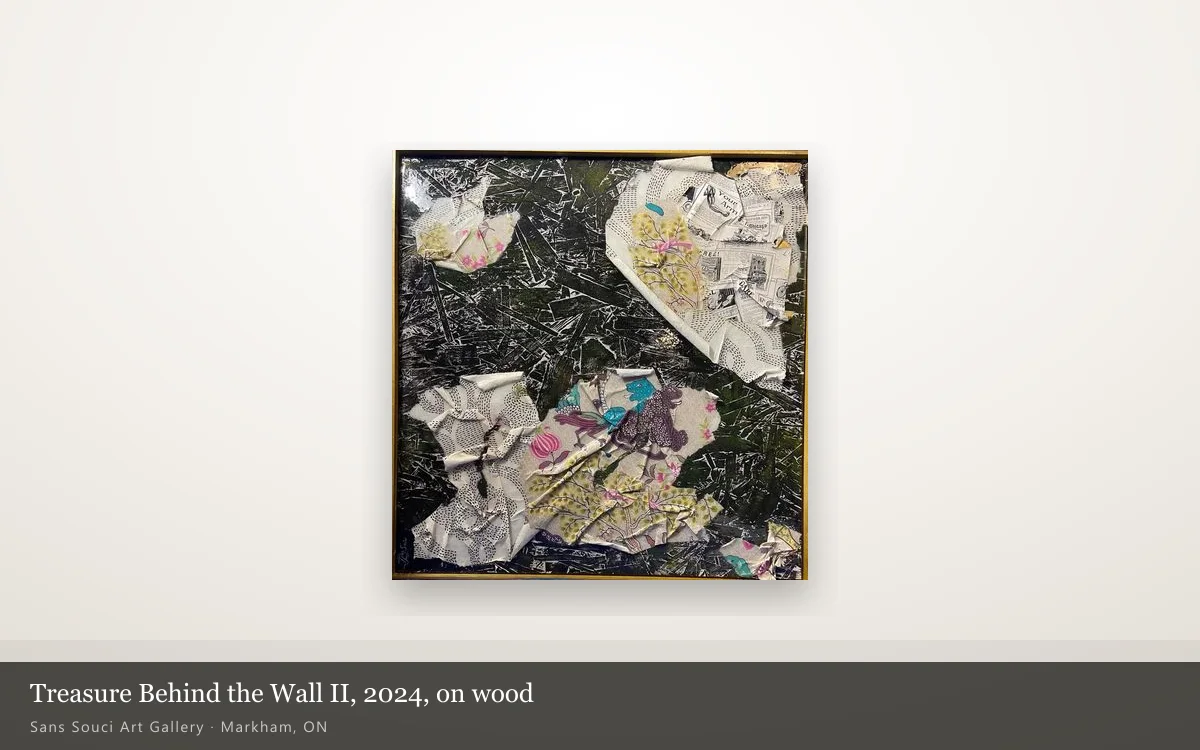
Treasure Behind the Wall II is the mirror image. It has the artist's words at length — beneath the multiple layers of wallpaper, the intricate abstract pattern of the wall emerges, and the shimmering diamond dust on its surface captivates anyone who takes the time to notice it — and it has no measurements at all. Forty-seven of the sixty-one works in this catalogue publish their dimensions. Fourteen do not, and this is one of them.
A description is also not automatically a distinguishing feature. Five pages here carry exactly the same artist's text, word for word — a textured imitation of snakeskin under multiple crystal clear coats of epoxy — and not one of those five publishes a size either. Quoted from memory, that sentence would not tell anyone which of the five works had gone missing. Your own photograph is what separates them. That is why photographing the object is Object ID's first step: it records the subject, the distinguishing features and the current condition at once, and it is the only part of the record nobody else can make for you.
What these pages never record
The catalogue is an archive of the work, not a record of its ownership. None of what follows was withheld: it was never written down, and some of it never could be by us, because it changes after the work leaves.
- Value — no page carries one. Prices are shared on request only.
- Provenance — the page shows what the work is and who made it, not who has owned it since, and none of the sixty-one carries an exhibition record.
- Condition — the photograph shows the work as it left the studio, which is useful, but it is not a condition report.
- Weight — not published for any of the sixty-one, which also matters whenever a piece is moved or shipped.
- Signature — the Certificate of Authenticity is the signed document; the pages do not describe markings on the work itself.
The Certificate is the one piece of paper that does this job, and the Terms say why: keep it, because it is the document that supports the work's provenance, and it matters for insurance and for any future sale. We wrote a whole note on what a Certificate of Authenticity actually is.
Price, value, and the word "replacement"
The price you paid is not a valuation, and we cannot turn it into one. Prices here are quoted individually, and a quotation is valid only for the period stated in it — that number describes one day, not the work. If your insurer wants a current value in writing, that is an appraiser's job. We are a gallery, not an appraiser and not a broker.
The word to watch on your own policy is replacement. The Financial Consumer Agency of Canada sets out two settlement bases: actual cash value, which pays the cost of the item when it was new minus depreciation, and replacement value, which pays the actual cost to replace an item after a covered loss. Both descriptions assume the item can be bought again — the agency's own worked example is a computer, replaced with a new one of similar quality. There is no second Beyond The Fuss of Life, and there never will be, because a sold original is not restocked. That is not an argument against insuring it. It is the reason to ask your broker, in advance rather than at claim time, how a one-of-a-kind object is handled under your policy and what documentation they want on file.
One more line from the Terms belongs here: buying an artwork transfers ownership of the physical object, not copyright or any reproduction right. Insurance covers the object. A damaged original cannot be replaced with a print of itself.
Make the condition record while nothing is wrong
Photograph the work now, while it is undamaged, and write down what you see. The Canadian Conservation Institute makes the case better than we can in its note on condition reporting for paintings: a report kept systematically documents any changes over time, and one made before acquisition gives a buyer the information required to gauge whether they can provide the necessary care. Made after acquisition, it does the same job for a claim.
- Photograph the whole work square-on in daylight, with a tape measure or a ruler in the frame.
- Take one raking-light shot — a lamp low and to one side — so texture, collage and a resin face read as depth rather than glare.
- Photograph the back, and any label, hook or fixing on it.
- Measure it yourself and write the numbers down, especially if your piece is one of the fourteen whose page gives no size.
- Keep the photographs, the measurements, the Certificate and the written sale confirmation together, and keep a second copy somewhere that is not the same building.
It is a short job, and it produces the file an insurer, an appraiser or the police would each ask you for. The ordinary care that keeps a claim from being needed at all — stable temperature, no direct sun, a dry soft cloth — is the short list in our note on looking after an original at home.
If you own one of ours
Find your work in the artworks catalogue. The page is still there, its address is a stable link you can paste into your own file, and reading it against the nine categories above shows you exactly what to fill in by hand. If you are adding a second or third piece over the years, that same file is what turns following one artist into a collection with a paper trail. And if something on your work's page is wrong or missing — a size we never published, a detail that belongs to a different piece — write to us with the title, or call, and we will go through what the page records and what it does not.