On the Artworks page, most pieces carry no label at all. A few carry one word under the image — Sold, or Private Collection — and on a handful of pages both words appear together. None of it is decoration. Each label is doing a specific job, and it is worth knowing what before it changes how you read the rest of the collection, and before it changes what you expect to happen next if you reach out about a piece.
What does Sold actually mean, next to Private Collection?
Practically, nothing different. Every page that carries either word runs the same sentence underneath it: the piece "has found its owner and is no longer available." Sold and Private Collection are two different words for the same status. Only a page with no label still has an owner to find.
An unlabelled page follows a shorter, more direct path than either of those. There is no price shown, because prices are shared on request rather than posted; no online checkout, because each piece is one of a kind and the gallery would rather answer questions first; a viewing by appointment in Markham if you want to stand in front of it before deciding; and, once it sells, a Certificate of Authenticity signed by Sergei Troshin travels with it from that point on. The label at the top of the page is simply where that process starts, or where it has already finished.
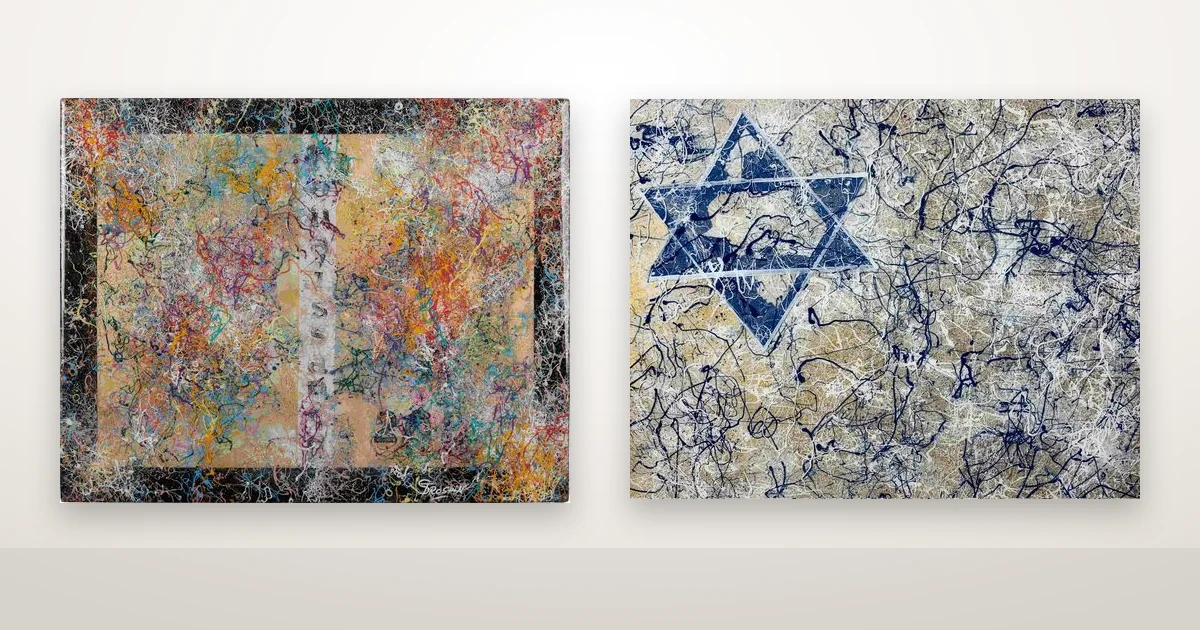
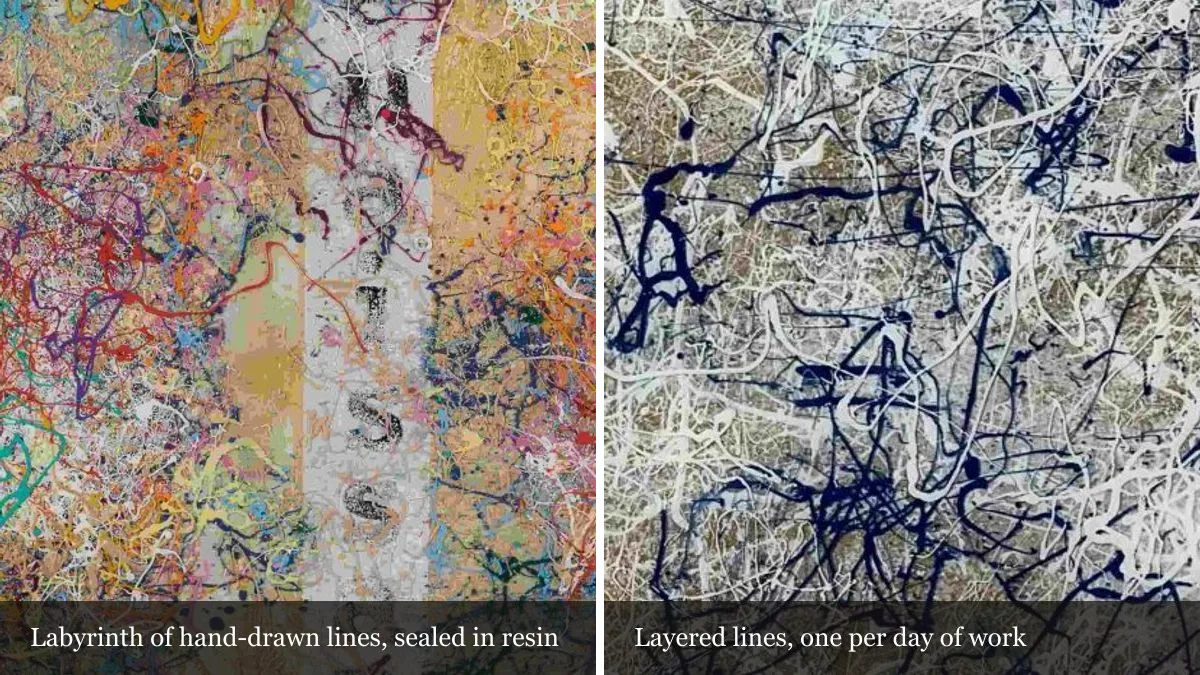
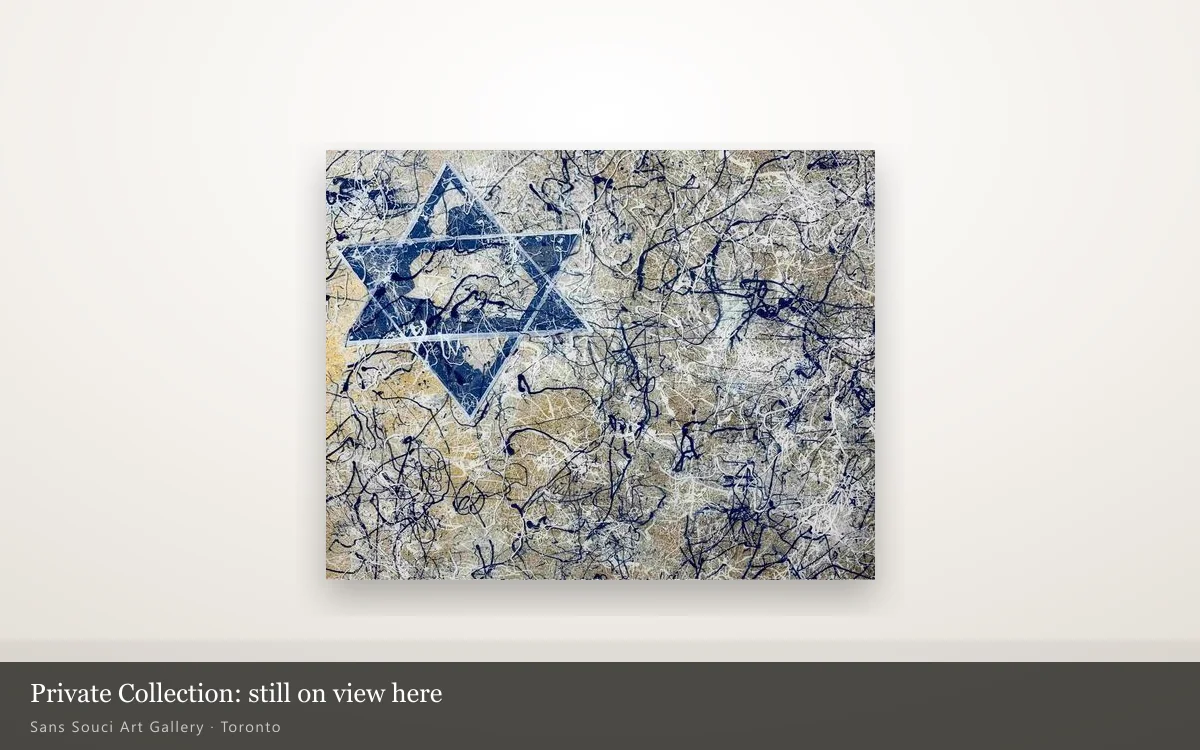
Take two pieces from the same year. Renaissance 2020 carries a plain Sold badge. My Star, also from 2020, carries Private Collection instead. Read the fine print on either page and it says exactly the same thing, word for word: "this piece has found its owner and is no longer available. It stays here as part of the artist's archive." Both are acrylic sealed with a poured resin coat — Renaissance 2020 on hardboard, My Star on wooden board — which is the same finish discussed in What a Certificate Actually Does: a hard, glass-like film that deepens the colour underneath and gives the surface a reflective face. Tate’s glossary entry on resin explains the material in more detail.
Why does a sold painting stay on the website at all?
Because that is what the line under the badge says on purpose: "It stays here as part of the artist's archive." A sold or privately held piece is not deleted or hidden once it changes hands. It stays listed, described and photographed exactly like an available one, so the site works as a running record of what Sergei Troshin has made, not only a shop window of what happens to be on the wall this particular week.
That is also why both pages carry the same invitation rather than a dead end: "If it speaks to you, get in touch — Sergei Troshin takes commissions and often has related work from the same series." Both pages also point sideways rather than only backward: Renaissance 2020's own "From the same year" section links out to Decorative Composition 1, 2 and 3, and My Star's does exactly the same. Follow either the sold page or the private-collection page far enough and you land on the same three pieces — which is the practical payoff of keeping an archive rather than trimming it down to only what happens to be for sale this week.
- No label — available now, price on request, no online checkout
- "Sold" — no longer available, already has an owner
- "Private Collection" — no longer available, already has an owner
- "Sold — Private Collection" — the same status, both words together
Renaissance 2020 and My Star, side by side
Same year, same family of finish, different label wording and a different size — which is exactly what makes them a fair comparison rather than a coincidence.
| Renaissance 2020 | My Star | |
|---|---|---|
| Label | Sold | Private Collection |
| Year | 2020 | 2020 |
| Material | Acrylic, resin on hardboard | Acrylic on wooden board, sealed with resin |
| Size | 20 × 16 in | 12 × 16 in |
| Certificate | Included, signed by the artist | Included, signed by the artist |
A third wording exists too, on a small number of pages: Decorative Composition 3, also 2020 and also acrylic and resin on hardboard, carries the badge "Sold — Private Collection." Its own page runs the identical sentence as the other two. Three different labels, one status, and — as the table above shows — the certificate line does not change with any of them either. That is the one detail that stays constant across every piece in the gallery: only whether the signed certificate already sits in an owner's file, or is still waiting to be written.
What this means if you are browsing
A Sold or Private Collection page is not a dead end. It is still the fastest way to see what Sergei Troshin's work looks like at full scale, in a real room, before you ask about anything. If nothing on the page is labelled at all, that piece is the one you can still buy today — there is no online checkout, so the next step is simply asking. If a sold or privately held piece is what caught your eye, the same page tells you where to go next: get in touch about a commission or a related piece from the same series, or browse the current Artworks collection for what is on the wall in Markham right now.