A sold painting and an available one look identical hanging side by side. Nothing about the canvas or the panel changes when a sale happens — what changes is one signed sheet of paper that starts travelling with the work from that point on. At Sans Souci, that sheet is the Certificate of Authenticity. Most buyers think about it once, on the day they sign for a piece. It matters again much later, and by then it is often the only thing in the room that can speak for the painting.
What does the certificate actually record?
It ties one specific, physical object to Sergei Troshin: the title, the medium, the size, the year, and a signature, matched to the exact piece it travels with. It is not an appraisal, a guarantee of future value, or a third-party authentication — it is the artist's own record that this piece came from his studio.
The signature on the certificate is meant to be checked against the signature on the piece itself, not treated as a separate promise. A certificate with no matching signature on the work, or a signature with no certificate behind it, is exactly the gap the document exists to close — which is why the two are written and issued together, never one without the other.
Every piece in the gallery is a unique original, one of one — nothing is sold as a print or an edition. There is no run number to check against a registry the way there would be with a limited print. For a one-of-one painting, the certificate is effectively the only paper record that exists apart from the object itself, which is why the gallery writes and signs one for every piece that leaves, whether it is heading to a new home the same week or sitting on a wall in Markham for years first.
Why does it matter more later than on the day you buy?
On the day of a sale, the context is all around you: the gallery, the conversation, the artist's own description of the piece. Ten or twenty years on, none of that travels with the painting except the certificate. It is what lets someone who was never in the room — an insurer, an appraiser, an heir — trust what they are looking at.
None of these moments happen while the painting is still visibly connected to the gallery. They happen in a different living room, a storage unit, or a lawyer's office, years after the piece last had anything to do with Markham. The certificate is what carries that connection forward without anyone needing to remember it by heart.
We touched on this briefly as one line in a first-purchase checklist in How to Choose Your First Artwork. This is the fuller version of that one item, because the moments it actually gets pulled out of a drawer for tend to arrive later, and unannounced:
- Insuring the piece at its replacement value
- Selling it privately or through an auction house
- Passing it on as part of an estate
- Donating it to a gallery or institution
- Simply confirming what it is, after years in storage or a move
Keep the certificate the way you would keep any other document tied to something valuable: somewhere dry, separate from the painting itself so a single fire or flood cannot take both, and known to whoever manages your affairs. The American Institute for Conservation publishes plain-language guidance on caring for artwork at home — the same principle of stable, protected conditions applies to the paper as much as the paint.
Two certificates, two different moments
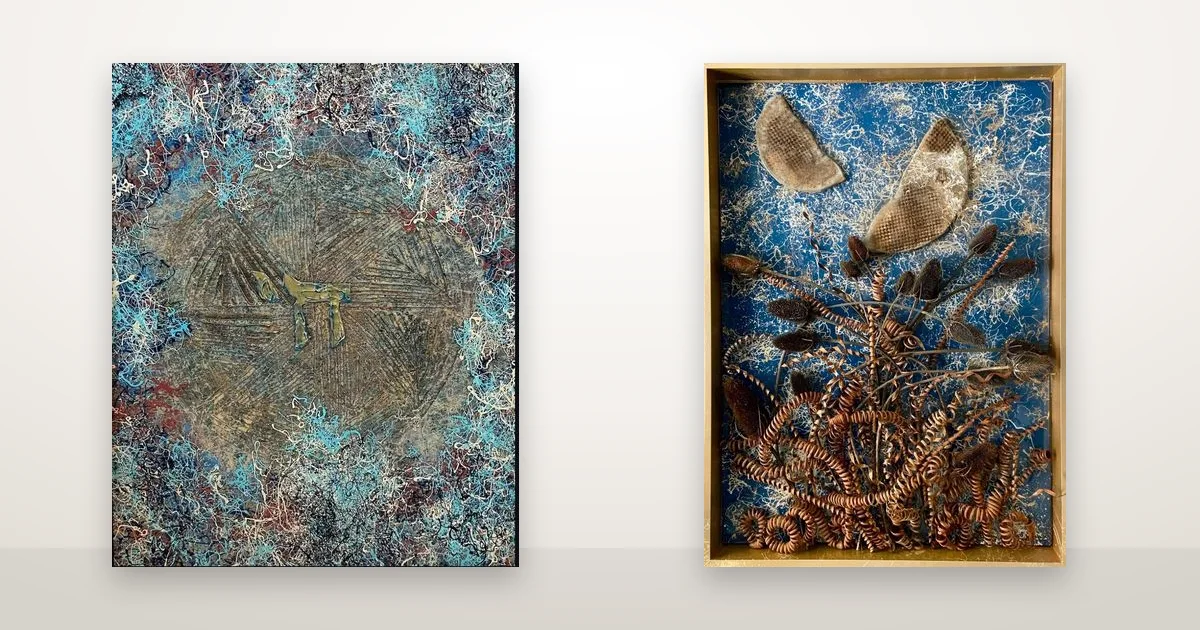
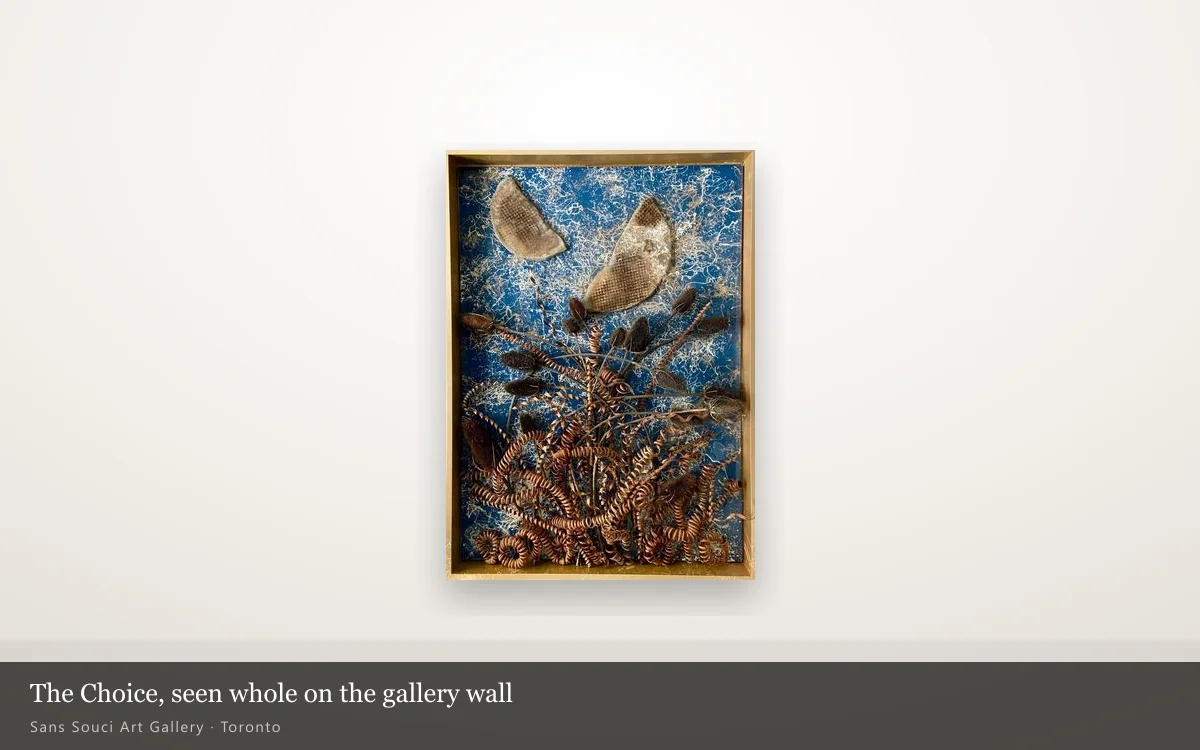
Wheel of Fortune (2024) already has an owner, and its certificate is already in that owner's file — the painting stays in the gallery's own photographs as part of the artist's archive, but the physical piece and its paperwork moved together. The Choice (2026) is still in the gallery, and its certificate will be written the day someone buys it. Same document, same promise, two different points in a painting's life.
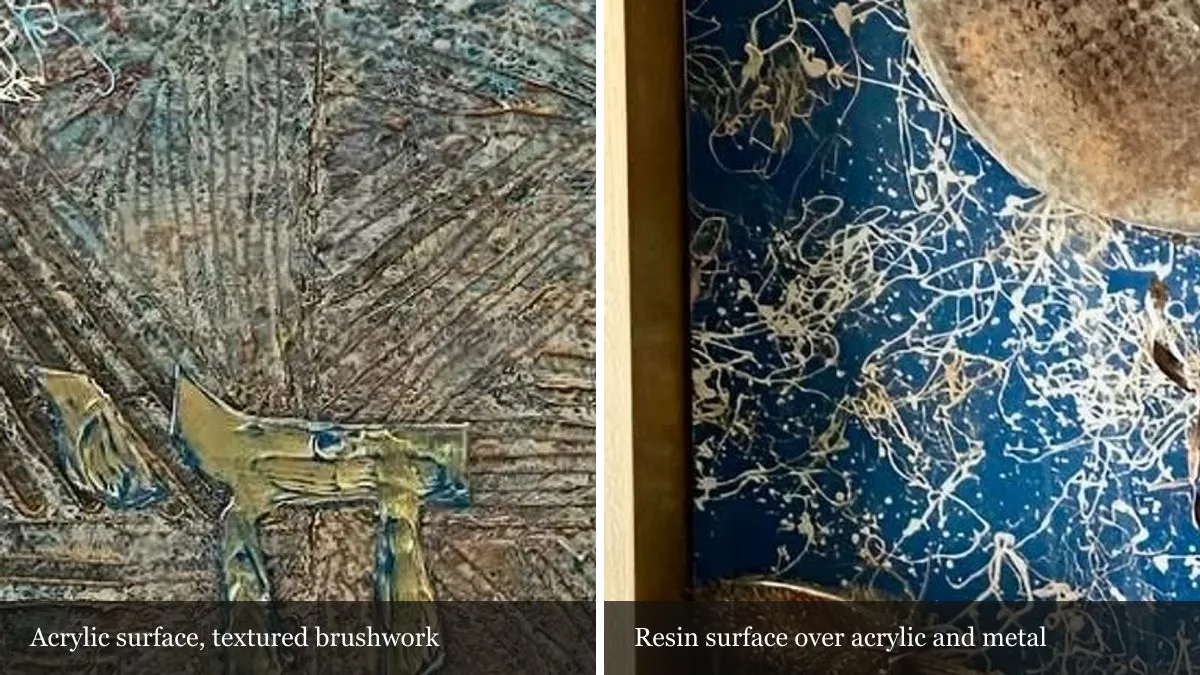
Wheel of Fortune is built around חַי, the Hebrew word for "life", set at the centre of a turbulent, circular field of texture; the description on its own page speaks of the symbol resisting the pull of history's chaos while the quiet presence of life remains, fragile but unbroken. That is a specific meaning the artist attached to this exact piece — the kind of detail that only survives with the object if someone can point back to it later. The certificate itself carries none of that description; what it does is anchor the object the description belongs to, so the meaning has something solid to stay attached to.
The Choice works differently: a broken moon over a restless landscape, with tangled lines beneath the surface standing in for doubt and consequence, and thin traces of light that persist rather than resolve. It is newer, built on panel with acrylic, resin and applied metal elements rather than acrylic on canvas, and it has not sold yet — its certificate exists only once a buyer is confirmed, not before.
| Wheel of Fortune (2024) | The Choice (2026) | |
|---|---|---|
| Status | Sold | Available |
| Medium | Acrylic on canvas | Mixed media: acrylic, resin, metal elements on panel |
| Size | 18 × 20 in | 15.7 × 23.6 in |
| Certificate | Issued at sale, now with the owner | Will be issued the day it sells |
Every artwork at Sans Souci leaves the studio with a Certificate of Authenticity, signed and sealed by Sergei Troshin, whether it is already on its way to a new home or still waiting in Markham. If you would like to see how a certificate is written to match its painting, or you already own a piece and want to talk through how to keep track of one, get in touch. You can also browse the current Artworks collection.