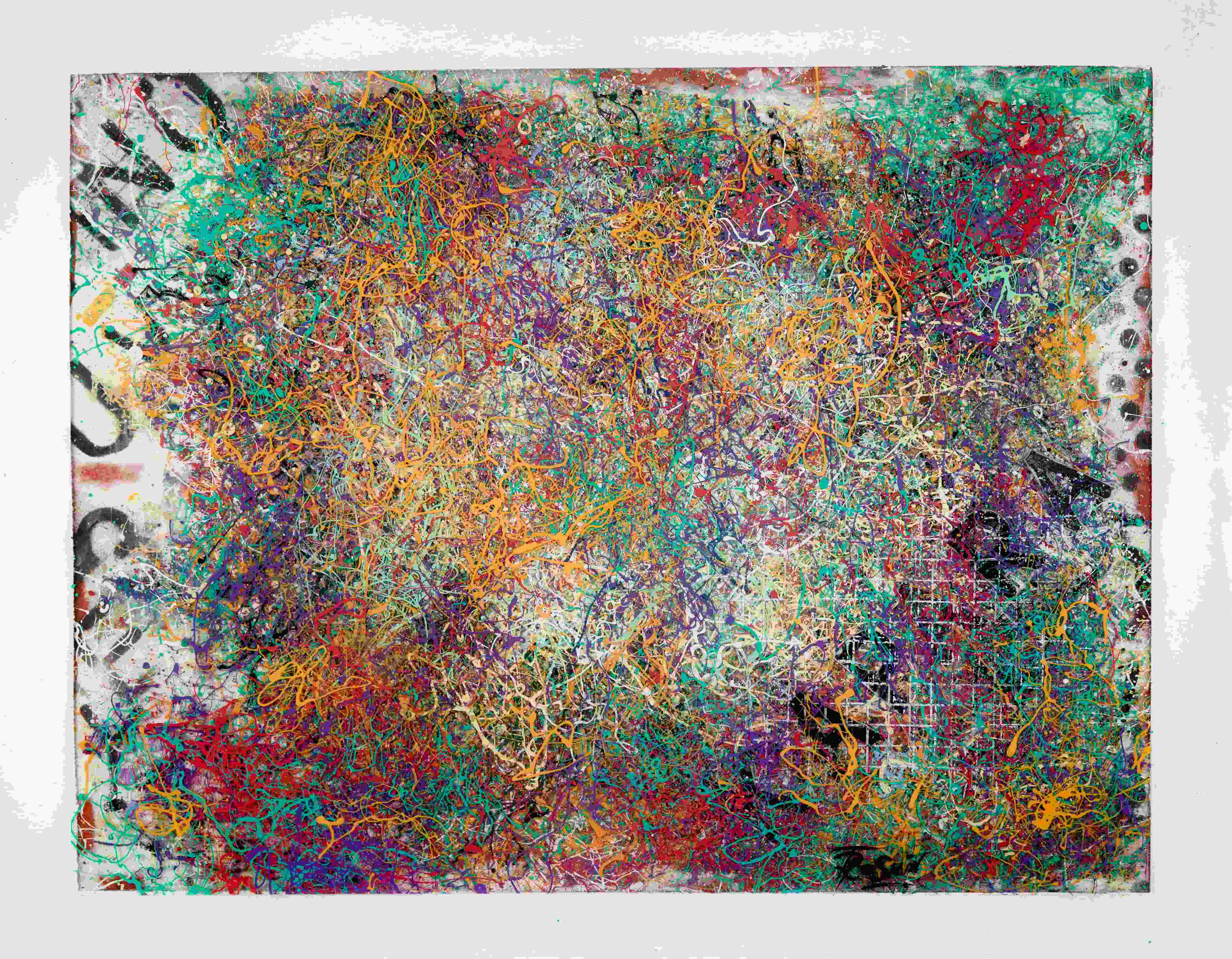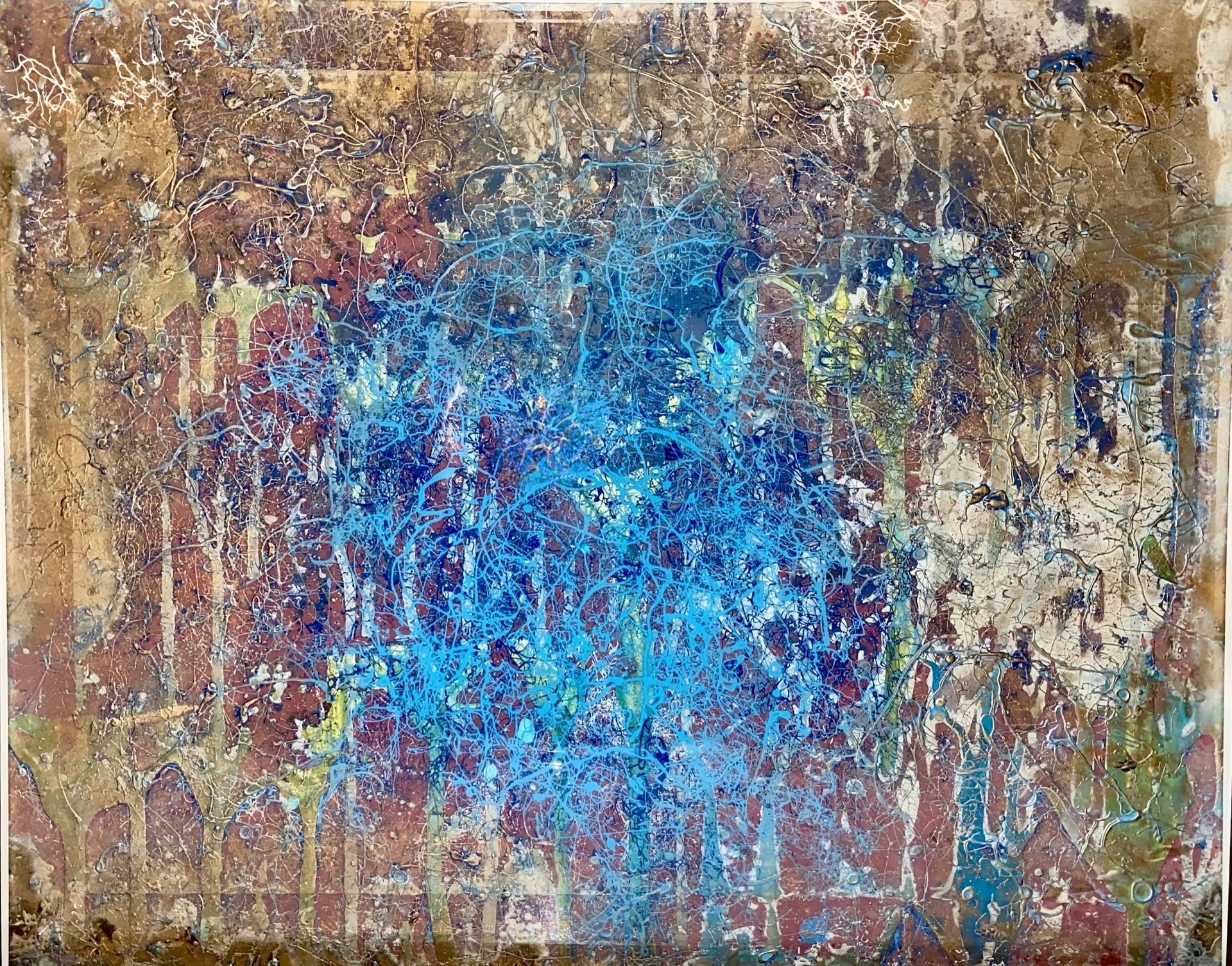
What actually makes a painting an original?
There is exactly one of it, and the artist made that one by hand. Nothing here is printed, and nothing is a copy of a painting that already exists somewhere else. That sounds obvious until you start looking online, where the same image is sold as a canvas print, a poster and a "gallery-quality reproduction" at the same time.
Three words get used loosely, and the difference is worth ten seconds of your time. An original is the object the artist worked on — the paint on this surface is the paint they applied. A fine-art print is still made by hand, but as a numbered impression, so there are several. A reproduction is a photograph of an existing painting, printed by machine, usually without the artist involved at all. The first has a surface you can look across; the third has a surface you can only look at. Original, print, reproduction sets out how to tell them apart from a listing alone.
Every piece that leaves this gallery is signed and comes with a Certificate of Authenticity from the artist — a document that records which object it is and that he made it. It is not an appraisal and it says nothing about value; it is the piece of paper an insurer or a family member will ask for years later. What a certificate of authenticity actually says explains the difference.
Why is there no price under the photograph?
Because each work is one of a kind, and there is no online checkout on this site. Prices are on request, sitewide, and asking carries no obligation at all — you name a painting, we tell you what it is, and that is the end of it if you decide against it.
This is the part first-time buyers find most uncomfortable, so here is what is actually behind it. A gallery that sells editions can print a number under a photograph because there are twenty of the thing. Here there is one, and what it costs depends on the piece rather than on a category — size, materials, and how long the surface took. Shipping is quoted per work for the same reason: a 60-inch board and an 11-inch canvas are not the same parcel. Nothing about this is a negotiation tactic; it is just what a single object requires.
Two things follow from it that work in your favour. You will speak to someone before you buy rather than after, which is when the useful questions get answered. And nothing is sold out from under you by an automatic cart — the label on the page tells you the state of the work, and sold, private or available explains how to read it. Sold work stays on the site marked as sold, as part of the artist's archive, rather than disappearing.
How do you know whether you actually like it?
By how long you keep looking, not by whether you can explain it. That is the whole test, and it is the one experienced buyers use too. If you have walked back to the same painting three times, that is the information you came for.
The two instincts that mislead people are matching and meaning. Matching — choosing a painting because its colours agree with a sofa — produces a room that looks coordinated for about a year and a painting you stop seeing. Proportion matters more than palette: which colour holds most of the surface, not which colours appear in it. Meaning is the other one. Abstract art does not have a hidden answer you are failing to find, and you are allowed to buy a work you do not fully understand yet — most of the interest in living with one comes from that. Living with a piece you do not fully understand and what abstract art is not both go further into this.
One honest warning about screens. A photograph is taken under even light and flattened to a rectangle, so it loses depth, scale and reflection — the three things that decide how a painting behaves in a room. A poured resin face, for example, deepens the colour underneath and gives the work a reflective front that a camera simply flattens out. If you can come and stand in front of the work, do; if you cannot, ask what the photograph is not showing you.
What should you check about the wall before you buy anything?
Four things, and all of them take a few minutes at home rather than any expertise. This is where first purchases actually go wrong — almost never on taste.
- The measurement, taped out. Put painter's tape on the wall at the piece's dimensions and leave it a day. A 24 by 24 inch work sounds small and reads much bigger on a narrow wall. Roughly the piece's own width of free wall on each side is a reliable rule; choosing a scale for a wall covers the rest.
- Where the light comes from. Light arriving from the side shows a built-up surface; light arriving straight on flattens it, and on a resin face it gives you reflection instead. A wall opposite a window is usually the worst spot in the room for a glossy piece.
- What the wall is made of. Drywall, plaster, concrete and a rented wall you must not damage all need different fixings, and a rigid board sealed with resin weighs more than a stretched canvas of the same size. How to hang a heavy painting and hanging art in a rental deal with both cases.
- The route in. Stairwell, lift, door frame, corner. Worth checking before a 4-foot board is on its way to you rather than after.
None of the artwork pages here publish a weight, so if the fixing matters to you, ask us for the piece you are considering rather than estimating from the photograph.
Which pieces are a sensible place to start?
Small to mid-scale work on canvas or board, which is where most of this catalogue sits. Measured today: the catalogue holds 61 works, 13 of which are painted furniture and objects rather than wall pieces, and of the 48 wall works, 34 carry no sold or private label — so a first-time buyer has real choice rather than three leftovers.
Six available originals, in order of size, that show the range without asking you to commit to a wall-sized piece:
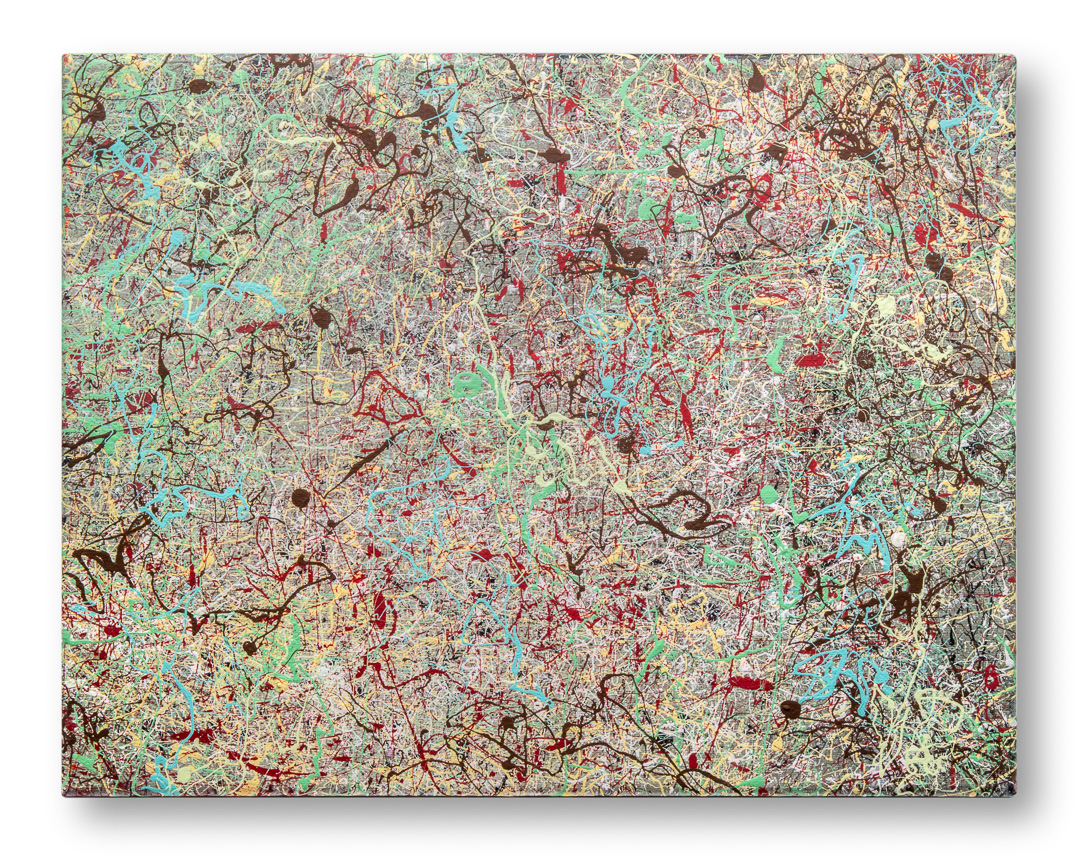
- Spring Thoughts (2019) — acrylic on canvas, 11 by 14 inches. The simplest possible start: light, one hook, no coating to think about.
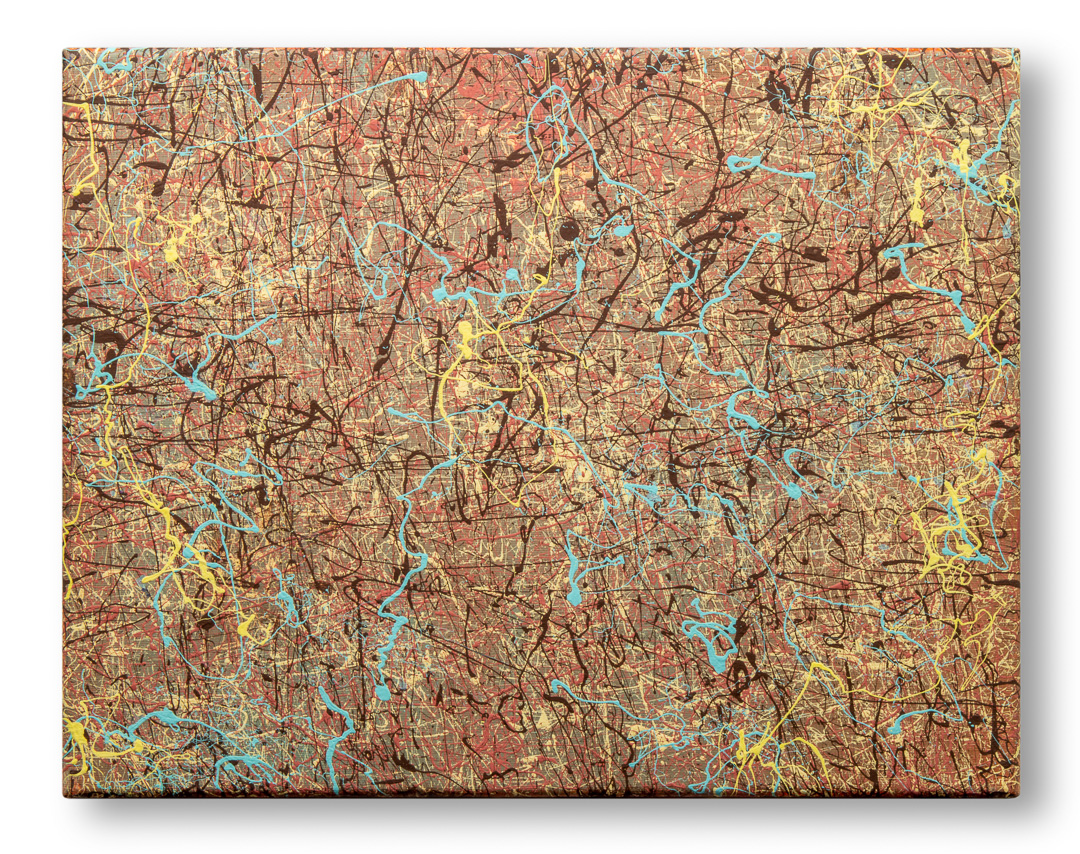
- Autumn Hysteria (2019) — acrylic on canvas, 11 by 14 inches. The same format in rust and ochre with turquoise and yellow flicks, which is a good way to see how much the colour proportion changes a small work.
- DaDa 2020 — acrylic and resin on fiberboard, 20 by 16 inches. A hand-drawn labyrinth of line under a poured coat. The artist's own note on it: "The entire labyrinth of lines was drawn by hand. As many lines, that many days of work it took!"
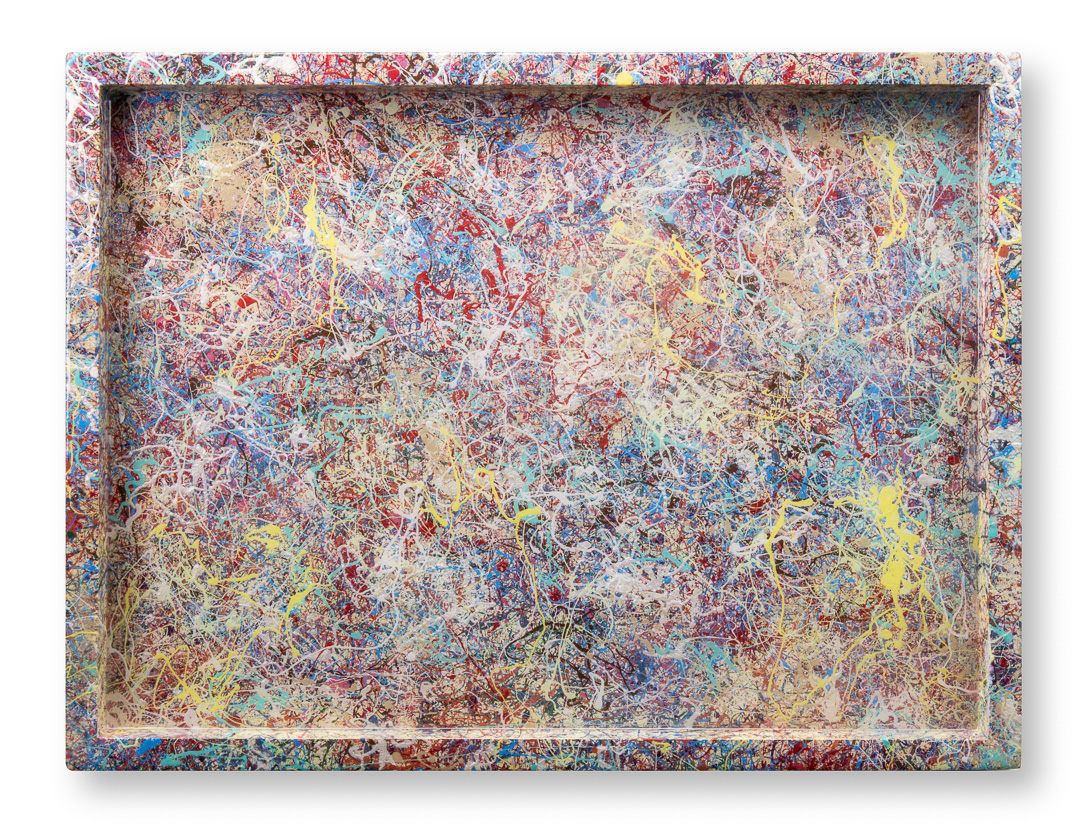
- Transience (2020) — acrylic on wooden board sealed with resin, 12 by 16 inches, described by the artist as up to ten floating layers of clear epoxy over the line work.
- Infinity (2024) — acrylic on board sealed with resin, 16 by 20 inches. A recent piece, rigid support, reflective face.
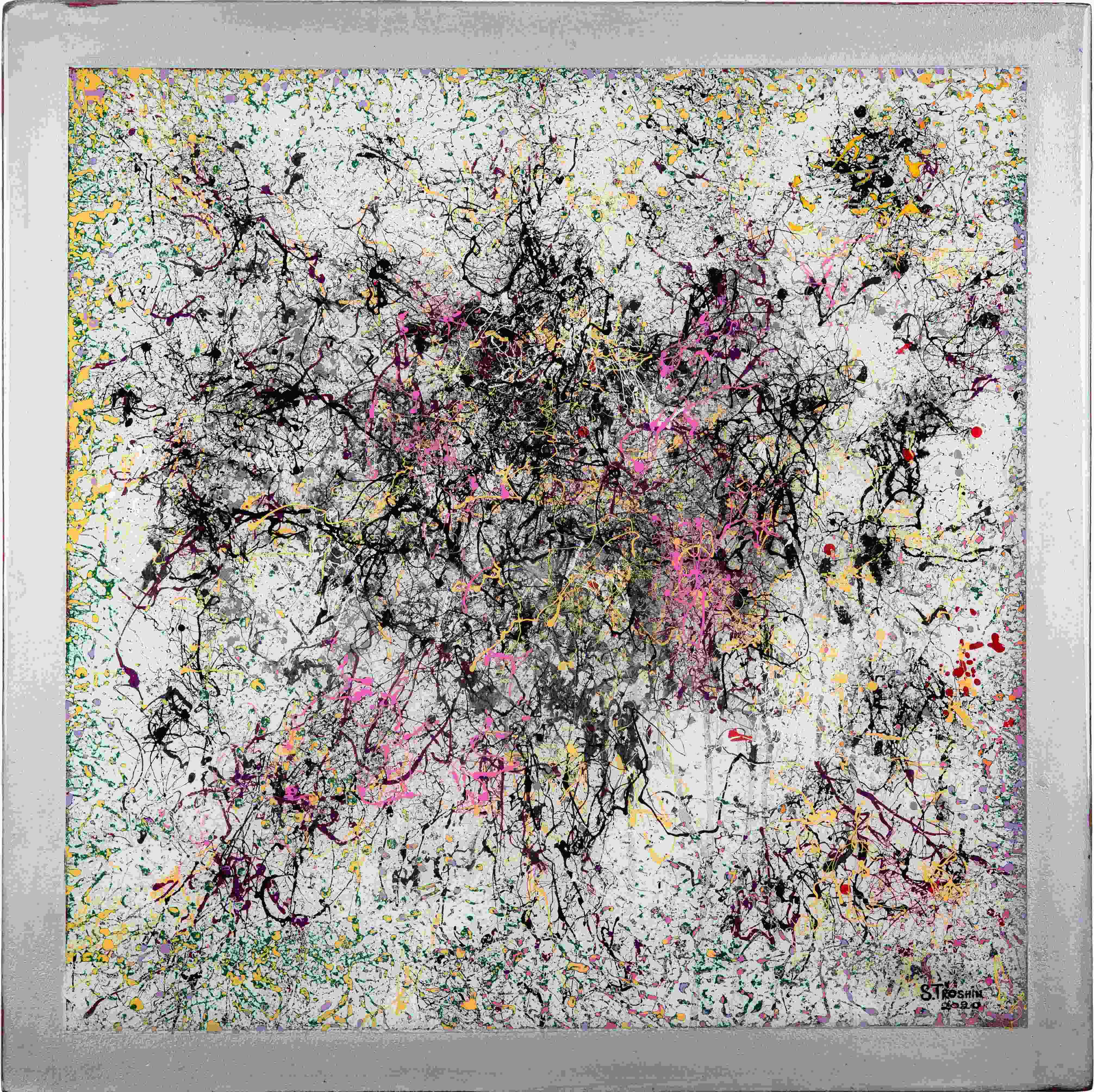
- White Night (2020) — acrylic and resin on fiberboard, 24 by 24 inches. The largest of the six and a square, which suits a wall with no obvious centre. The artist's whole statement about it is a question: "Have you ever experienced White Nights when you could see all colors of early summer in its beauty? I have!"
The full listing is on the artworks page, and there is more about the artist on the about page. If nothing here is the right size or the right colour for your wall, a piece can also be made for it — commissioning a painting explains how that works.
What happens after you decide?
You speak to us, the work is signed and documented, and it is either collected in Markham or packed and shipped. There is no account to create and no checkout to complete.
In order: you tell us which piece, we confirm it is still available and what it costs, and the certificate is signed by the artist for that specific work. Collection at 473 Simonston Blvd means you carry it home yourself, which is the simplest option if you are local. For everything else the piece is wrapped and crated individually and quoted to your address, across Canada and internationally; shipping an original across Canada covers what that involves, including the winter problem of a painting moving between a cold truck and a heated room.
Two administrative things worth doing in the first week, both of which people put off for years. Photograph the work, front and back, and keep those photographs with the certificate — the international museum standard for recording an object, Object ID, was built with police, customs and insurers, and it is a sensible template for a single painting too. Then tell your home insurer what you now own, because a one-of-a-kind object is not replaceable at a shop price; insuring an original you own goes through the wording.
Does an original need special care at home?
Less than people expect, and almost all of it is about what you do not do. The Canadian Conservation Institute's note on basic handling of paintings is the short, public reference, and it applies to everything in this gallery unchanged.
The practical version is four lines. Do not wipe it with a cloth and never spray anything on it — glass cleaner and furniture polish are the most common avoidable damage in a house, and a resin face looks enough like glass that a helpful visitor will treat it as glass unless you have said otherwise. Keep it out of direct sun and off the wall directly above a radiator or a fireplace. In an Ontario winter, heating dries indoor air sharply, so a wall that swings between damp and very dry is worse for a painting than a cool one; winter air and the wall has the details. And if something does happen to it, photograph it before you move anything and do not clean it — how to look after an original is the full list.
What should you ask on the phone or at a viewing?
Whatever you actually want to know. There is no question that marks you out as a beginner here, and the ones below are the ones that change a decision.
- Is it still available, and what does it cost? Both fair, both first, and neither commits you to anything.
- What is the surface? Sealed under resin, or open paint? That decides the reflection, the lighting and the cleaning for as long as you own it.
- How deep does it stand off the support, and what does it weigh? The pages here do not publish weights, so ask.
- What does it look like lit from the side? The single most useful question about a textured or glossy work, and one a photograph cannot answer.
- How is it shipped, and what does that cost to my address? Quoted per piece, so it is a real answer rather than a table.
Viewings are by appointment, which in a small gallery is a practical matter rather than a formality: someone needs to be there to turn the right light onto the right wall for you. What to ask a gallery before you buy has a longer list, and original abstract paintings near Toronto covers what else is in the catalogue. Anything at all can go through the contact page.
Questions people ask
I have never bought art before. Where do I start?
With the piece you keep coming back to, and with the wall you have. Tape the dimensions onto the wall for a day, check where the light comes from, then call and ask what the work costs and how it ships. Nothing before that step commits you to anything.
Why are there no prices on the website?
Every work is one of a kind and there is no online checkout, so prices are on request. What a piece costs depends on its size, materials and the time the surface took, and shipping is quoted per work because a small canvas and a four-foot board are not the same parcel.
How do I know it is a real original and not a print?
Nothing in this catalogue is a print or a reproduction — there is one of each work, made by hand, and it is signed. Each piece leaves the gallery with a Certificate of Authenticity from the artist, which records the object and his authorship rather than a valuation.
What size should a first painting be?
Whatever the wall can take with room to spare — roughly the piece's own width of free wall on each side. Many works here have no side longer than 16 inches, which suits a hallway, an alcove or a wall above furniture, and needs no special fixing.
Can I see a painting in person before deciding?
Yes, and for a textured or resin-sealed surface it is worth the trip, because a photograph loses depth, scale and reflection. The gallery is at 473 Simonston Blvd, Markham, open daily 9:00 to 18:00, with viewings by appointment so someone is there to light the work for you.
What if I change my mind about where to hang it?
That is normal and easy. Photograph the wall and the fixings before you move anything, carry the work with two hands on the sides rather than by the top edge, and avoid a spot above a radiator or in direct sun. Ask us about the specific piece if it is heavy.