How does commissioning a painting actually work?
It begins with a phone call, not a form. You describe the space — the wall, the room it is in, what hangs near it, how much daylight it gets and at what time of day. From there the artist proposes a direction: a scale, a palette, a surface. Nothing is agreed until that direction sounds like something you want to live with.
You do not need to know what you want in art language. "The room is cold in the morning and I want something warm on that wall" is a better brief than a list of colours, because it describes the problem the painting has to solve.
What does the artist need to know before starting?
Three things do most of the work: the measurements of the wall, a photograph of the room as it actually looks, and what the space is used for. A painting that reads well in a hallway you walk past is not the same painting that holds a room you sit in every evening.
- The wall width and height, and how far back a person usually stands
- A photo in daylight and, if it matters to you, one in the evening
- What else is on or near that wall already
- Anything you know you do not want — this is often the most useful part
Can a commission be based on a painting you have already seen?
It can start there, and often does. If a piece in the gallery is close but the size is wrong for your wall, or the palette is right but you want it quieter, that is a workable starting point — and a far more concrete one than a blank page.
What a commission is not is a copy. Each painting is made once. A second version of an existing work would be a reproduction, and this gallery does not sell those. If you want the piece you saw, ask whether it is still available — sometimes it is.
How long does a commissioned painting take?
It depends on the scale, the surface and how much layering the direction calls for — a heavily textured piece needs drying time that cannot be hurried without hurting the surface. The honest answer is that the timeline is agreed at the start of your specific commission, once the direction is settled, and not before.
If you are working to a date — a move, an anniversary, a renovation finishing — say so in the first conversation. That is exactly the kind of constraint that shapes what is worth starting.
What happens once the direction is agreed?
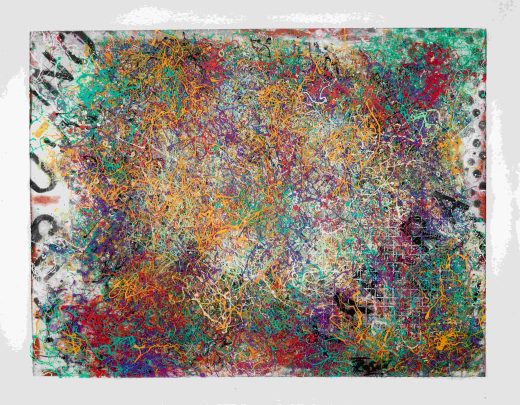
The work moves from conversation to surface. A commission is built in layers, and the early ones rarely look like the finished painting — a piece that will end up quiet and deep often starts loud, because the depth comes from what is laid over the top later.
That is worth knowing before you see a progress photograph. If seeing an unfinished stage would make you anxious rather than curious, say so, and you will see it when it is resolved instead. Neither choice is unusual and neither changes the painting.
Nothing is considered finished until it has been looked at in daylight for several days. A surface that convinces under studio light and fails at four in the afternoon is not done.
Which walls does a commission suit better than a ready piece?
Three situations come up again and again, and in all three a commission solves something a finished painting cannot.
- An unusual proportion. A long low wall above a sofa, a tall narrow strip beside a staircase, a chimney breast — shapes that almost nothing on a gallery wall is cut to fit.
- A room whose light changes hard. East-facing rooms that are bright at breakfast and grey by dinner ask for a palette chosen against both, not one.
- A pair or a run. Two or three pieces meant to hang together read as one composition, and they work far better made together than assembled from separate works.
If your wall is none of those, a commission may still be the right answer — but so might something already hanging in the gallery, and that is a fair thing to ask about on the same call. There is more on this in our note on hanging two or three together and on choosing the scale for a wall.
What if you are not sure a commission is what you want?
Then say that on the call. Sometimes the right answer is a piece that already exists, and it is faster, cheaper and hanging on your wall next week. Sometimes the right answer is that the wall does not want a painting at all.
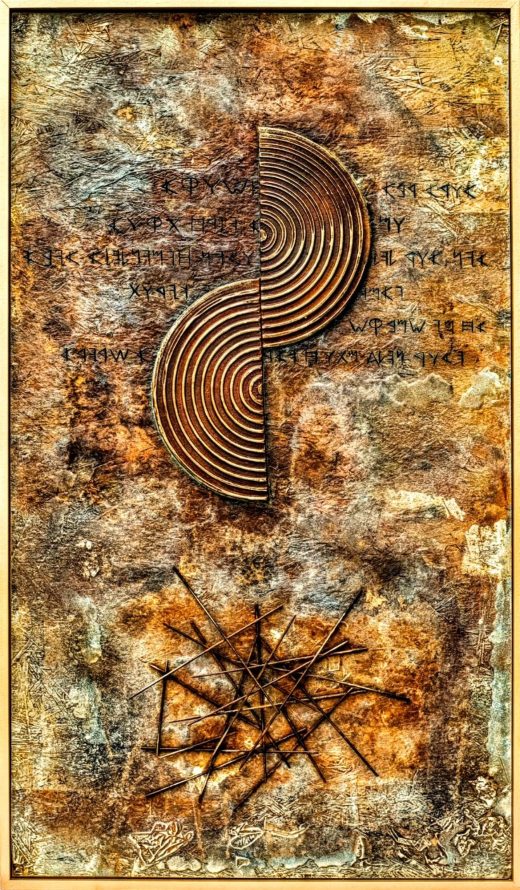
You are welcome to come and look first. Seeing originals in person — the depth of a layered surface, how the texture catches the light from the side — settles the question faster than any photograph will. Browse the current collection or read what to ask before you buy.
Questions people ask
Do I need to know exactly what I want before calling?
No. Most useful commissions start from a room and a feeling, not a specification. Describe the wall, the light and how the space is used, and the direction is worked out from there.
Can you match a colour in my room?
A palette can be built around colours you already live with, and a photograph of the room in daylight is usually enough to work from. Matching a single exact shade is a different job from making a painting that belongs in the room — the second is what a commission is for.
What size should the painting be?
It depends on the wall width and how far back people stand. Bring the measurements and a photo to the first conversation and the scale is one of the first things settled.
Can I see the work in progress?
Yes. How often, and at which stages, is agreed at the start so it suits how you like to be involved — some people want to see every layer, others prefer to see it finished.