What size of painting suits a condo wall?
One sized to the wall you actually have, measured, rather than to the room. In a condo the usable walls are often the short ones — beside a door, at the end of a hallway, above a console or the head of a bed — and a painting that would sit comfortably in a house can crowd them.
The rule that works is simple: leave roughly the piece's own width of free wall on each side. Tape the dimensions onto the wall with painter's tape and live with the rectangle for a day before you decide. It shows you, at the real scale, whether the work will hold the wall or fight the door frame beside it. Choosing a scale for a wall goes further into this.
The catalogue suits small walls better than most. Of the 48 wall works here, 16 — one in three — have no side longer than 16 inches, and most of those are 11 by 14 or 12 by 16. A small painting sets a short viewing distance: it is meant to be looked at from a step or two away, which is exactly the distance a hallway or a bedroom gives you. What a small painting asks for explains how that distance decides the wall.
Where should a painting go in a condo with floor-to-ceiling windows?
On a wall the sun does not reach, and ideally one that the window light crosses from the side rather than hits head-on. In a unit with a glass wall, that usually means an interior wall — the one shared with the corridor or the next unit — rather than the short wall that meets the glass.
Direct sun matters for two reasons. The first is fading, which is cumulative and cannot be reversed. The Canadian Conservation Institute's note on light gives the scale of it: museums light sensitive work at about 50 lux, and average daylight is around 30,000. A high-floor unit facing south or west gets a great deal of it. What direct sun actually costs sets out the numbers. Four works in this catalogue name a natural dye in their materials, and those are the ones to keep furthest from the glass.
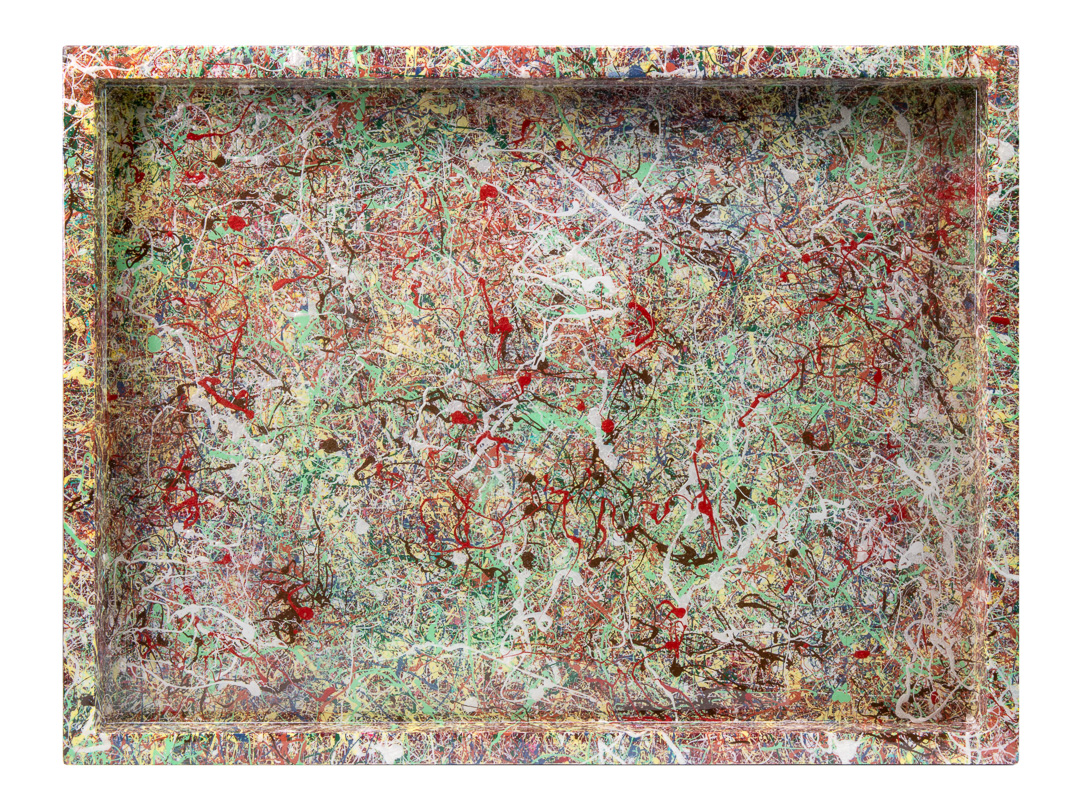
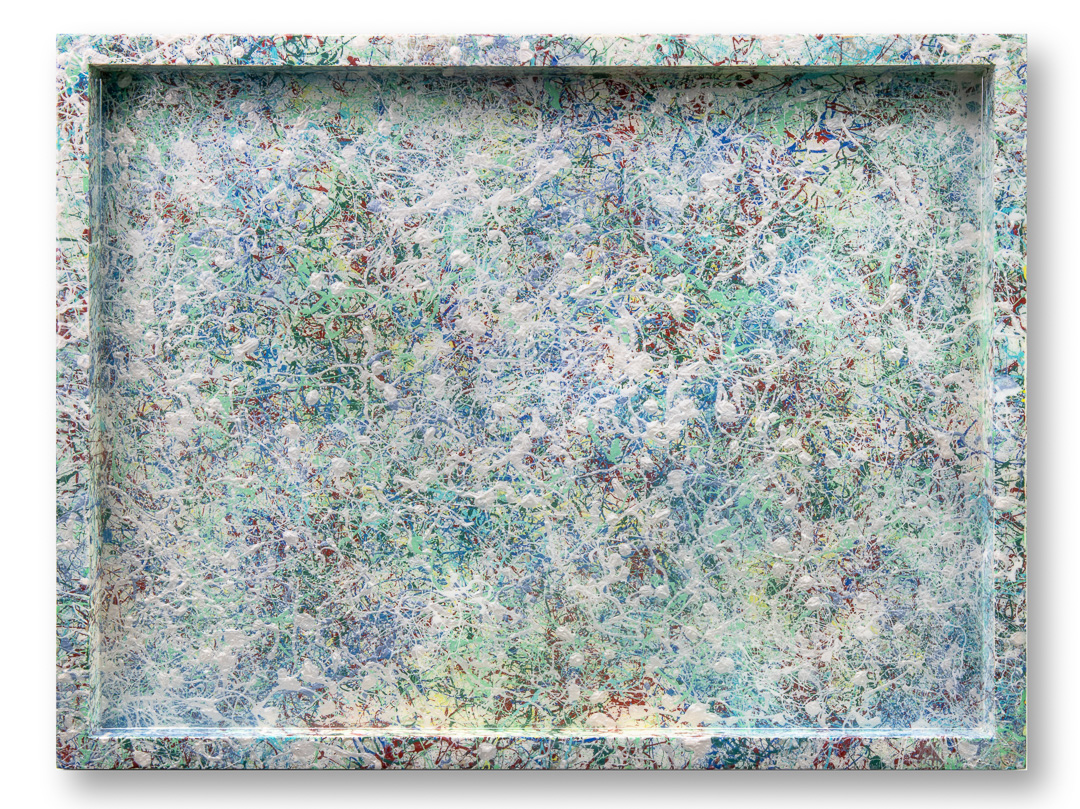
The second reason is reflection. Many works here — 36 of the 61 — are sealed under a poured resin coat, which gives them a glossy face. Hung opposite a window, that face shows you the window. Hung on a wall the light crosses from the side, it shows you the painting, and a textured surface shows its relief as well.
Can you drill into the walls of a condo?
Into some of them, usually; into others, only with permission — and the answer is in your building's documents, not in the wall. Before you buy a heavy piece, find out which walls are yours to fix into.
An Ontario condominium is split into individual units and common elements. The Condominium Authority of Ontario describes the common elements as often including "a foyer, exterior walls, and amenities", and says owners are expected to follow the community's rules. Where your unit ends and the common elements begin is set out in your corporation's declaration, and what you may fix to which surface can be set by its rules. If you rent the unit, the landlord's permission comes on top of that.
In practice that means three questions for your property manager: which walls in the unit are part of the unit, whether the rules say anything about drilling or anchors, and whether any wall is concrete. A concrete wall needs different fixings from drywall, so ask before anyone drills into one. Hanging art in a rental and how to hang a heavy painting cover the fixings themselves. We are a gallery, not a law office: your own declaration and rules are the answer, and the manager is the person who reads them to you.
Do you need to drill at all for a small painting?
Often not. A small canvas is usually light enough for a single picture hook, and it can also simply stand on a shelf or a console. That keeps the question of which walls you may drill out of the decision altogether.
The weight is set by how the piece is built, not by its size in the photograph. An 11 by 14 inch acrylic on canvas and a 12 by 16 inch wooden board sealed under resin look similar on screen and do not weigh the same. No page in this catalogue publishes a weight, so ask us for the specific work before you choose a fixing — we will answer with what we know about that piece.
One caution from the conservation side: standing a painting on a shelf or a console is fine for one work you are displaying. Leaning several against a wall is not. The Canadian Conservation Institute's storage and display guidelines for paintings advise against leaning as a storage method, because stacked works rub and get walked into.
Does condo air affect an original painting?
Yes, in winter more than any other time. Heating dries indoor air sharply, and a painting does best on a wall where the humidity stays steady rather than swinging between damp and very dry.
In a condo that means avoiding the wall directly above or beside a heating or cooling unit, and the wall next to a bathroom or kitchen vent. An interior wall away from the glass is usually the steadiest spot in the unit, which is convenient, because it is also the one the sun does not reach. Winter air and the wall explains which constructions are least sensitive and why.
How does a painting get into a condo building?
Through the same doors, lift and corridors as you — so measure them before a large piece is on its way. A small work goes home in your arms. A four-foot board does not fit every lift, and turning a corner in a narrow corridor with one is harder than it sounds.
Ask your building two things before delivery: whether deliveries have to be booked with management, and whether a particular lift or entrance has to be used. You can collect a piece yourself from the gallery in Markham, or we pack and crate it individually and quote the delivery to your address; shipping an original across Canada covers what that involves.
Which works in the catalogue suit a condo?
Small and mid-scale work on canvas or board, which is where most of the catalogue sits. Six available originals, from smallest to largest:
- Spring Thoughts (2019) — acrylic on canvas, 11 by 14 inches. Open canvas with no poured coat, so there is no glossy face to reflect a window.
- Blue, White (2019) — acrylic on canvas, 11 by 14 inches. The same format in a cooler palette.
- Zwei Goldfische (2020) — acrylic on wooden board sealed with resin, 12 by 16 inches. A glossy face that wants side light rather than a window opposite.
- Fair of Colours (2020) — acrylic on wooden board sealed with resin, 12 by 16 inches, described by the artist as up to ten floating layers of clear epoxy over the line work.
- Infinity (2024) — acrylic on board sealed with resin, 16 by 20 inches. Sized for the wall above a console or a bed.
- Hamsin (2022) — natural dye, acrylic and resin on wooden board, 24 by 24 inches. The largest of the six and one of the four dye works, so it belongs on a wall well away from direct sun.
The full listing is on the artworks page, and there is more about the artist on the about page. If your wall needs a size or a palette nothing here has, a piece can be made for it — commissioning a painting explains how that works.
Questions people ask
What size painting is best for a condo?
One that leaves roughly its own width of free wall on each side of the wall you have. Tape the dimensions onto the wall for a day before deciding. A third of the wall works here have no side longer than 16 inches, which suits a hallway, a bedroom or the wall beside a door.
Can I hang a painting opposite floor-to-ceiling windows?
It is the least suitable wall for most works. Direct sun fades colour permanently, and a glossy resin face hung opposite a window reflects the window instead of showing the painting. An interior wall the light crosses from the side is better for both reasons.
Am I allowed to drill into my condo walls?
That depends on your building. Your condominium corporation's declaration sets out which walls belong to your unit, and its rules can limit what you fix to them. Ask your property manager before drilling, especially into concrete, and ask your landlord as well if you rent.
How do I hang art in a condo without drilling?
A small, light canvas can often hang on a single picture hook or stand on a shelf or console. Heavier work, such as a large board sealed under resin, needs a proper fixing. No page here publishes a weight, so ask us about the specific piece first.
Can the gallery deliver a painting to a condo?
Each piece is packed individually and delivery is quoted to your address, or you can collect it from the gallery in Markham. Check with your building beforehand whether deliveries must be booked and which lift or entrance to use, and measure the route for a large work.
Can I see a painting in person before buying it for my condo?
Yes. The gallery is at 473 Simonston Blvd, Markham, open daily 9:00 to 18:00, with viewings by appointment. Bring your wall measurements and a photo of the wall, and we can look at which works fit it and how they behave with light coming from the side.