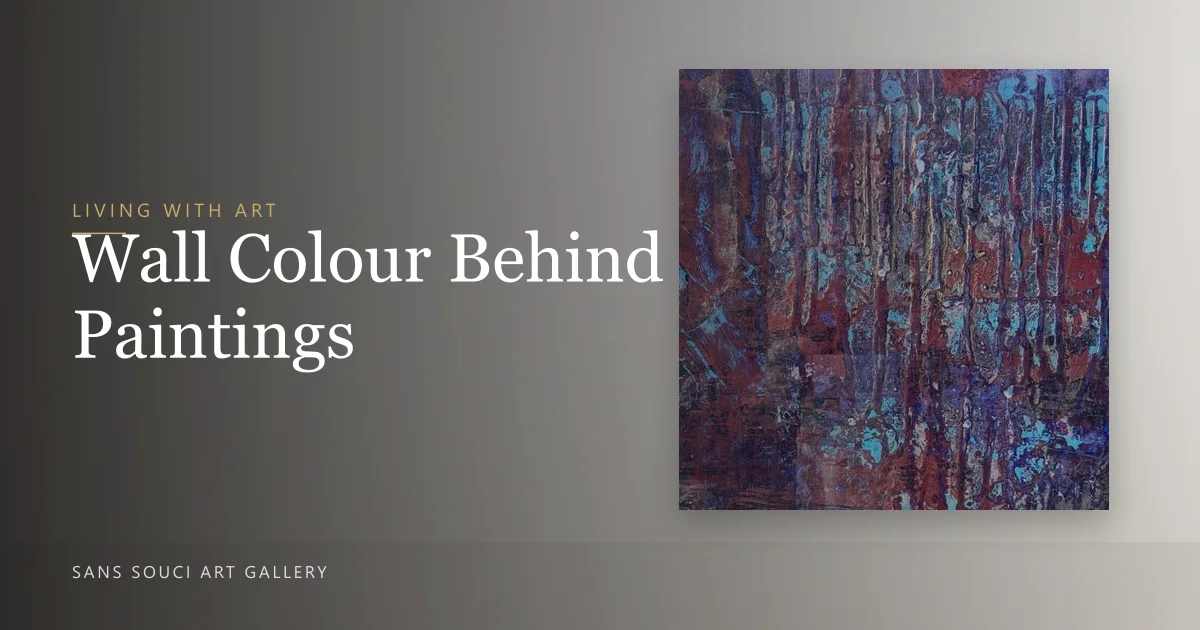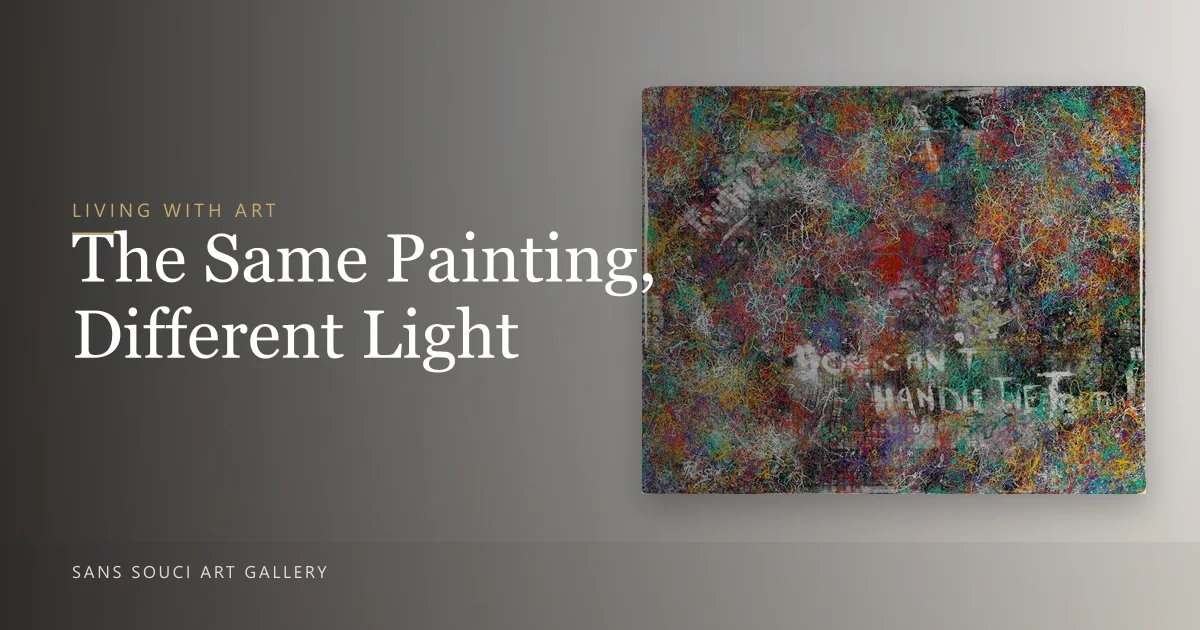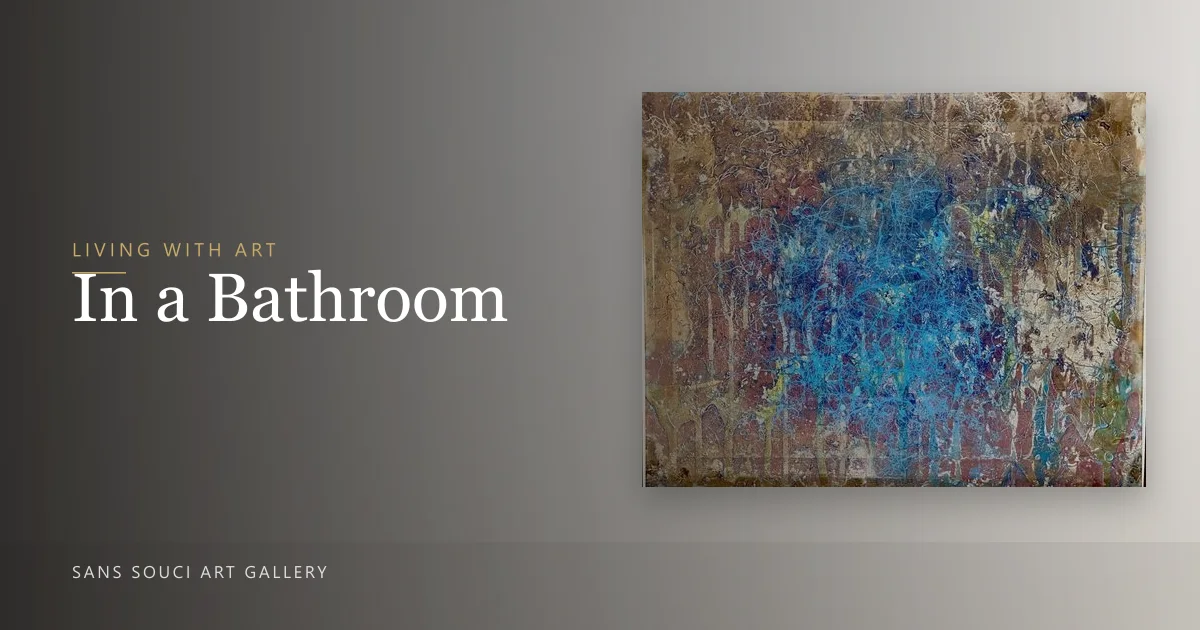
A double-sided painting is a single support with a finished painting on each face. Turn it over and there is no bare back, no label and no stretcher bars: there is another picture. Three works in our catalogue are made this way, all of them small boards by Sergei Troshin from 2020, and the medium line on each of their pages ends with the same three words: "Two sides painted".
That changes more than it seems. A painting with two faces has no side you can safely lean on, rest on a table or write a note on, and a wall can only ever show half of it. Below is what the term means, why painters have used both sides of a support for centuries, how these three boards are built, and what an owner does differently.
Recto, verso and why painters used the back
The words come from books and drawings. Tate's glossary defines the recto as the front or face of a sheet and the verso as its back or underside, and the works it illustrates carry paintings on both. Museums use the same pair for a canvas or a panel with an image on each face.
Often the second image was a matter of thrift. A paper from the Getty's Conserving Canvas conference, written by conservators at a Moscow restoration institute, notes that early twentieth-century painters, to save materials, would paint on old canvases and ignore the sketch or study on the other side. Sometimes a finished painting became the support for a new one. The encyclopaedia entry on double-sided painting adds that the two subjects were sometimes, though not normally, related, and that restoring and displaying such works gives museums extra problems.
The same Getty paper describes the hardest of those problems. If neither side is to count as the main one, the painting must end up with no verso at all, so the stretcher has to hold it flat without crossbars that would hide paint on either face. For one very large work, the curators built a stand with a frame on a post so visitors could see both sides.
The three boards painted on both sides
All three come from the same year and share one size, which makes them easy to compare.
| Work | How its page words it | Size | Status |
|---|---|---|---|
| Zwei Goldfische, 2020 | Acrylic painting on wooden board sealed with resin. Two sides painted | 12 x 16 in | Available |
| Golden Night, 2020 | Acrylic painting wooden board sealed with resin. Two sides painted | 12 x 16 in | Sold |
| White, 2020 | Acrylic painting on wooden board, sealed with resin. Two sides painted | 12 x 16 in | Sold |
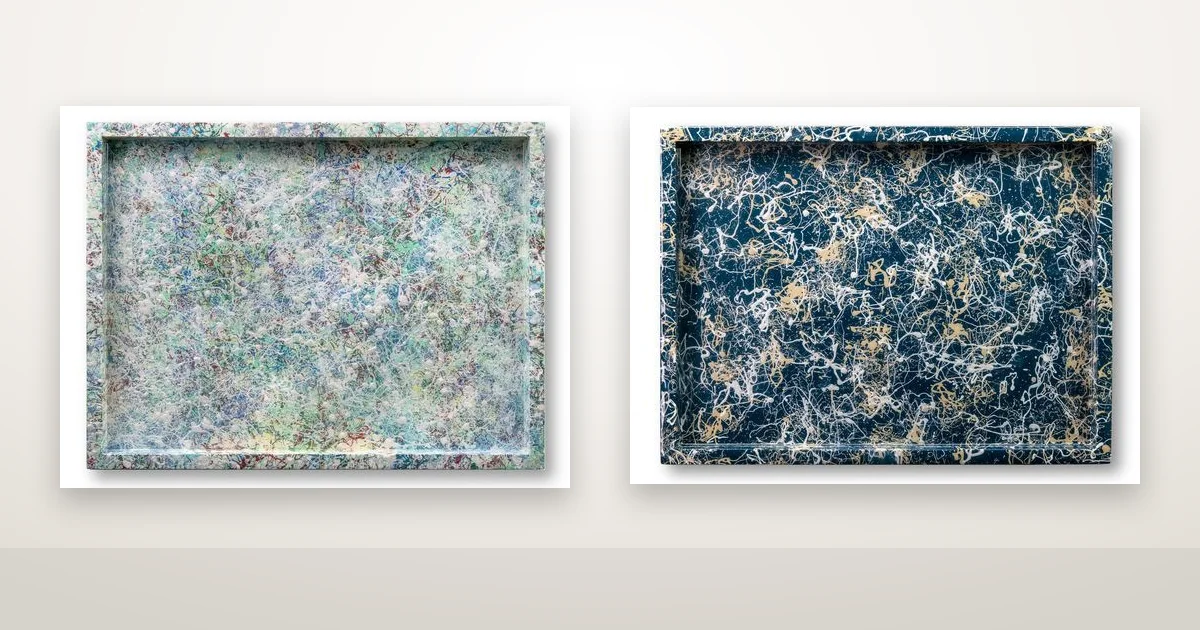
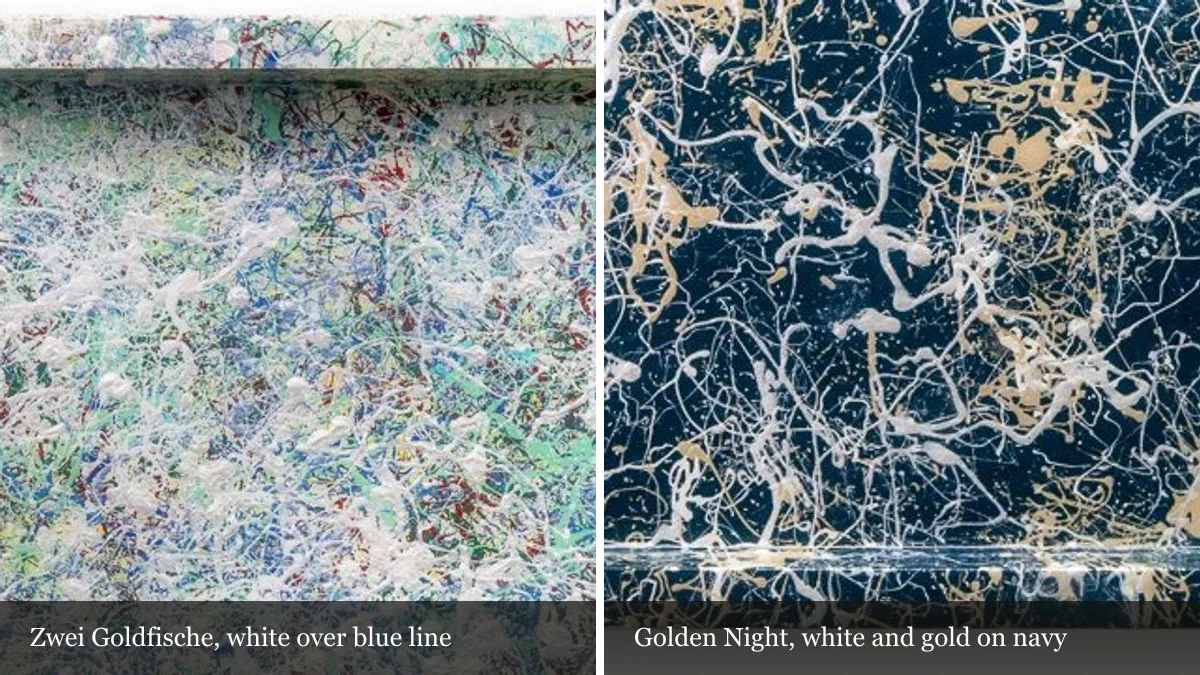
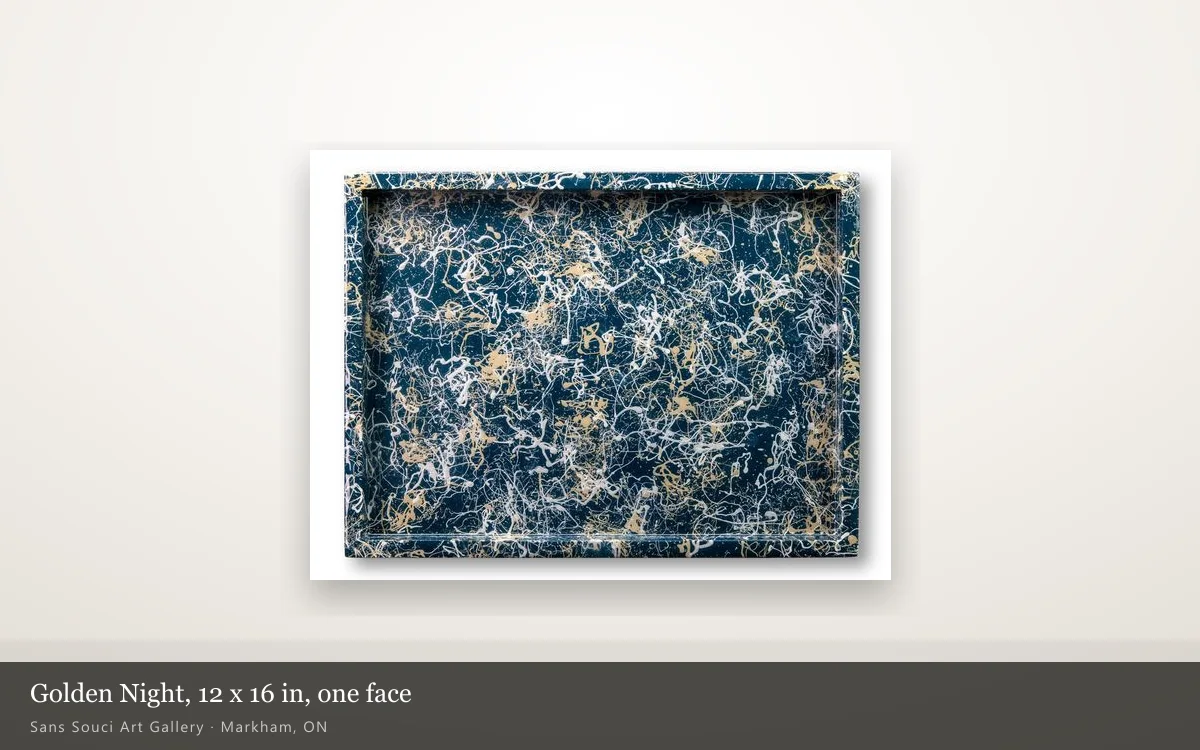
Golden Night's page says it most plainly: deep navy covered with loops of white and soft gold, "painted on a wooden board with a raised edge and sealed with resin. Both sides of the board are painted."
Why a board suits two faces better than a canvas
The back of a stretched canvas is mostly wooden bars and tacked fabric, which is why the Getty conservators had to design new stretchers before a two-sided canvas could be shown. A board has no such frame behind it. Its reverse is as flat and solid as its front, so the artist can treat it as a second surface from the start. We wrote more about the difference between supports in canvas, wood or board.
The raised edge matters too. In the catalogue photographs of Zwei Goldfische and Golden Night, a narrow rim runs round all four sides and is painted like the field inside it. That rim gives the board stiffness and a defined border, so each face reads as a complete picture with its own edge rather than a surface that simply stops.
- A board does not sag or slacken the way fabric on a stretcher can, so both faces stay flat.
- There are no bars to hide paint, and no keys or tacks on the reverse.
- The painted rim belongs to both faces at once, which makes the edges part of the work on every side.
What the photographs of Zwei Goldfische show
The page for Zwei Goldfische carries six photographs, and between them they show the board in three different ways. At a viewing, ask to have it turned over so you can see each face for yourself.
Lying flat, with its rim
One photograph shows the board from an angle, flat on a surface, with the raised rim on all four sides painted in the same tangle of poured line as the field. It is the clearest picture of the object as an object, with depth and edges, rather than as an image on a screen.
Close enough to see the line
Two close-ups show a blue and green field under white and grey poured line, the thicker strands standing slightly proud of the thinner ones. In one of them, two small marks in gold sit near the top. The title, Zwei Goldfische, is German for two goldfish. The way this kind of line is laid down is the subject of our note on what drip painting is.
In a frame
Another photograph shows the board inside a dark wooden frame with a pale linen mat, and Golden Night has a photograph in the same kind of frame. A frame like that holds one face toward the room and closes off the other, which is the central choice an owner of a two-sided painting makes. When a frame helps and when it covers the work is the subject of our note on framing an original painting.
Living with a painting that has no back
Most care advice assumes one face to protect and one back to handle by. With two painted faces, both count as the surface people look at. The Canadian Conservation Institute's note on basic handling of paintings already treats painted edges as "viewed" edges to avoid touching. On a board painted on both sides, that applies to the whole object.
- Wear clean, well-fitting cotton or latex gloves when you lift it, as the CCI note advises, because every place your fingers go is a painted place.
- Never lay it face down on a bare table or floor. Whichever side is underneath is a painting too, so put a clean soft cloth down first.
- Do not hand it to another person. The CCI note says to place a painting where the next person can lift it in a controlled way.
- Decide which face hangs on the wall now, and note the date. Turning it to the other face later is a real option, as long as each change is a planned, careful handling.
- If you want both faces on view at once, think of a stand or table easel in a spot where you can walk round it, away from a doorway or a busy shelf where it could be knocked.
- Photograph both faces when it arrives, so your own record shows each side as it was on day one.
None of this makes a double-sided painting delicate. It simply asks you to remember that there is no "back" to grab, and that a wall shows only half of what you own.
Seeing both sides
A photograph can show one face at a time; a board in your hands shows two, and the rim that joins them. Zwei Goldfische is available, and viewings are by appointment at the gallery in Markham. Get in touch to arrange one and ask to see the board turned over.