
A painting for your living room, sized from the sofa
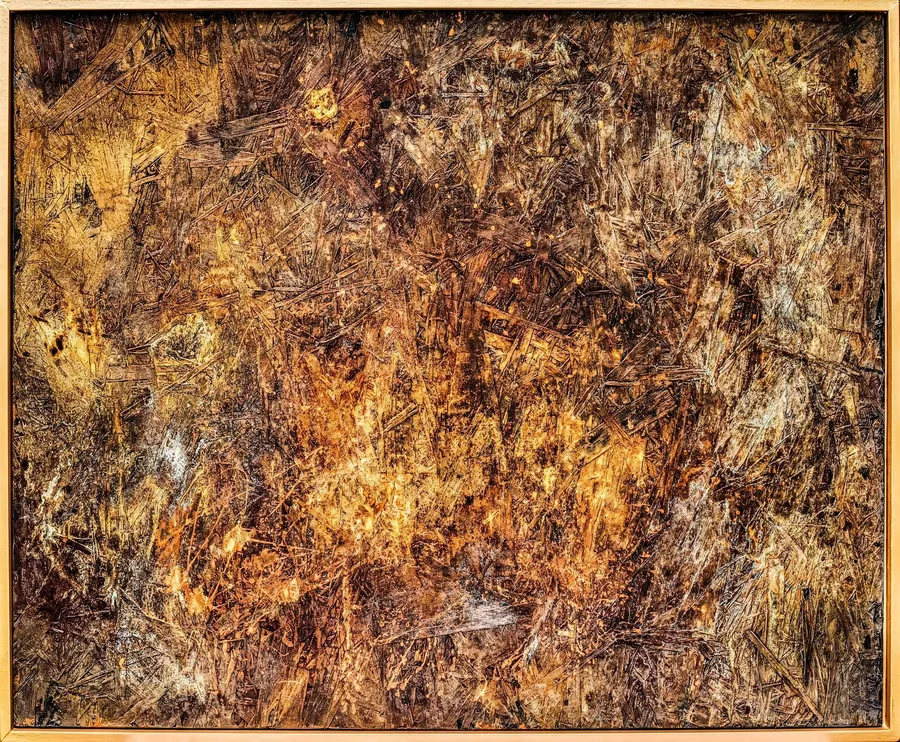 43 in
8 in gap
centre
43 in
8 in gap
centre57 in 64 in sofa
Start with the sofa, not the wall. A painting about two thirds of the sofa's width, hung a hand's width above its back, almost always looks right.
Below are real works by Sergei Troshin drawn at true size over three common sofas, then what your windows will do to them. All of them hang in the gallery in Markham.
Call +1 (416) 919-8331What size painting goes over my sofa?
Measure the sofa, multiply by two thirds, and look for a painting between that and three quarters. Here is the same rule on three sofas, with a work from the catalogue on each, every wall drawn at the same scale.
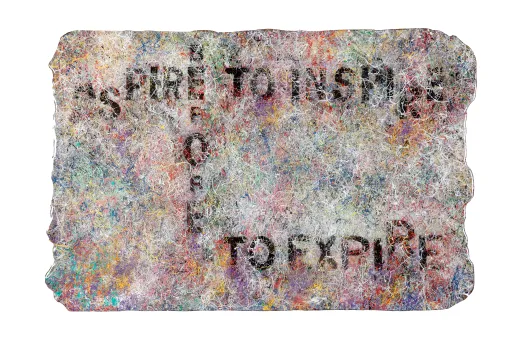
Loveseat, 60 inches
Aspire to Inspire is acrylic and resin on hardboard, 38.6 by 25.4 inches, with the words of its title painted across the lines.
64% of the sofa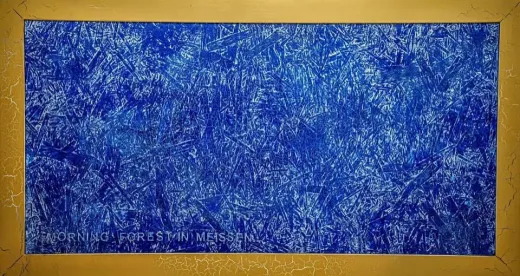
Three-seat sofa, 84 inches
Morning Forest in Meißen (2023) is a deep blue board in a gold frame, 52 by 28 inches. It sits a little under two thirds, which suits a low, wide room.
62% of the sofa
Sectional, 110 inches
Under Media Cobweb (2019) is collage and acrylic under resin, 60 by 80 inches. Hung long side across, its top edge ends up about 100 inches off the floor, so it needs a ceiling higher than eight feet.
73% of the sofaEach wall above is 130 inches wide. If you are between two sizes, the larger one is usually the safer choice. A small painting over a long sofa looks like it was hung there by accident. Our note on choosing the scale for a wall works through odd widths.
How high should it hang?
Low enough that the painting and the sofa read as one group. These three numbers do most of the work:
from the floor to the centre of the painting, roughly the eye level of someone standing.
of bare wall between the top of the sofa back and the bottom of the painting. If eye level leaves a bigger gap, lower the painting.
of the sofa's width for one piece, or for two pieces measured edge to edge with their gap.
Which way do your windows face?
Light changes a painting more than the wall colour does. The Canadian Conservation Institute notes that light damage rises with intensity, and direct sun is about a thousand times stronger than good museum light. So keep sun off the painting, and choose the surface for the light you do have.
South-facing room
Hours of strong, warm light. Hang on a wall the sun never reaches. Dark and finely layered work flattens in glare, so a brighter open canvas copes better here.
North-facing room
Soft, even light all day with no hot spots. Quiet surfaces with small changes of colour look their best, and a resin finish reflects less.
East or west windows
Low sun for part of the day, straight across the room. Check where that band of light lands at seven in the morning or seven in the evening before you pick the wall.
Used mostly after dark
Then it is a room lit by lamps. Gold, metallic paint and resin come alive under a warm lamp from the side, which is where they belong.
If you want to see one work move through those conditions, the same painting in different light shows it in photographs.
Gloss or open canvas: what happens opposite a window?
People walk past a living-room painting all day rather than stand in front of it, so the surface counts as much as the image.

Sealed in resin
The clear coat deepens the colour underneath and reflects like glass. Hung straight across from a big window, it will show you the window. On a side wall, or opposite a lamp, the same coat is the reason to choose it. More on this in a resin finish in a room.
Open acrylic canvas
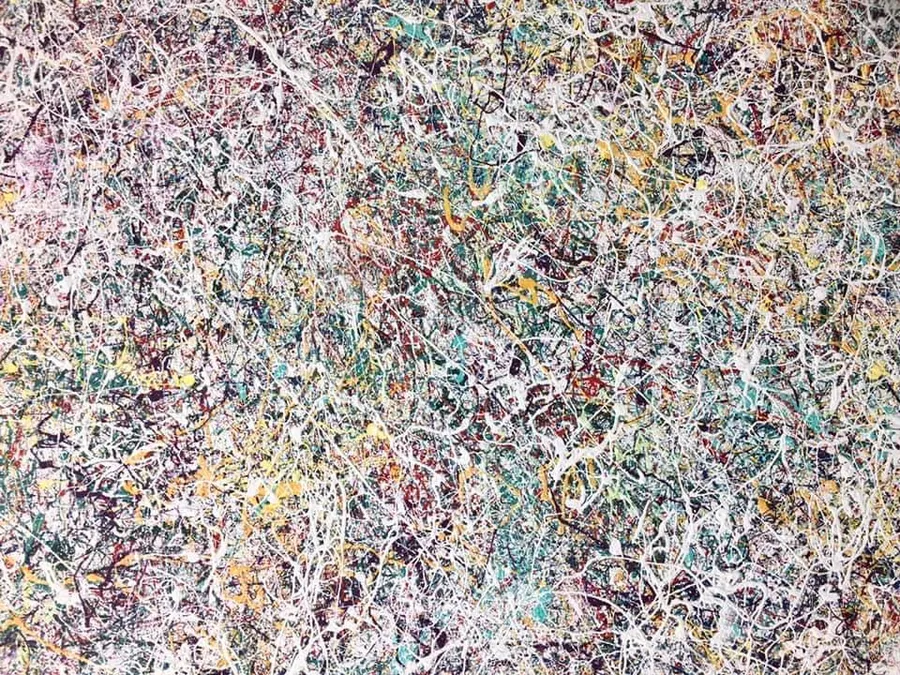
No coat on top, so it looks much the same from the sofa, the doorway and the kitchen, in daylight or at night. This is the easy choice for the wall facing the windows, as long as the sun itself never lands on it.
Can it go over the fireplace?
We would rather it didn't. The Canadian Conservation Institute lists areas near heat radiators, air vents or fireplaces as places not recommended for paintings.
If the fireplace is decorative and never used, the mantel is fine, and the same two-thirds rule works against the width of the mantel. If it is used, look at the narrow walls on either side. A tall work belongs there.
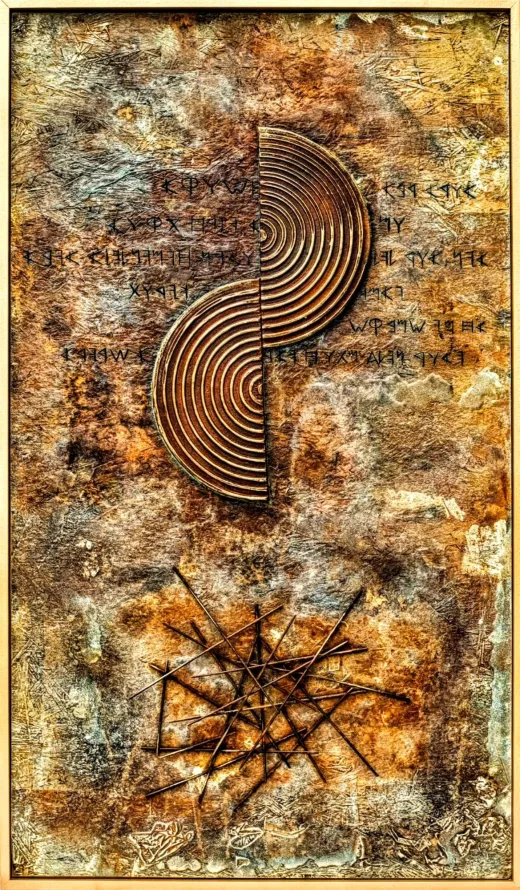
That is where Traces of the Forgotten (2025) fits: it is 30 inches wide and 48 inches high, rust and gold with a broken circle near the top, too tall for the space over a sofa and right for a strip of wall beside a chimney breast or a door.
How do I test a size before I buy?
With paper and a few evenings. It costs nothing and tells you more than any photo on a screen.
Cut kraft paper or taped-together newspaper to the exact size of the painting you are considering. Tape it up at the height from the numbers above.
Live with it. Look at it from the sofa, from the doorway and after dark. By the second evening you will know if it is too small, and moving tape is free.
Photograph the wall from where you sit, in the light you actually use the room in, and bring that photo to the gallery.
The gallery is at 473 Simonston Blvd, Markham, open daily 9:00 to 18:00, with viewings by appointment. You can stand back at the distance your sofa sits and see the surface in daylight and under a lamp in one visit.
Every work is a one-off by Sergei Troshin, with a certificate of authenticity signed by the artist. Prices are on request; the full catalogue is on the artworks page.
Nothing fits the wall you have?
Living rooms have awkward walls: a long low strip under a bulkhead, a chimney breast 42 inches wide, a gap between two doors. A painting can be made at your proportions instead. How that works is on the commission a painting page, and you can read about the artist on the about page.
Questions about living-room art
How big should a painting be over an 84-inch sofa?
Between about 56 and 63 inches wide, which is two thirds to three quarters of the sofa. A single piece or a pair with a small gap both work, as long as they add up to that width.
How far above the sofa should the painting hang?
Leave 6 to 10 inches of wall between the top of the sofa back and the bottom of the painting, with its centre roughly 57 to 60 inches from the floor.
Will a resin painting reflect the window?
If it hangs straight across from a large window, yes, because resin behaves like glass. Hang it on a side wall or where a lamp lights it from an angle, and an open canvas on the wall facing the window.
Is it safe to hang a painting over a working fireplace?
It is not recommended. The Canadian Conservation Institute advises against hanging paintings near fireplaces, radiators and air vents. A narrow wall beside the fireplace is a better place for a tall work.
Can I see a painting in person before deciding?
Yes. The gallery is at 473 Simonston Blvd in Markham, open daily 9:00 to 18:00, with viewings by appointment. Bring a photo of your wall and its measurements.
More originals for a living-room wall


Send us the width of your sofa
Call +1 (416) 919-8331 with the sofa width, the ceiling height and which way the windows face, and ask which works in the gallery would fit. You can then see them at 473 Simonston Blvd, Markham, open daily 9:00 to 18:00, viewings by appointment.