Can you transport a painting in a car yourself? For most original paintings, yes. Three things have to be true: the work goes in without being forced or bent, nothing rests against its face, and the car is warm before the painting is. This note covers how to check the fit before the day, what may touch each kind of surface, how cold is too cold according to the Canadian Conservation Institute, and one work in our catalogue that should not go in a car at all.
From the door of the gallery, the painting is yours
That is the reason to plan the drive. Our terms of use say a work can be shipped or “collected in person by appointment”, and then:
“Risk and title pass on delivery or collection.”
Sans Souci Art Gallery, Terms of Use
If a carrier brings the work, it becomes yours when it arrives. If you collect it in Markham, it becomes yours when you pick it up, and the drive home is your first hour as its owner. The same page says works are packed individually, so it leaves here wrapped. What the wrapping meets in your car is up to you. If you want the work covered from that first hour, speak to your insurer before the day; we have a separate note on insuring an original you own.
Will it fit? Measure the opening, not the car
A painting fits a car when it passes through the narrowest opening without tilting into a corner and then lies or stands on something flat. The length of the boot floor matters less than the gap the work has to pass through. Do this at home, before you come:
- Take the size from the artwork page and add 4 in (10 cm) to each side for wrapping. That allowance is ours, so ask us for the packed size if the fit is close.
- Open the boot or hatch and measure the narrowest width and the lowest height of the opening itself, between the lamp housings, hinges and the latch.
- Fold the rear seats and measure the flat floor from the closed front seats to the hatch. Note any step or slope where the seat backs fold.
- If the work is to stand on its edge, measure the height from the floor to the roof lining at the lowest point.
- Cut a sheet of cardboard to the padded size, or tape two together, and try it. Cardboard can be forced through and a painting cannot, so if the cardboard bends, the answer is no.
The table sorts the paintings in our catalogue that hang on a wall and publish a size. The counts come from the artwork pages as they stand today. The right-hand column is our judgement, and your tape measure overrules it.
| Longest side | Works in the catalogue | What it asks of a car |
|---|---|---|
| 16 in (41 cm) or less | 16 | Goes on a rear seat or in any boot. The risk is the things around it. |
| 20 to 43 in (51 to 109 cm) | 24 | Needs a clear flat floor, usually with the rear seats folded. Measure the opening. |
| 48 to 52 in (122 to 132 cm) | 6 | Only a van, or a long estate or SUV that you have measured. Two people to carry it. |
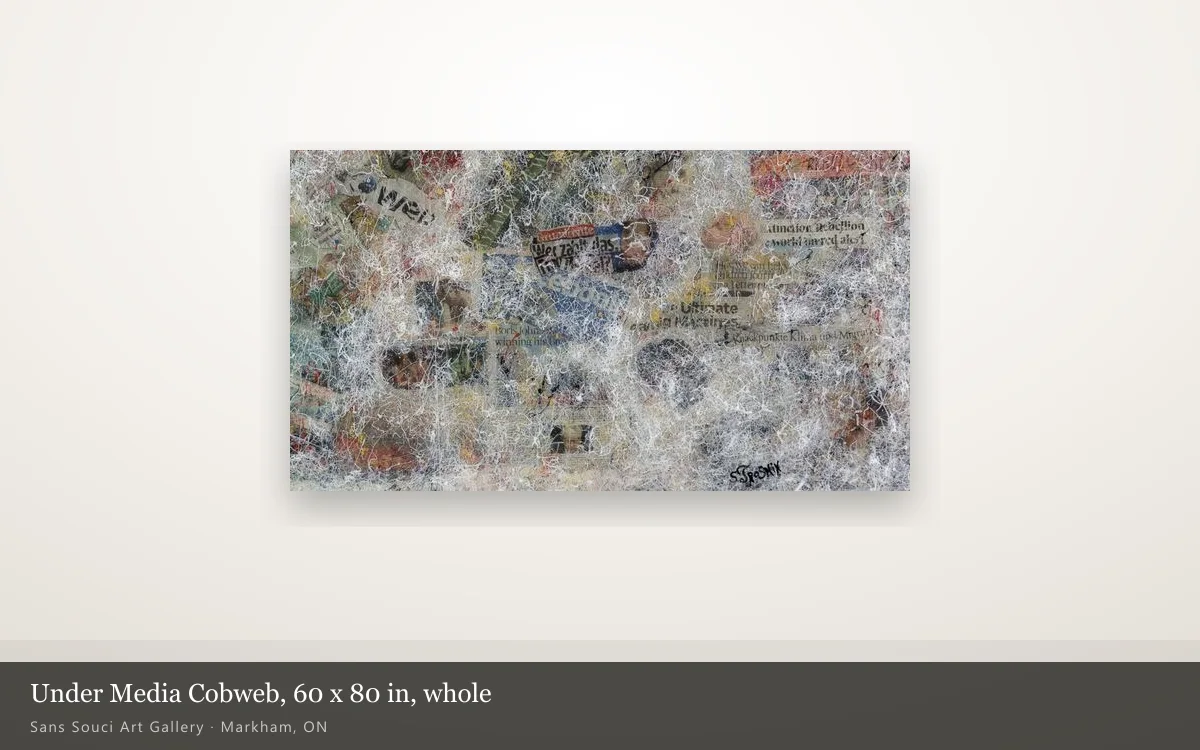
| 60 × 80 in (152 × 203 cm) | 1 | Does not go in a car. |
What may touch the work on the way
Nothing should press on the painted face, and what else is allowed depends on what the paint sits on. The Institute’s Note 10/13 on handling paintings says that most damage to paintings and frames happens during handling, and it lists dents, scrapes and tears among the results. A car adds a floor that moves and loose things that slide.
A painting on canvas
The fabric is the weak part. Note 10/13 says that when you lift a canvas, “hand pressure is not placed on the canvas, either front or back”. The same holds in a car: a headrest, a seat-belt buckle or the corner of a box leaning into the back of a canvas can leave a dent that shows on the front. Rest a canvas on its wooden edge or flat on its back on a level floor, with nothing under it and nothing on it. Summer Languor, at 48 × 36 in, is the largest canvas in the catalogue.
A board sealed with resin
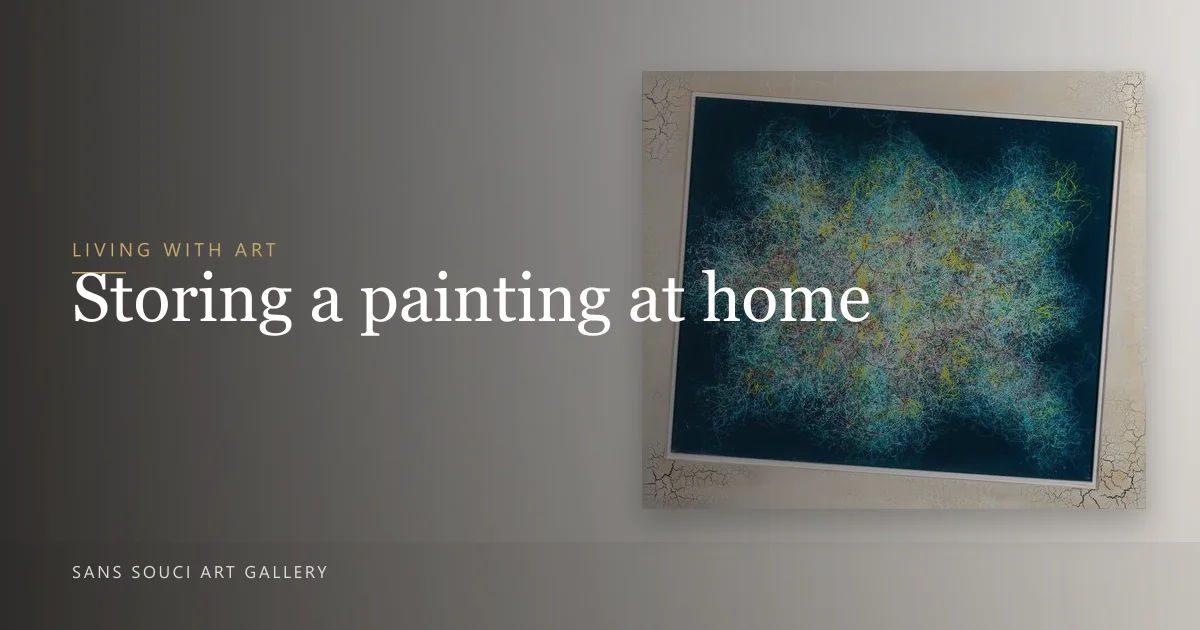
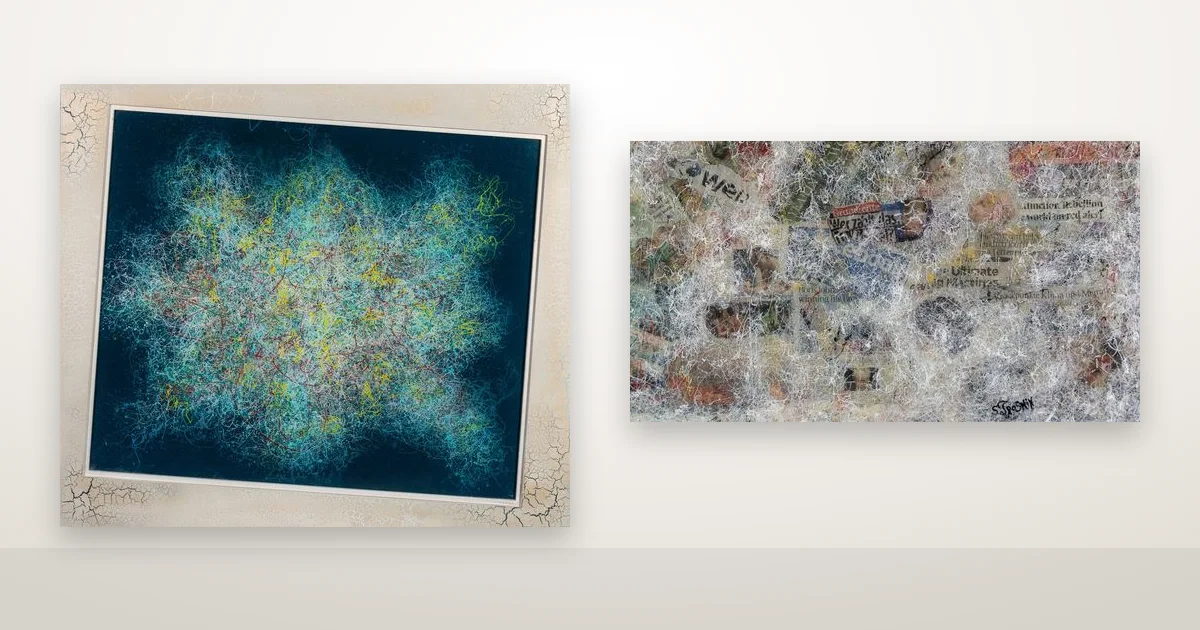
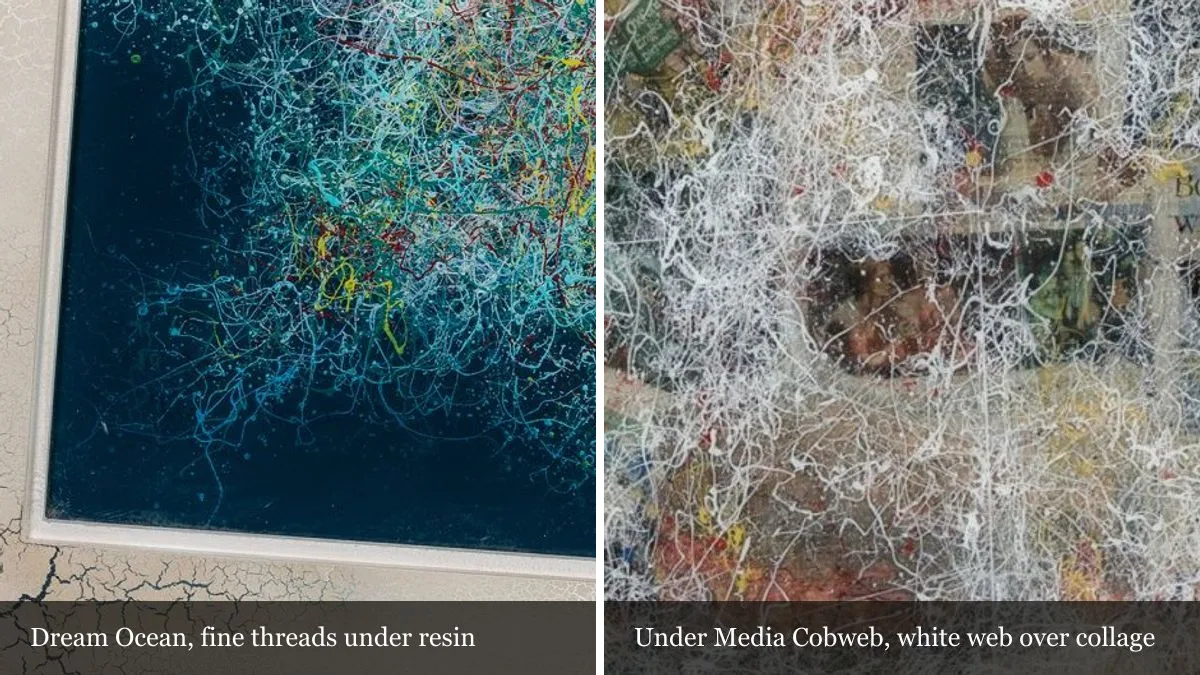
Dream Ocean (2022) is acrylic on fibreboard, sealed with resin, 32 × 34 in. A board does not dent from behind the way fabric does, so it can lie flat on its back on a folded blanket. Its risks are the corners and the face. A rigid panel that slides under braking stops on a corner. A hard glossy coat shows every scratch in a raking light, so nothing goes on top of it, however soft. Its page describes “a wide cream border with a crackled texture” around the image; that border is part of the painting, and it is where hands and straps tend to go.
A raised or open surface
Some works here carry paste, collage or metal parts that stand above the surface. Wrapping pulled tight across relief presses on the highest points. Ask us how such a work is packed and which side is to face up before you plan where it lies.
For any of them, clear the boot of everything loose, wedge the wrapped work with blankets or cushions so it cannot slide, and keep it out of a seat belt that would cross the face. Note 10/13 adds two habits for the carry to and from the car: do not hand a painting from one person to another, set it down so the other person can lift it; and never carry it by its hanging wire, by the top of its frame or by one side alone.
How cold is too cold
Below about 5 °C, by the Institute’s figures, and an Ontario night reaches that in October. Its guide to incorrect temperature says that below 5 °C artists’ acrylic paints, “leathery and tough at room temperature, enter their glassy phase”, and that acrylic paintings then “become more vulnerable to shocks and blows than at room temperature”. Most of the paintings in this catalogue name acrylic in their materials line.
The Institute’s Note 10/15 on paintings and travel turns that into an instruction: a painting “should, therefore, not travel in an unheated vehicle in cold weather”, because painting materials “become more brittle and easily damaged in low temperatures”. For a car that means three things. Run the heater until the cabin is at room temperature before the painting comes out of the building. Put the work in the heated cabin or in a hatch that shares its air; a separate saloon boot is not heated. Drive straight home, and do not leave the painting in a parked car while you stop for lunch. The temperature guide adds that “careful handling mitigates most of the risk”, so on a cold day the thing to avoid is a knock or a pothole while the paint is cold.
The work that does not go in a car
Under Media Cobweb (2019) is mixed media, collage, acrylic and resin, 60 × 80 in. That is 152 by 203 cm, about the size of a queen mattress, and unlike a mattress it cannot flex round a door frame. Its page ends with the line “Ask about delivery and hanging for a piece of this size.” We mean it. A work this large is a question of vehicle, of how many people carry it, and of the route from the kerb to the wall: the stair turn, the lift, the height of the ceiling where it has to be stood upright. Note 10/13 puts the rule in one sentence: know the size of your painting and be sure the intended route will take the painting and the people carrying it.
The six works between 48 and 52 in sit in between. One of them may fit a van you can borrow. Measure first, bring a second person, and if the cardboard test fails, arrange delivery. How a carrier handles a painting is in our note on shipping an original across Canada.
What to ask us before the day
These four answers are worth an email before you set out:
- The packed size: height, width and depth with the wrapping on, to set against your measurements.
- The weight, which decides whether one person can carry the work from the car to the house.
- Which way up: whether this work should travel flat or on its edge, and which face is to be uppermost.
- What must not be touched: painted edges, a textured border, parts that stand proud of the surface.
Viewings and collection are by appointment. Choose a work in the Artworks collection, measure your car, and send us both through the contact page.