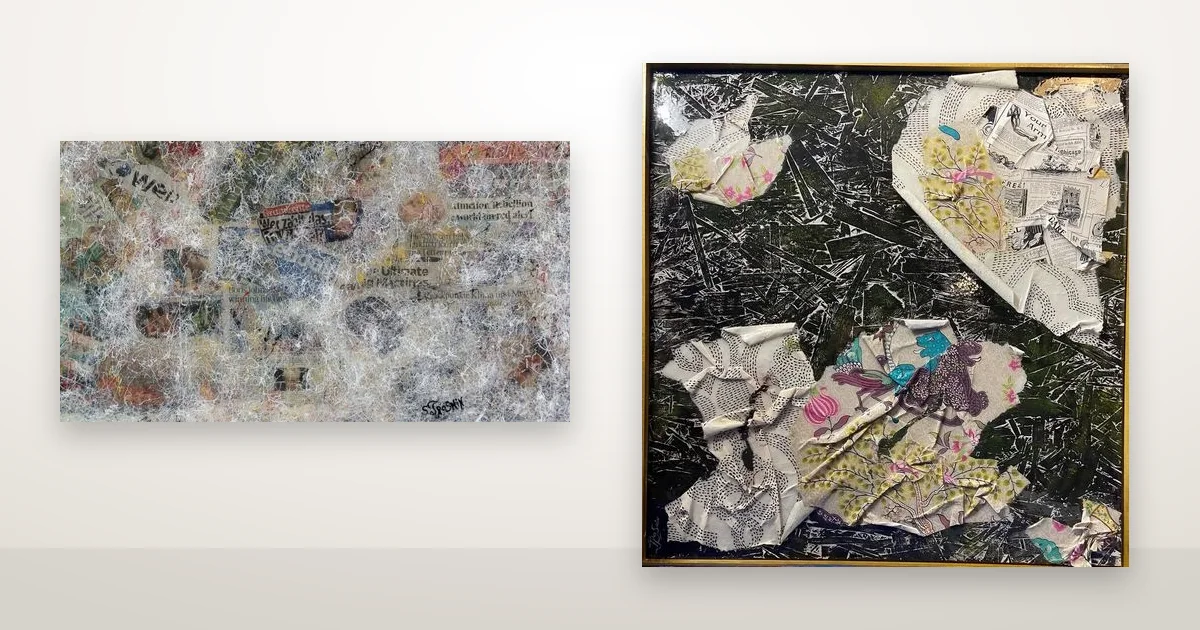
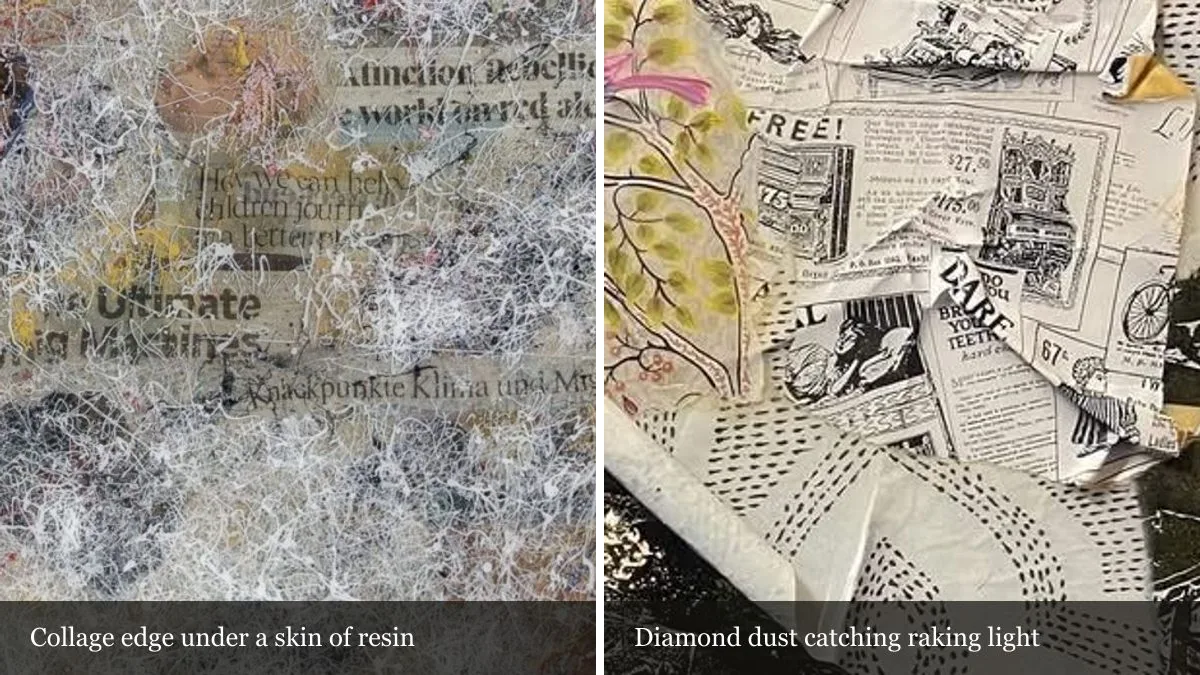
Under Media Cobweb hangs in Toronto at 60 by 80 inches, and its wall label reads simply: mixed media, collage, acrylic, resin. Stand close and the four words start to make sense. Newsprint edges surface under a skin of resin. A passage of acrylic sits right next to a torn scrap of paper, and the two catch the light differently. That gap between materials is the whole idea, and it is worth pulling apart into plain language before you stand in front of the next piece that carries the same label.
What Does Mixed Media Actually Mean?
Mixed media means a single artwork is built from more than one material or process — paint plus paper, plus a sealing resin, plus whatever else the piece calls for — instead of one medium worked alone from first stroke to last, the way an oil painting stays oil. It describes how a piece is constructed, not a style or a subject.
In Under Media Cobweb, Sergei Troshin layers collage — cut and torn paper set directly into the surface — under passages of acrylic, then seals the whole thing under resin. The paper does not disappear beneath the paint. Look closely and fragments of newsprint are still legible: half a word here, the corner of a headline there, sitting under resin the way a coin looks different a few inches underwater. That is the mechanical answer to what mixed media means — several physically different materials, worked into one surface, on purpose.
Not every piece at Sans Souci is built this way. A lot of the collection is acrylic on canvas or wood, one medium handled with control from the first layer to the last, and those pieces read differently — the surface stays close to flat, and the colour does the work. A mixed media piece asks something else of a wall: it wants you to walk up close, then step back, because part of what it is doing only shows up at close range.
Why Combine Materials Instead of Staying With One?
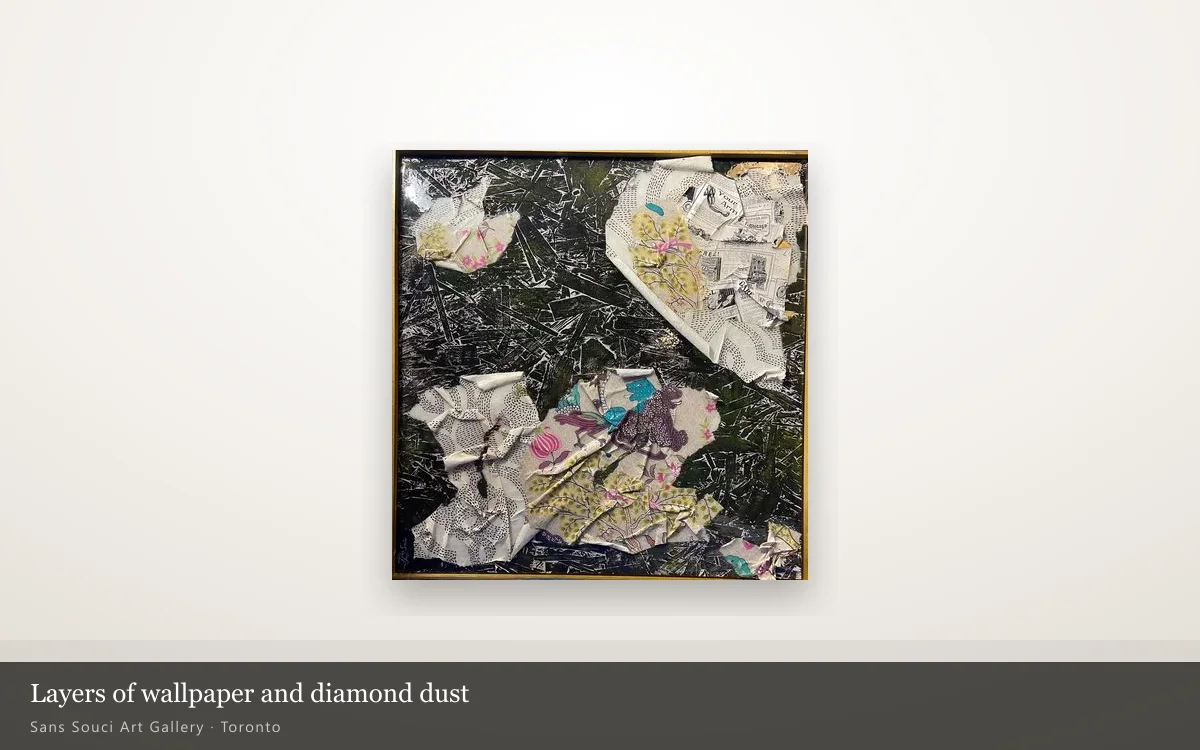
Different materials catch light differently, and layering them gives a surface real depth that flat paint alone cannot produce — resin pools and refracts, a collaged edge casts its own small shadow, and something like diamond dust throws light back at a different angle than the paint around it. Treasure Behind the Wall II (2024) is built on exactly that idea.
Troshin's own description of the piece treats the materials as the point, not the decoration: "Beneath the multiple layers of wallpaper, the intricate, abstract pattern of the wall emerges. The shimmering diamond dust on its surface captivates anyone who takes the time to notice it." He goes on to describe the layering as a way of thinking about people — a consistent exterior sitting over hidden layers of experience and belief — which happens to describe what mixed media does physically as well as what it can mean.
That interplay depends on light that moves across the piece through the day — a window, a picture light, or simply the change from morning to evening in a room. Under flat, even light, the same diamond dust reads as a faint sparkle instead of a genuine flicker. It is one more reason a photograph on a screen understates what these materials are actually doing.
A few terms that show up often on Sans Souci labels, in plain English:
- Collage — cut or torn paper, or fabric like the wallpaper in Treasure Behind the Wall II, set into the surface before paint or resin goes on.
- Resin — a clear, hard coating poured over the finished surface. It seals everything underneath and adds real depth you can see into, not just a shine on top.
- Diamond dust — fine reflective particles worked into a passage of the surface, so it catches light differently depending on where you stand.
- Wax paste — built up in raised passages for texture you can feel, not only see.
- Natural dye — pigment drawn from a non-manufactured source and let into the fibers of wood or canvas, rather than sitting on top of them.
Does a Mixed Media Piece Need Different Care?
No. Once a mixed media piece is sealed — usually with resin — it is handled the same way as any original in the Artworks collection: kept out of direct sun, away from big swings in humidity, and dusted gently with a dry cloth. The resin finish protects the layers underneath from everyday handling, not only from moisture. Avoid glass cleaner or anything with ammonia directly on a sealed surface — a dry microfibre cloth, used gently, is enough.
The combination of materials changes how a piece is made and how it reads across a room, not how carefully it needs to be treated once it is finished and sealed. If a piece has an unsealed or unusually delicate passage, we will tell you when you view it.
The only real way to see what mixed media means is in person — a photograph flattens exactly the depth these pieces are built for. Both pieces discussed here are currently available, not sold or reserved. If Under Media Cobweb or Treasure Behind the Wall II sound like something you would want to stand in front of, or you are curious about Sergei Troshin's practice more broadly, get in touch and we will set up a time to view them in Toronto.