Most people who write to the gallery about a commission do not start with a subject. They start with a wall: a stretch above a console that has stayed empty for two years, or a room being repainted around a colour that needs one more anchor. Sergei Troshin works from that starting point — a real space, not a blank canvas and total freedom — and the process reads more like a conversation than a brief.
What we actually need from you to start
A commission starts with three things: the size of the wall it will hang on, the light the room gets through the day, and — if one exists — a painting you already respond to as a reference point. Send those and the gallery replies with what is possible and roughly how long it would take.
None of this needs a form. It is usually an email or a phone call, and the description on the contact page still holds: describe the space, the light, and any colours you want to avoid, and Sergei Troshin comes back with what is possible. A photo of the actual wall, even a rough one from a phone, tells him more than a list of styles he has not worked in — his own vocabulary is layered acrylic, natural dye, resin, collage and diamond dust, described more fully on the artist’s own page, and a commission stays inside what that vocabulary can do.
It also helps to see existing work in person before settling on a direction. These surfaces are built from layers, resin and metallic pigment, and photographs only capture part of what a piece is doing under real light — a viewing in Markham, by appointment, of two or three paintings closest to what you have in mind is often more useful than another round of emails.
Starting from a blank brief or from a piece already sold
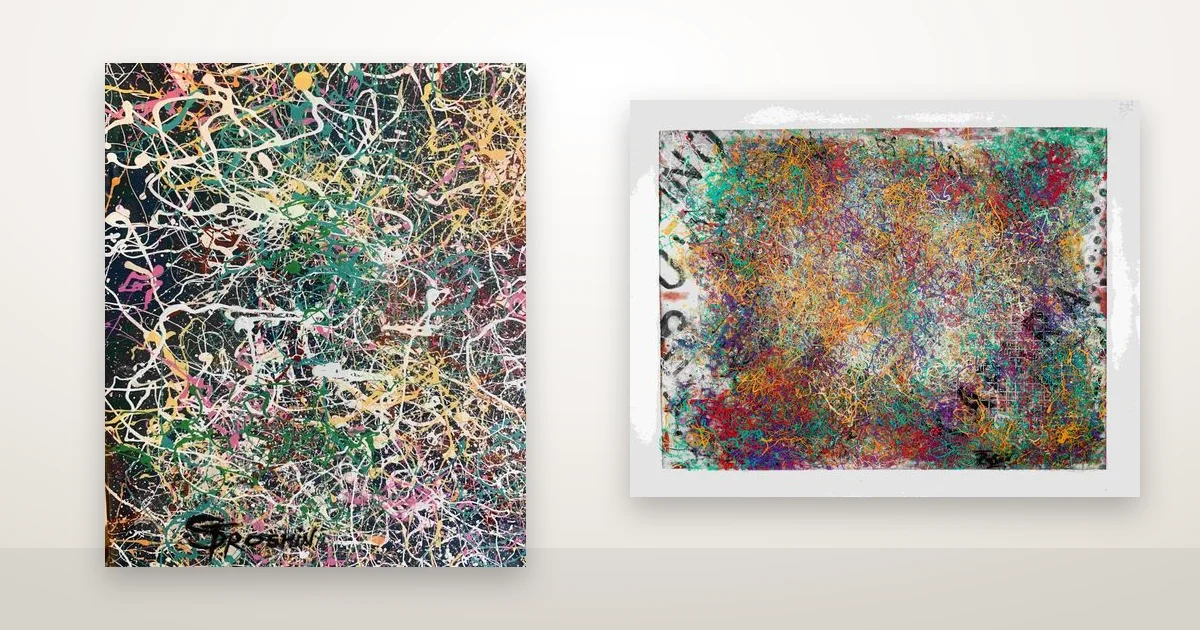
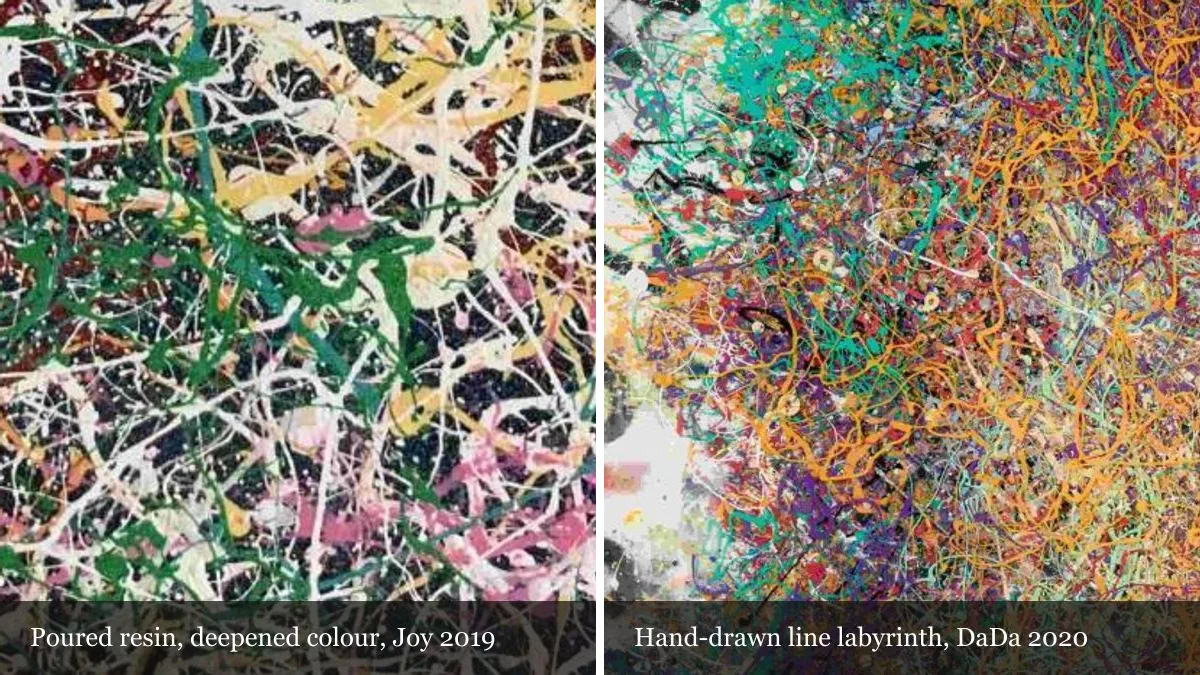
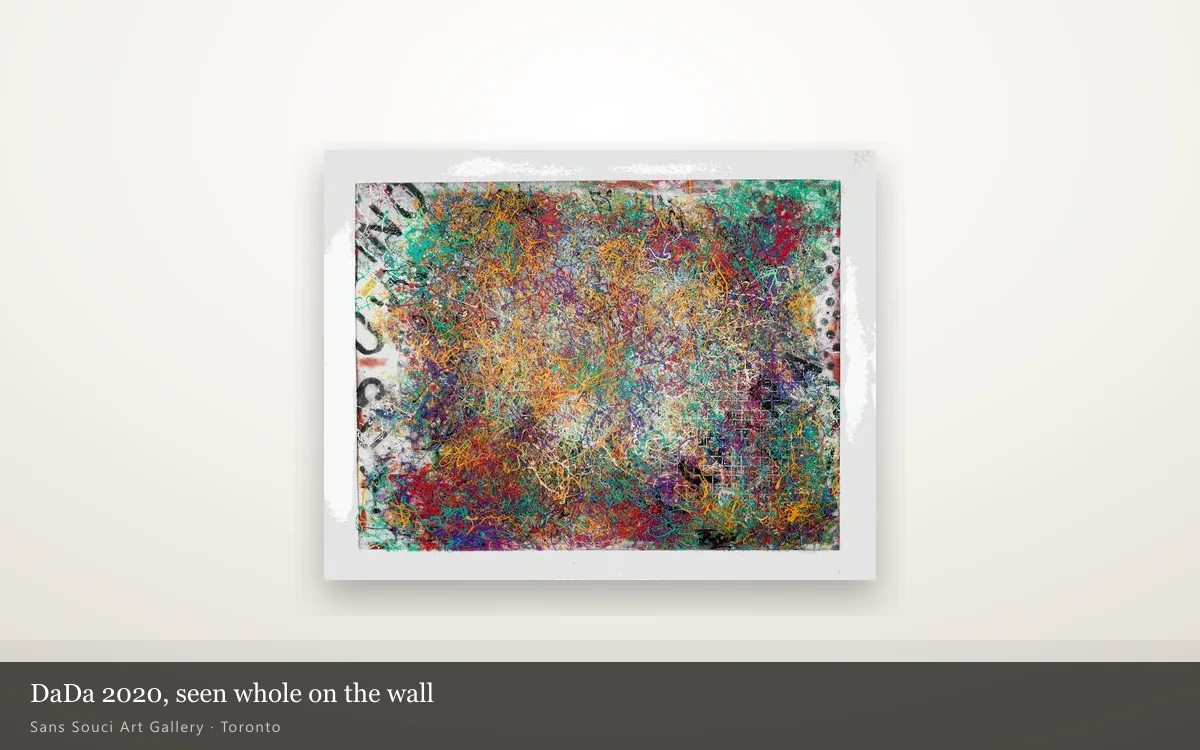
A commission can begin two ways: from an open brief with only a wall and a palette to work from, or from an existing piece the client wants echoed. Joy, sold in 2019, is exactly the kind of painting people ask to be revisited; DaDa 2020 shows what an open brief produces once size is the only fixed constraint.
Joy’s own listing states the mechanism plainly: it “has found its owner and is no longer available,” and stays on the site “as part of the artist’s archive” — with a note that Sergei Troshin “takes commissions and often has related work from the same series.” A sold painting does not come back. Its resin face, poured over acrylic and cured to a hard, glass-like film that deepens the colour underneath — Tate’s glossary explains the term — or its palette or its scale can still be worked into something new that belongs to you rather than to whoever bought the original.
| Joy (2019) | DaDa 2020 | |
|---|---|---|
| Status | Sold | Available |
| Size | 18 × 24 in | 20 × 16 in |
| Medium | Acrylic, resin on canvas | Acrylic, resin on fibreboard |
| What it shows about a commission | A reference point — palette and mood, not a copy | What an open brief looks like once size is set |
How long a commission actually takes
There is no fixed timeline, because the layered technique is not fast by design: colour, texture, resin and dye are built up in stages, and each layer needs time before the next goes on. Sergei Troshin gives an estimate once he has seen the wall and the reference — it depends on the piece, not on a set turnaround.
The support changes the calculation too. A poured resin coat, like the one on Joy, has to cure between stages before the next layer goes on. A hand-drawn line composition like DaDa 2020 is built stroke by stroke rather than poured. And a piece using natural dye needs the dye to sink into the wood grain before acrylic and resin go over it — a different order of steps again. None of those stages can be rushed without the surface showing it later.
On DaDa 2020 he put it plainly in his own note on the piece: “The entire labyrinth of lines was drawn by hand. As many lines, that many days of work it took.” A commission built with the same hand-drawn technique carries the same arithmetic — more line, more days — which is why an estimate comes after he has seen the brief, never before.
What arrives when it is finished
A commission arrives the same way any original from the gallery does: with a Certificate of Authenticity signed and sealed by the artist, and no print or edition made from it afterward. It can be collected in person in Markham or shipped, packed individually, anywhere in Canada or internationally.
Prices are shared on request throughout the process, the same as for anything already in the Artworks collection — there is no online checkout and no fixed price list for a commission any more than there is for the existing catalogue, because scale and technique both change the amount of work involved. Once it is on your wall, the same care applies as to any piece in the catalogue: the American Institute for Conservation’s plain-language guidance on caring for artwork at home covers the light and humidity basics that apply regardless of what you commissioned.
If a wall has stayed empty for a while, or a room is being planned around a colour you cannot find yet, that is enough to start the conversation — a photo and a rough sense of size gets Sergei Troshin further than a mood board. Get in touch about a commission.