
Giving someone an original painting
You are choosing for walls you may never have measured and a taste you can only guess at. The way round both is to start small, start from their room, and put the right facts on the card.
Everything here is an original by Sergei Troshin, one of a kind and signed, and you can see it in Markham before you decide.
Call +1 (416) 919-8331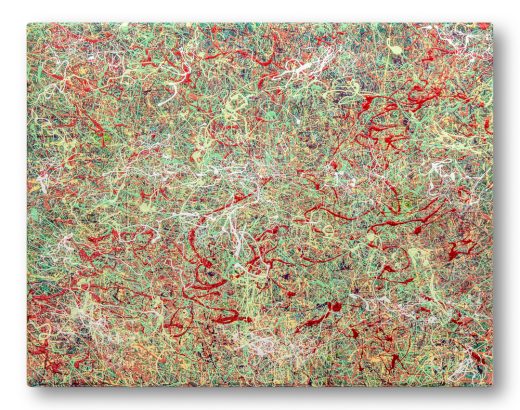
How much of their home have you actually seen?
That one fact decides what you can safely give. Find yourself on the line below, and you know how big to go and whether to buy at all.
You have been there many times
You know which wall is empty and what the light does to it. You can go larger, up to a piece you have pictured on that wall. Infinity is 16 by 20 inches, acrylic on board under resin, with a burst of bright blue in the centre of earthy browns.
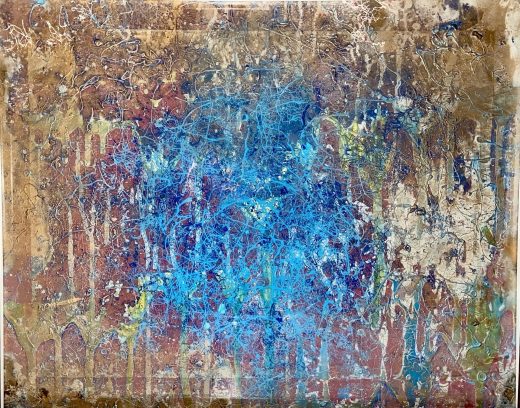 Infinity, 2024. 16 × 20 in.
You have been there once or twice
Stay at 11 by 14. A canvas that size goes on a shelf, a desk, beside a door or into a group they already have, and nobody has to move furniture for it. If you remember the colours of the room, the table below picks one of the four for you.
You have never been inside
Do not buy a painting blind. Either choose something that does not need a wall (the painted glasses further down), or give them the choice itself and bring them to the gallery. Both are covered on this page.
Which of the four small canvases suits the room they live in?
Read the room you remember, not their personality. The sofa, the floor and the walls are choices they have already made, and a painting that shares one colour with them belongs there from the first day.
| Their room | The canvas, and why |
|---|---|
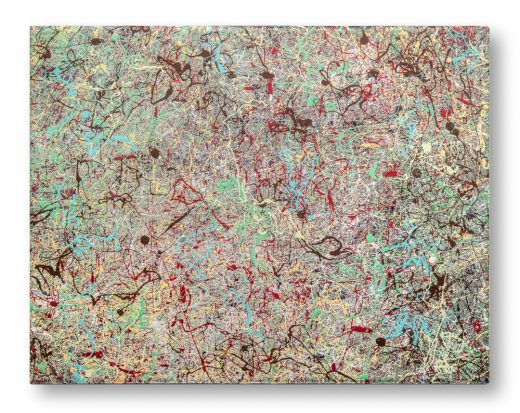
| White walls, pale wood, beige or sage fabric, very little colour | Spring Thoughts keeps most of its canvas a pale sage green. The deep red and dark brown marks are small and scattered. It adds detail to a quiet room without taking it over. |
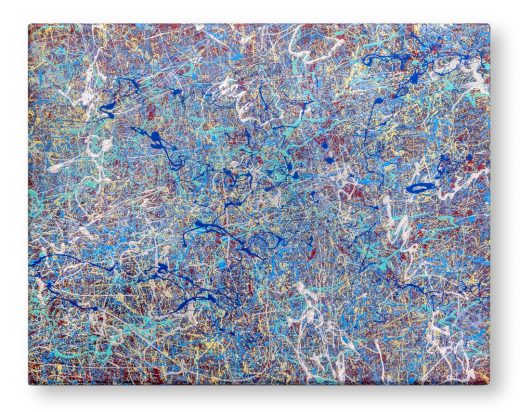
| Grey, navy, white tiles, a cool and tidy kitchen or study | Blue, White is light blue and turquoise from edge to edge, with heavier cobalt and white over them. Only a few threads of red and ochre show underneath, so the whole piece reads cool. |
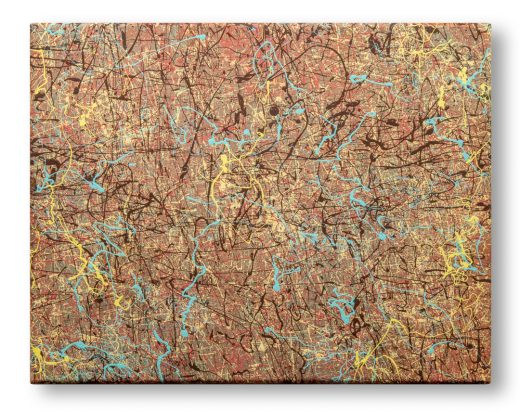
| Warm wood, leather, terracotta pots, brick | Autumn Hysteria has a rust and terracotta ground under a tight tangle of dark brown, with a few strands of yellow and pale blue. It picks up wood and leather tones directly. |
| Red or green already in the room, or a gift for late December | Christmas lays red and light green lines over olive, peach and cream, with white loops on top. The title comes from those colours, and it stays up after the holidays because nothing in it is a picture of Christmas. |
If you cannot picture the room at all, ask them to send you a photo of it for some other reason, or bring the photo you already have on your phone when you come to look. Five minutes with the canvases next to a picture of the room settles it.
What if their walls are already full?
Then give something they can use. Sergei Troshin paints a few objects with the same poured lines as his canvases, and they ask for no wall space at all.
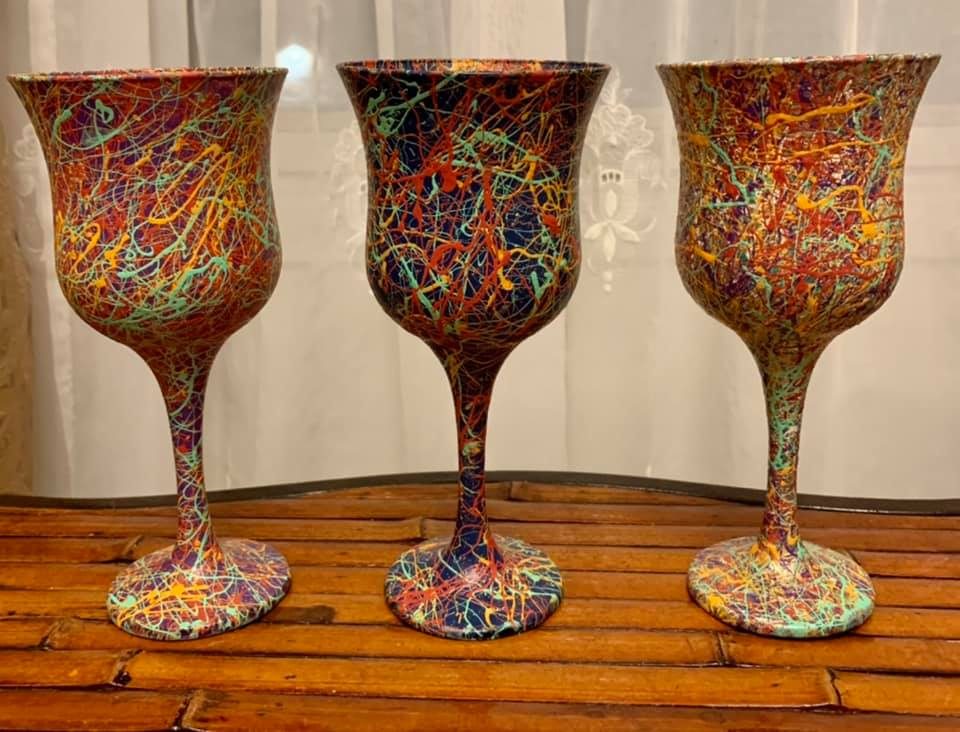
Each wine glass is painted over the bowl, the stem and the foot, then varnished, and the pattern is different on every one: (I) on a dark ground, (II) in deep red and violet, (III) on dark plum. They are listed one by one, so you can give a single glass or put together a pair or all three. Ask how to look after them when you call.
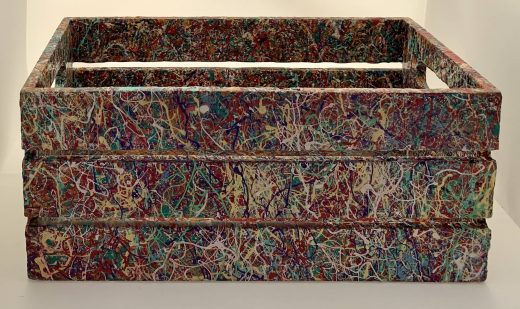
The hand-painted tissue box has slatted sides painted inside and out and sealed with resin. For a bigger occasion there are round painted side tables on three slim legs.
What should you write on the card?
Christmas
- Artist
- Sergei Troshin
- Year
- 2019
- Medium
- Acrylic on canvas
- Size
- 11 × 14 in (27.9 × 35.6 cm)
Certificate of Authenticity, signed by the artist, enclosed.
Write the facts first and your wishes after them. Title, artist, year, medium and size are what turn a canvas into a painting someone can identify in thirty years, when it has moved house twice and nobody remembers who gave it.
The same facts are on the Certificate of Authenticity that leaves the gallery with every work. Put it in the envelope with the card, and tell them to keep it somewhere other than the back of the frame. An insurer or a valuer will ask for it. What the certificate says explains the rest.
If you know why you chose this piece, add one line of that in your own words. People keep the card longer than you would think.
Can you give the choice instead of the painting?
Yes, and for someone whose taste you really do not know, it is the better gift.
Come together
Book a time, bring them, and let them walk round the work in front of you. The surprise is gone, but what they take home is something they picked, and that gets hung. Viewings are by appointment, daily from 9:00 to 18:00, at 473 Simonston Blvd in Markham.
Give the visit
Arrange the appointment as the present: a date, a time, and the promise that you are paying. Say on the phone which way you are doing it, so whoever opens the door knows the plan. What a visit is like is worth sending them beforehand.
There is no blanket returns policy on this site, because every work is a one-off. If you buy before the occasion, ask on the phone what can be done for that particular piece if it is not right, and you will get a straight answer before you pay.
Getting it to them in winter
Do not leave a wrapped painting in the car overnight before the party.
The Canadian Conservation Institute's note on paintings and travel says paint and ground layers become more brittle in low temperatures, and that a painting should not travel in an unheated vehicle. A January night in an Ontario driveway is exactly that.
Keep it indoors until you leave, carry it flat on the back seat rather than in a cold trunk, and hand it over still wrapped. An 11 by 14 canvas fits in a large gift bag; for anything bigger, ask about delivery when you call.
Questions people ask before giving art
What size painting is safest as a gift?
11 by 14 inches, unless you know the wall. At that size it fits a shelf, a desk or a short stretch of wall, and nobody needs to move furniture. Christmas, Spring Thoughts, Blue, White and Autumn Hysteria are all that size.
What comes with the painting?
Every work is one of a kind and signed, and it leaves with a Certificate of Authenticity signed by the artist, naming the title, year, medium and dimensions. Nothing here is a print or an edition.
Is there a gift for someone with no free wall?
Yes. Three hand-painted wine glasses, a painted tissue box and painted side tables are made with the same technique as the canvases. The glasses are listed one by one, so you can give one, two or all three.
Can I make a gallery visit the gift?
Yes. Book an appointment, come together, and let the person choose in front of the work. Call +1 (416) 919-8331 and say that the visit is the present.
How much does a small original cost?
Prices are on request for every work. Name the piece when you call and you will get the figure for that piece, with no obligation attached to asking.
Small originals and painted objects to give


Tell us about the person and the room
Describe the room they live in, or send a photo of it, and ask which pieces are still here. Prices are on request for each work. Call +1 (416) 919-8331, send a question, or book a time to come and look in Markham with or without them.